
 Salud al Limite

A small patio may have limited space, but it can still become one of the most comfortable and attractive areas of your home.
The key is not trying to fit everything you would place in a large backyard. A successful small patio uses furniture, plants, lighting, and accessories that match the scale of the space.
Every piece should have a purpose. Instead of filling the patio with many small objects, focus on creating one clear area for relaxing, dining, or entertaining.
With the right layout and a few thoughtful details, even a narrow balcony-style patio or compact backyard corner can feel stylish, functional, and surprisingly spacious.
Here is how to style a small patio without making it feel crowded.
1. Decide How You Want to Use the Patio
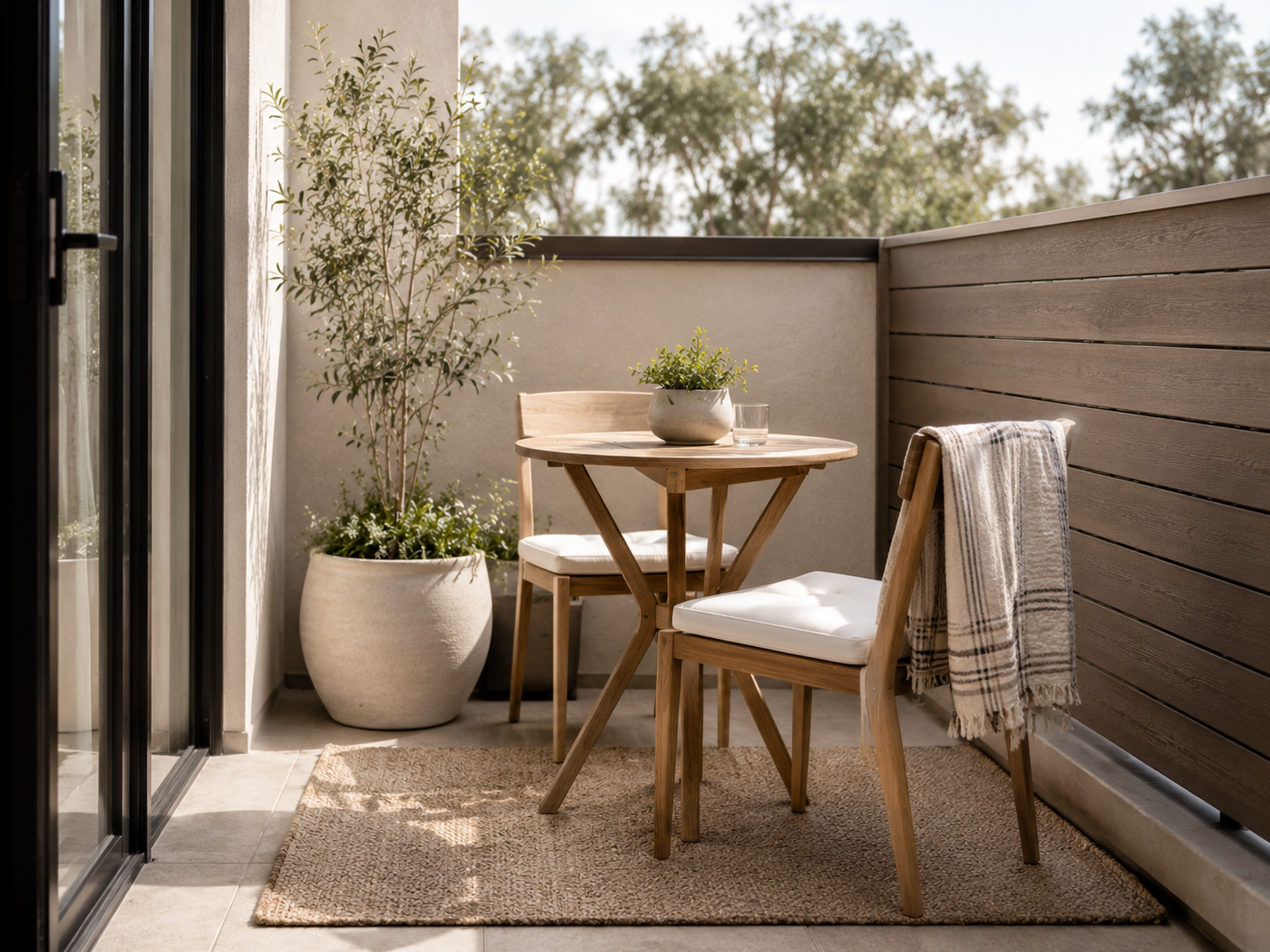
Before buying furniture or decorations, decide what the patio needs to do.
Do you want a quiet place for coffee, a comfortable lounge area, or a small outdoor dining space? Trying to include all three functions in a very limited area can make the patio feel cluttered.
Choose one main purpose and build the design around it.
For a relaxation area, you may only need two lounge chairs and a small table. For outdoor dining, a compact bistro set may be more useful than a sofa.
When the patio has a clear purpose, selecting furniture and accessories becomes much easier.
2. Measure the Entire Space
Small patios require careful planning because even a few inches can affect movement.
Measure the width and length of the patio, along with door openings, steps, railings, and pathways. Leave enough space to walk comfortably around the furniture.
Before purchasing anything, use painter’s tape to mark the size of a sofa, table, or chairs on the floor. This will help you understand how much room each piece will occupy.
Furniture that looks compact online may feel much larger once it is placed in a small outdoor area.
Accurate measurements can prevent the patio from becoming overcrowded.
3. Choose Furniture With a Light Visual Profile
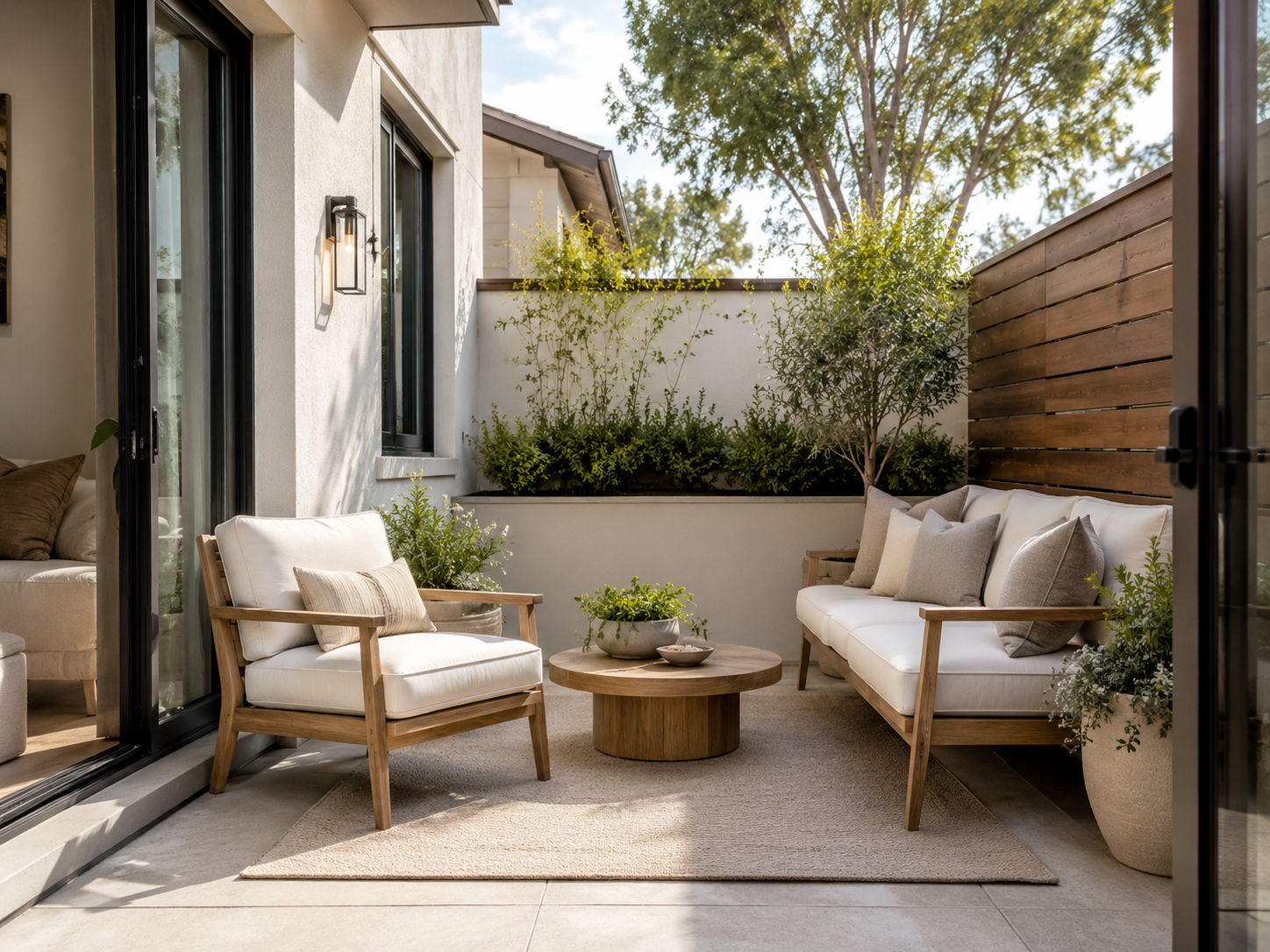
Bulky furniture can make a small patio feel even smaller.
Look for chairs, benches, and tables with slim frames, visible legs, and simple shapes. Furniture made from light wood, woven materials, or narrow metal frames allows more of the floor and surrounding space to remain visible.
A low-profile loveseat may work better than a deep sectional. Two individual chairs may also provide more flexibility than one large sofa.
Avoid furniture with oversized arms or very thick bases unless the patio has enough room to support them.
The lighter the furniture appears visually, the more open the space will feel.
4. Consider Built-In Seating
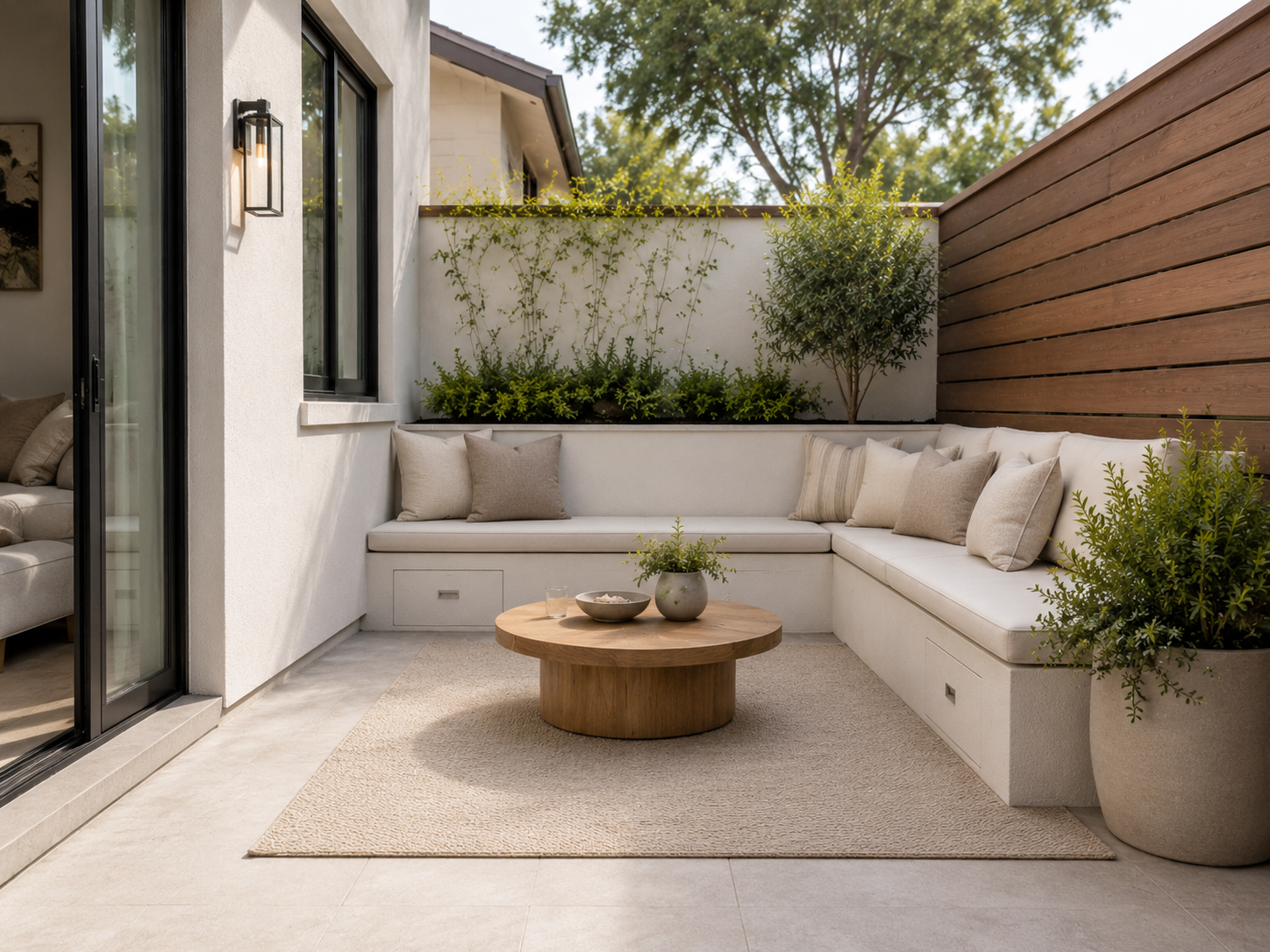
Built-in seating is an excellent solution for small patios because it uses the edges of the space efficiently.
A bench positioned against a wall or fence leaves the center of the patio open. It can also include storage beneath the seat for cushions, outdoor tools, or seasonal accessories.
Add a few comfortable cushions in weather-resistant fabric, but keep the styling simple. Too many pillows can reduce the amount of usable seating.
A corner bench can transform an awkward patio area into a comfortable conversation zone.
5. Use a Simple Color Palette
A controlled color palette creates visual continuity and helps a small patio feel less busy.
Choose one main neutral, such as warm white, beige, taupe, gray, or natural wood. Add one darker contrast color through furniture frames, planters, or lighting.
Greenery can provide the main source of color.
For example, combine cream cushions, light wood furniture, black metal accents, and olive-green plants. This palette feels calm and works well with many architectural styles.
Avoid using several unrelated bright colors in cushions, rugs, and accessories. Too many competing shades can make a small area feel chaotic.
6. Add a Properly Sized Outdoor Rug
An outdoor rug can define the seating area and make the patio feel more complete.
Choose a rug that is large enough to connect the furniture. The front legs of the chairs, loveseat, or bench should ideally rest on it.
A tiny rug placed only beneath a small table may divide the floor visually and make the patio appear smaller.
Select a simple pattern or solid color that complements the rest of the design. Subtle stripes, geometric patterns, and natural woven textures are versatile choices.
Make sure the rug is designed for outdoor conditions and can resist moisture, sunlight, and regular cleaning.
7. Use Vertical Space for Plants
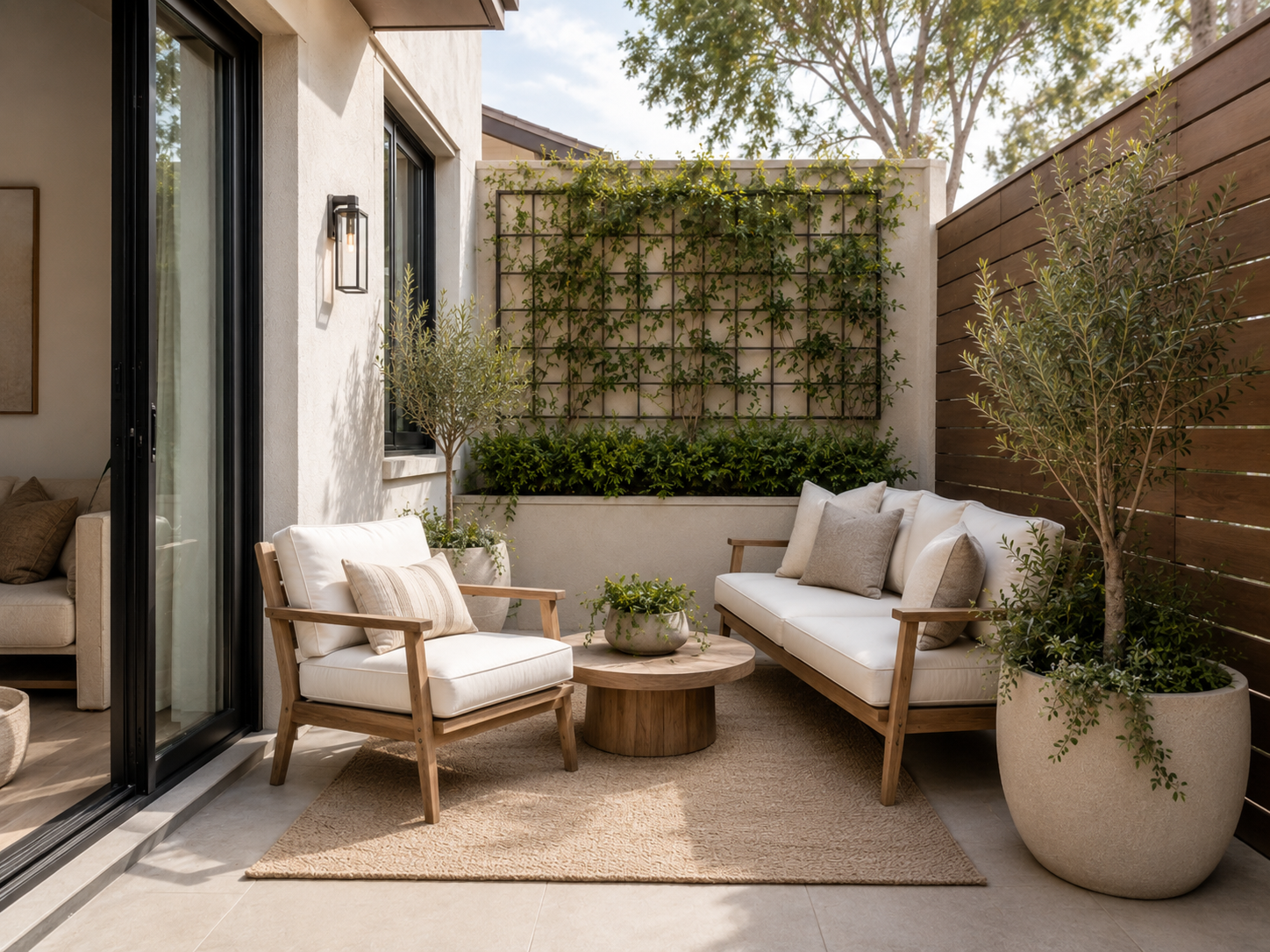
Greenery makes a patio feel relaxing, but many pots on the floor can quickly use up valuable space.
Take advantage of walls, fences, and railings instead. Install wall-mounted planters, a narrow trellis, hanging pots, or vertical plant shelves.
Climbing plants can soften a plain wall while creating privacy. Herbs can also be grown vertically near a small dining area.
Keep the arrangement organized by choosing similar pots or repeating one or two materials.
Vertical greenery adds color and texture without making the walking area feel crowded.
8. Choose Fewer, Larger Planters
When using floor planters, choose a few larger containers instead of many small pots.
A large planter with an olive tree, palm, ornamental grass, or sculptural shrub creates more impact and looks more intentional.
Place planters in empty corners, beside seating, or near the entrance to frame the patio.
Choose containers in similar finishes, such as concrete, matte black, terracotta, or natural stone. This creates a cohesive appearance.
Too many small pots can require more maintenance and may make the space look cluttered.
9. Include Multifunctional Furniture
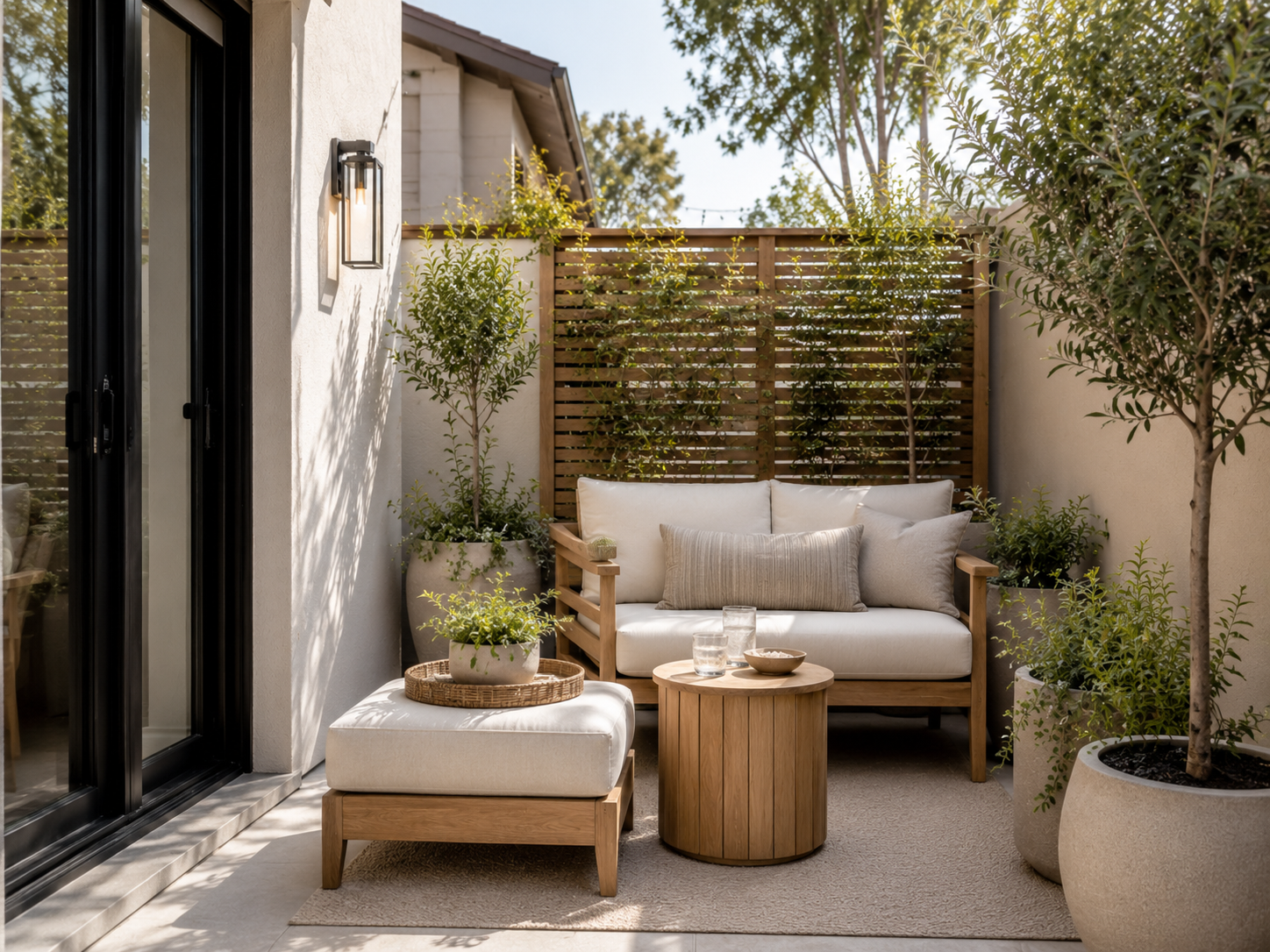
Furniture that serves more than one purpose is extremely valuable in a small outdoor area.
An ottoman can function as a footrest, extra seat, or small table. A storage bench can hide cushions while providing seating. Nesting tables can be separated when needed and stored together afterward.
A folding table can create a dining area without remaining open all day.
Choose pieces based on how frequently you will use them. Multifunctional furniture should make the patio easier to use rather than adding unnecessary complexity.
10. Add Warm Outdoor Lighting
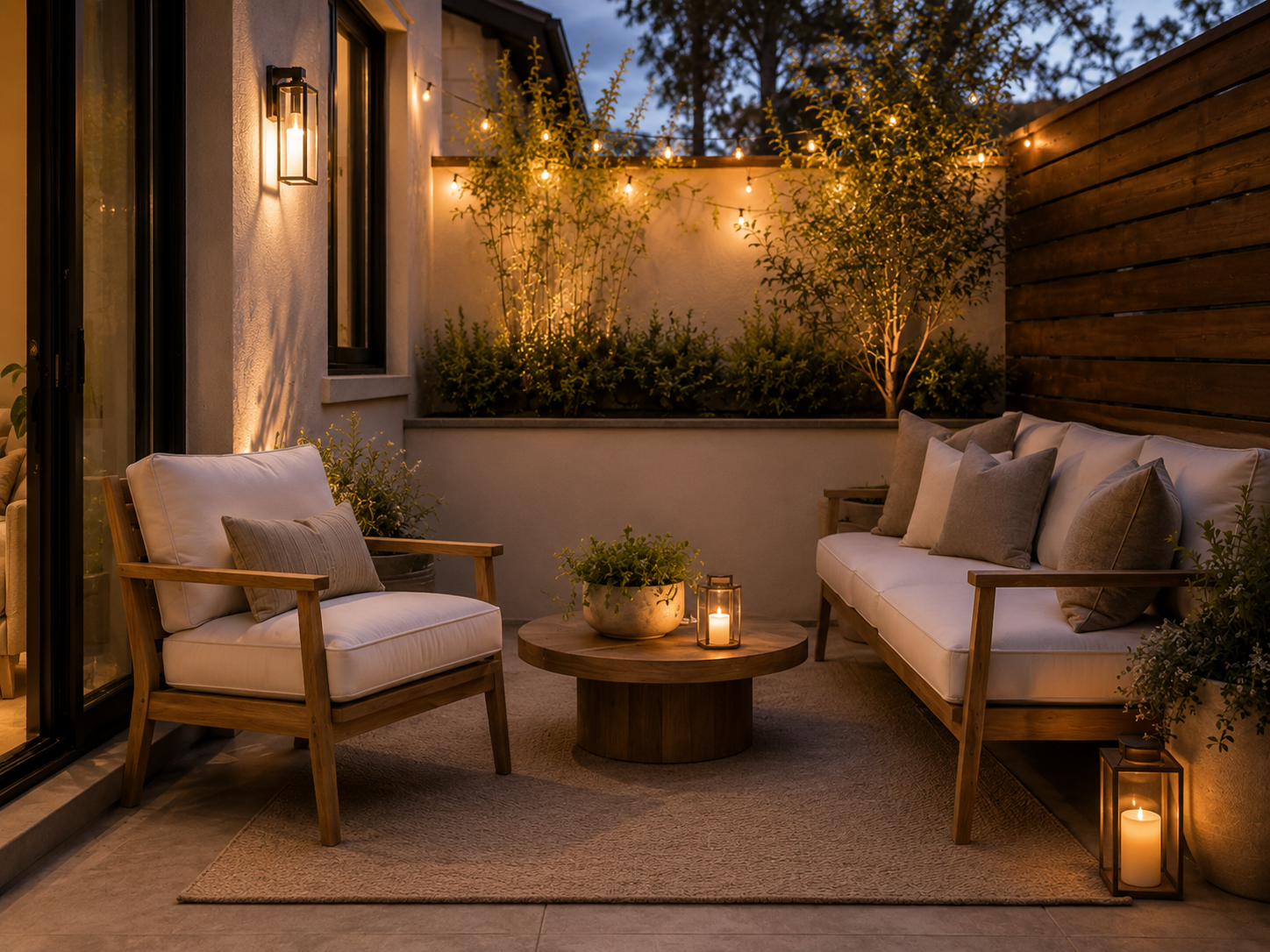
Lighting allows the patio to remain enjoyable after sunset and creates a more welcoming atmosphere.
Use several soft sources of light instead of one harsh fixture. Wall sconces, lanterns, portable lamps, and subtle string lights can all work well.
Place lights near seating, steps, pathways, and plants. This creates depth and improves safety.
Warm white bulbs generally feel more relaxing than cool blue lighting.
Keep cords hidden whenever possible, and avoid covering the entire patio with too many decorative lights. A few carefully placed fixtures will look more elegant.
11. Create Privacy Without Closing the Space
Privacy can make a small patio feel more comfortable, but heavy barriers may make it feel enclosed.
Use wooden slats, outdoor curtains, tall planters, climbing plants, or a narrow privacy screen. These options provide separation while still allowing light and air to move through the space.
A slatted wood wall can also serve as a decorative background for a bench or small sofa.
Outdoor curtains create softness and can be opened when privacy is not needed.
Choose a solution that complements the architecture and does not reduce the usable area too much.
12. Keep the Final Decor Minimal
The final styling should support the patio rather than overwhelm it.
A few cushions, one throw, a tray, and a decorative planter may be enough. Avoid covering every table and surface with candles, lanterns, figurines, or small accessories.
Choose objects that are both beautiful and practical. A basket can store blankets, while a tray can organize drinks or candles.
Leave some empty space around the furniture and on the tables. This helps the patio feel calm and allows each selected element to stand out.
Minimal styling is especially important in a compact outdoor area.
How to Make a Small Patio Look Bigger
Keep the floor as visible as possible and avoid blocking the main lines of sight.
Furniture with open legs creates a lighter appearance, while transparent or woven pieces can feel less visually heavy. Place larger furniture against a wall instead of in the middle of the patio.
Repeating the same colors and materials also helps the space feel more continuous.
Use tall plants, vertical slats, or curtains to draw the eye upward. A large outdoor mirror can create a sense of depth, but it should be mounted securely and positioned carefully to avoid intense reflected sunlight.
Good organization is equally important. Store gardening supplies, cleaning products, and unused cushions out of sight.
What Furniture Is Best for a Small Patio?
The best furniture depends on the patio’s main purpose.
For relaxing, consider two lounge chairs, a compact loveseat, or a built-in bench. For dining, a round bistro table usually takes up less visual space than a large rectangular table.
Folding and stackable furniture can be useful when the patio needs to support different activities.
Before choosing any piece, confirm that there is enough room to pull out chairs, open doors, and walk through the space comfortably.
Furniture should fit the patio rather than simply fill it.
Small Patio Decorating Mistakes to Avoid
One of the most common mistakes is using furniture that is too large. Oversized sofas and deep chairs may leave very little room for movement.
Another problem is adding too many small accessories and planters. While each item may be attractive individually, together they can make the patio feel disorganized.
Avoid using several unrelated furniture styles, finishes, and colors. A small patio benefits from a simple and cohesive design.
Do not forget practical concerns such as shade, drainage, weather resistance, and storage. The patio should remain comfortable and easy to maintain.
Final Thoughts
Learning how to style a small patio begins with understanding the space and choosing one clear purpose.
Properly scaled furniture, a simple color palette, vertical greenery, warm lighting, and practical storage can transform even a very compact outdoor area.
You do not need to use every idea at once. Start by measuring the patio, removing unnecessary items, and improving the layout.
Then add comfort and personality through a few carefully selected details.
With thoughtful planning, your small patio can become an elegant and inviting outdoor space that feels much larger than it actually is.


