
 Salud al Limite

A small front porch may not have enough space for large furniture or elaborate decorations, but it can still create a beautiful and memorable first impression.
The entrance of a home is one of the first things visitors notice. A thoughtfully decorated porch can make the entire property feel warmer, more welcoming, and better maintained.
The key is to work with the available space rather than trying to make it function like a large outdoor living room. Every chair, planter, light fixture, and decorative accent should contribute to the overall design.
With a clear color palette, properly scaled furniture, and a few practical details, even the smallest porch can feel polished and inviting.
Here are 10 small front porch ideas you will want to copy.
1. Create a Simple Seating Corner
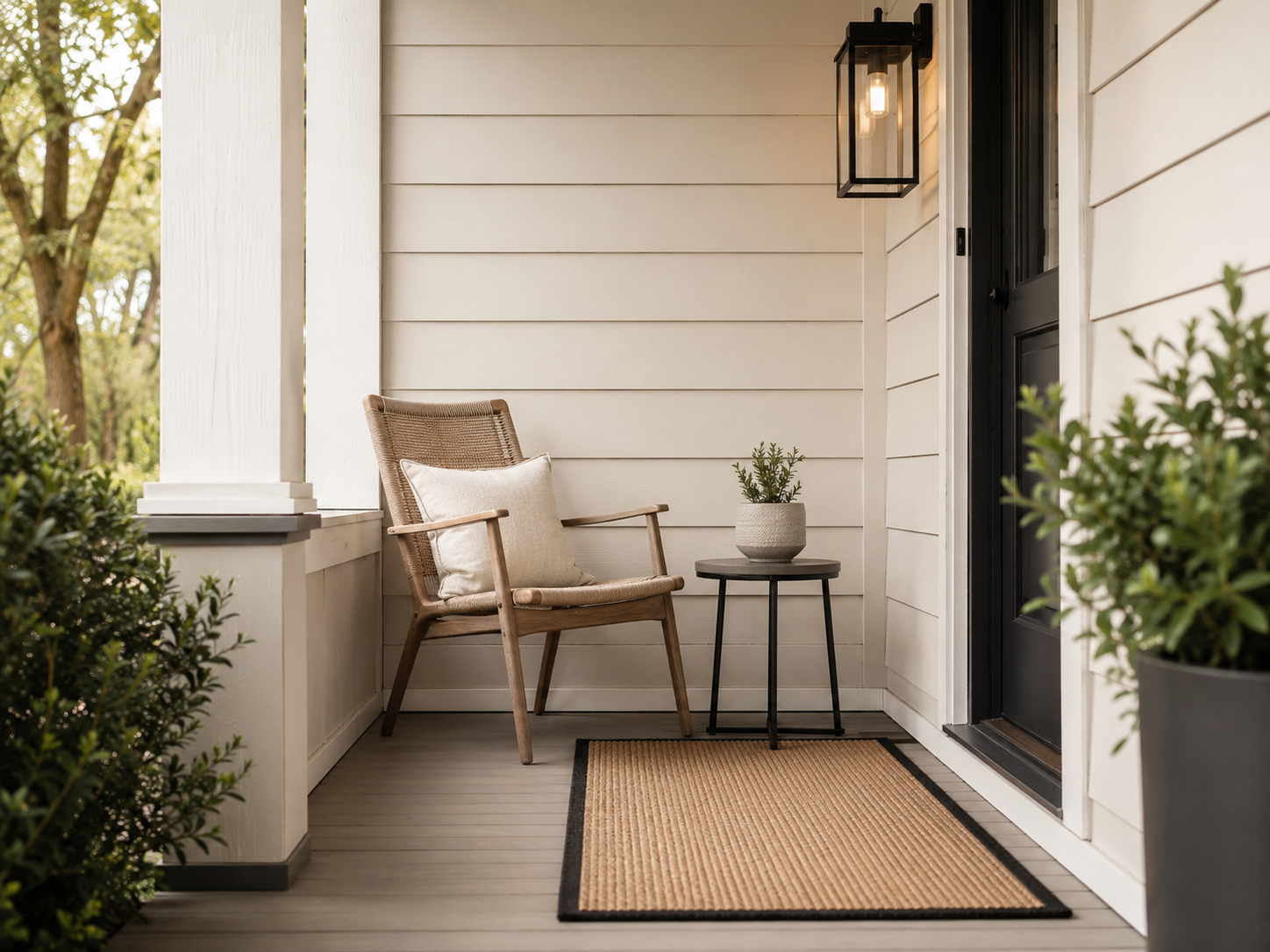
A small porch does not need a complete furniture set to feel comfortable.
One attractive chair and a compact side table can create a welcoming place to sit without blocking the entrance. Position the chair in an empty corner, leaving enough space for the front door to open fully.
Choose furniture with slim arms, visible legs, and a light visual profile. A wooden chair, woven seat, or narrow metal design will usually feel less bulky than a deep outdoor armchair.
Add one weather-resistant cushion for comfort and color. Avoid using too many pillows, as they can make a small chair appear crowded.
This simple seating arrangement gives the porch a purpose while keeping the walkway open.
2. Use Matching Planters to Frame the Door
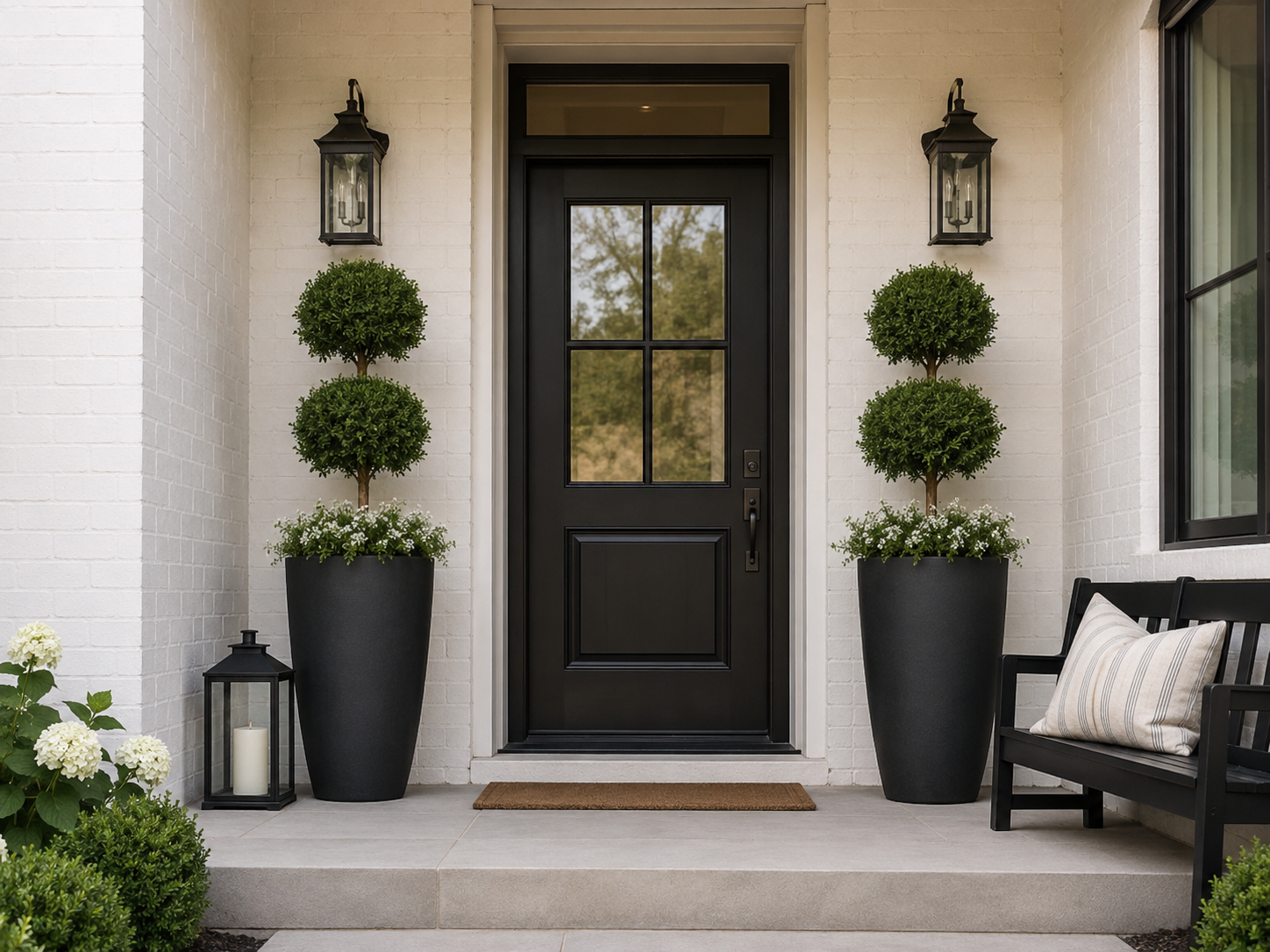
Matching planters placed on both sides of the front door create balance and make the entrance feel more intentional.
Tall, narrow containers are especially useful on small porches because they add height without taking up too much floor space.
Fill them with small trees, ornamental grasses, ferns, or evergreen shrubs. Choose plants that can tolerate the amount of sunlight and weather exposure the porch receives.
The containers do not need to be highly decorative. Simple planters in black, warm gray, stone, or terracotta can complement many architectural styles.
For a less symmetrical look, use one large planter on one side of the door and a smaller grouping on the other.
3. Choose a Cohesive Color Palette
Too many unrelated colors can make a small front porch feel busy.
Select two or three main shades and repeat them throughout the space. Begin with the color of the front door, exterior walls, flooring, and nearby trim.
A neutral palette of cream, beige, black, and natural wood creates a clean and timeless appearance. For more personality, introduce muted green, dusty blue, deep navy, or warm terracotta.
Repeat the accent color in a cushion, planter, doormat, or seasonal wreath. This connects the different decorative elements and makes the porch feel professionally styled.
Greenery can provide additional color without disrupting the palette.
4. Add a Properly Sized Doormat
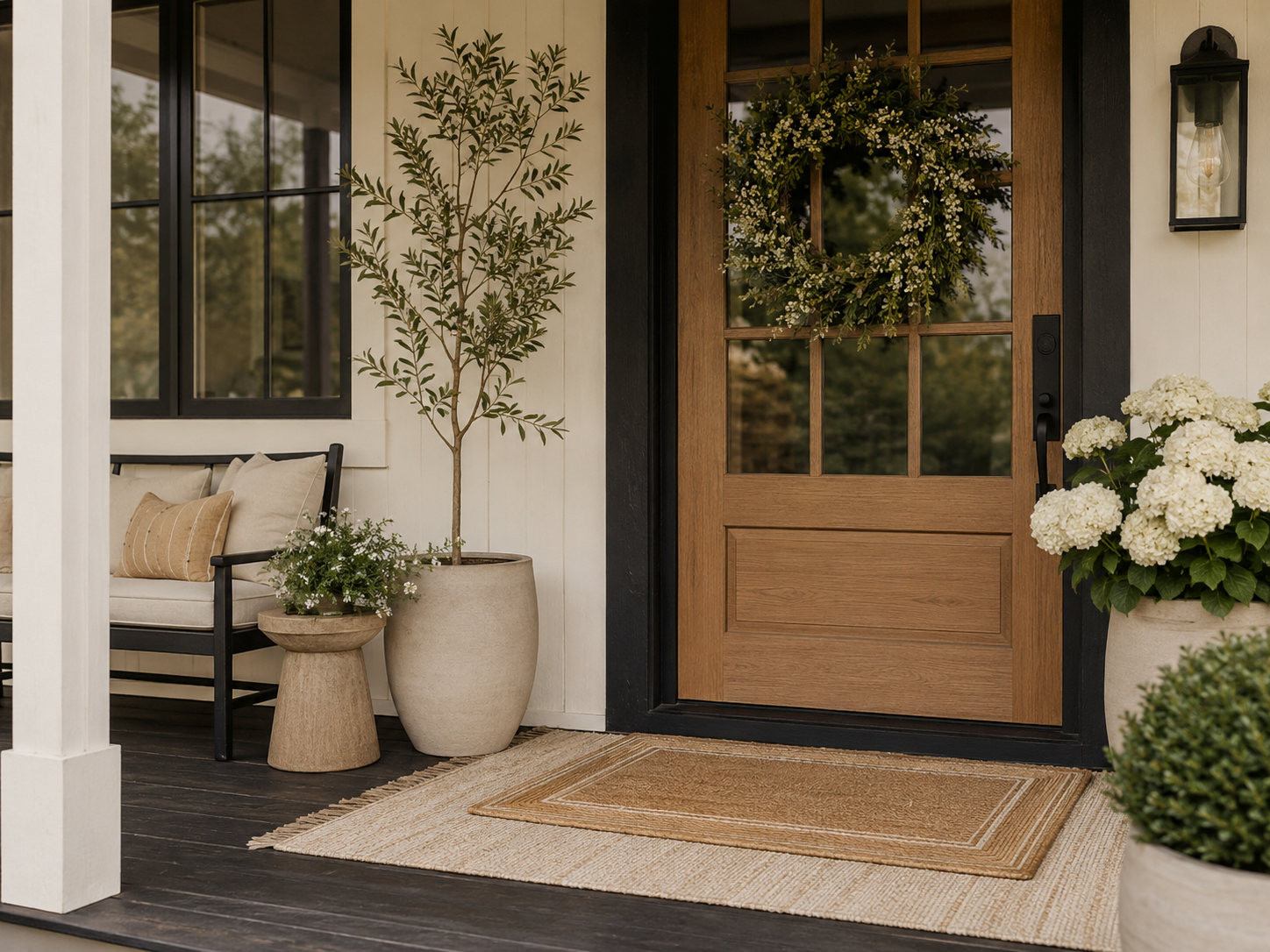
A doormat is practical, but it also helps define the entrance.
One common mistake is using a mat that is too small for the width of the door. A narrow mat may look disconnected and make the entrance feel less substantial.
Choose a doormat that extends across a generous portion of the doorway. For a more layered look, place it over a slightly larger flat-weave outdoor rug.
A neutral striped, checked, or subtly patterned rug can add interest without overwhelming the porch.
Make sure the rug is thin enough that the door can open comfortably and durable enough to withstand moisture, dirt, and regular foot traffic.
5. Upgrade the Porch Lighting
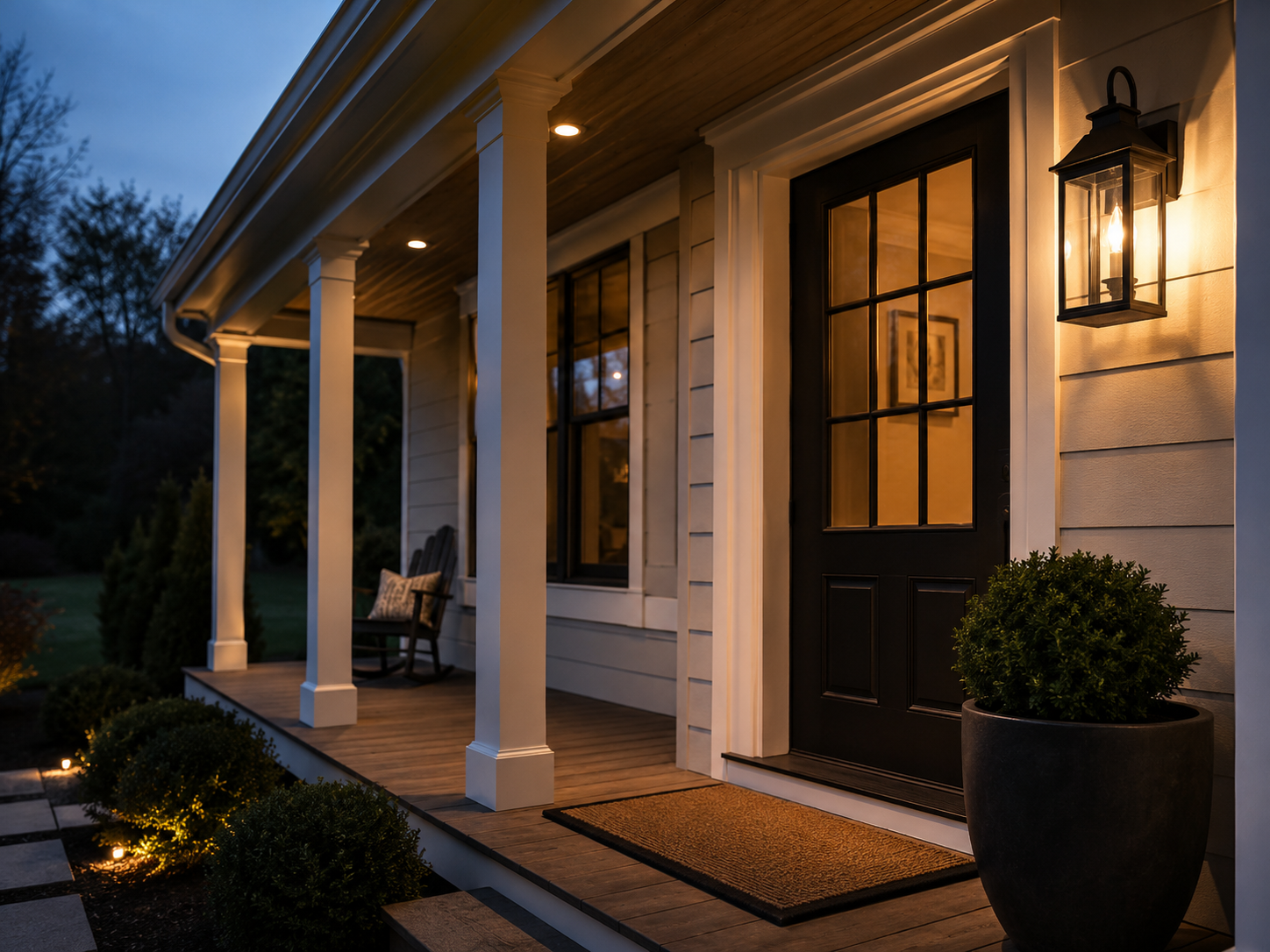
Lighting has a major influence on how welcoming the entrance feels.
Replace a small or outdated fixture with a lantern-style sconce, modern wall light, or simple pendant that matches the scale of the porch.
If there is enough wall space, two matching sconces on either side of the door can create an elegant and balanced effect. On a narrower entrance, one carefully selected fixture may be enough.
Use warm white bulbs rather than harsh blue-toned lighting. Warm light creates a softer atmosphere and complements natural wood, brick, stone, and neutral paint colors.
Good lighting also improves visibility around the steps, door lock, and house number after sunset.
6. Make the Front Door the Focal Point
On a small porch, the front door naturally becomes the main design feature.
A fresh coat of paint can transform the entrance without requiring new furniture or major construction. Black, charcoal, navy, olive green, muted blue, and warm wood tones are all stylish options.
Choose a color that works with the home’s exterior rather than selecting a shade only because it is popular.
Upgrade worn hardware at the same time. A new handle, knocker, kick plate, or doorbell can make the door feel more polished.
Keep the surrounding decor simple so the front door remains the focus.
7. Decorate With Vertical Elements
When floor space is limited, use the walls and vertical surfaces.
Hang a simple wreath, install a narrow wall planter, or place a tall decorative sign beside the door. A climbing plant on a slim trellis can soften a blank wall and add natural character.
Vertical decor draws the eye upward, making the porch feel taller.
Keep the number of wall decorations limited. One medium or large item will usually look more intentional than several tiny pieces scattered across the entrance.
Make sure all hanging items are securely attached and suitable for outdoor conditions.
8. Add a Small Bench With Storage
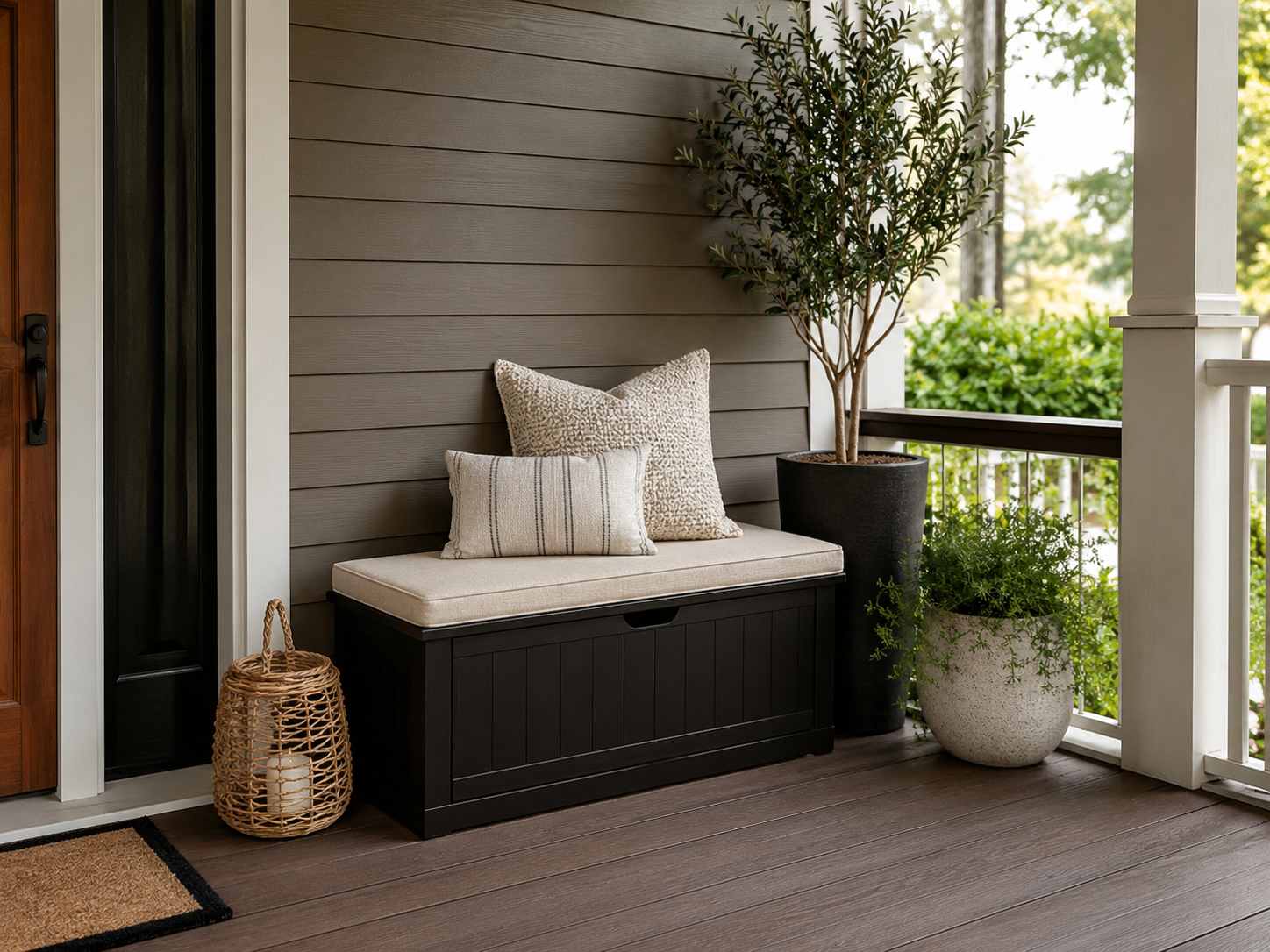
A compact bench can provide seating, style, and storage in one piece.
Position it against a wall where it will not interfere with the front door or main walkway. Choose a narrow design with a simple back or no back at all.
A bench with hidden storage can hold gardening tools, outdoor shoes, cleaning supplies, or seasonal decorations. If concealed storage is not available, place one neat basket underneath.
Add one seat cushion and one or two pillows in weather-resistant fabric.
Before purchasing a bench, measure carefully. It should fit comfortably without making the porch feel enclosed.
9. Keep Seasonal Decor Controlled
Seasonal decorations can make a front porch feel festive, but a small space can become overcrowded very quickly.
Choose one focal arrangement rather than placing decorations on every surface. In autumn, use one pumpkin grouping with a planter or lantern. During the holidays, a wreath, greenery, and warm lights may be enough.
Repeat colors and materials so the display feels cohesive.
Avoid blocking the steps, door, house number, or pathway with oversized decorative items. Safety and daily function should remain the priority.
After each season, remove outdated or damaged pieces rather than allowing the porch to accumulate unnecessary objects.
10. Use Fewer, Larger Decorative Pieces
Many small accessories can make a compact porch feel cluttered.
Instead of using several tiny pots, signs, lanterns, and ornaments, choose a few larger items with stronger visual impact.
A tall planter, one substantial lantern, a properly sized doormat, and a single chair may be enough to complete the space.
Leave some open floor area around the decorations. Negative space makes each piece stand out and helps the porch feel cleaner and more spacious.
Useful objects are especially valuable. A lantern can provide light, a basket can store outdoor items, and a bench can offer seating and storage.
How to Make a Small Front Porch Look Bigger
Begin by keeping the main walkway completely clear.
Push furniture toward the walls and avoid placing decorative items directly in front of the door. Choose chairs and benches with open bases so more of the flooring remains visible.
Light and neutral colors can make the porch feel brighter, while vertical planters and tall wall decor draw the eye upward.
Use only one or two furniture pieces. An overcrowded porch will always feel smaller, regardless of how attractive the individual items are.
Good lighting can also increase the feeling of space at night by illuminating the walls, doorway, and steps evenly.
How to Make a Front Porch Look More Expensive
An expensive-looking porch is usually defined by consistency and maintenance rather than the cost of the decor.
Clean the flooring, remove cobwebs, repair peeling paint, and replace damaged hardware. These improvements often have more impact than adding new accessories.
Choose planters in coordinated finishes, use a properly scaled light fixture, and keep the color palette controlled.
Natural materials such as wood, stone, woven fiber, and ceramic can create a more elevated appearance. However, avoid using too many finishes at once.
One healthy plant in a substantial planter will usually look more luxurious than several neglected plants in mismatched containers.
Small Front Porch Mistakes to Avoid
Avoid selecting furniture before measuring the available space. Even a small bench or chair may block the door or narrow the main walkway.
Do not use a large number of tiny accessories. They often create visual clutter and require more maintenance.
Another common mistake is ignoring the scale of the lighting, doormat, and planters. Items that are too small may make the entrance look unfinished, while oversized items can overwhelm it.
Avoid hiding the house number or creating obstacles around steps and pathways.
The porch should look beautiful, but it must also remain safe and easy to use.
Final Thoughts
The best small front porch ideas combine style, function, and simplicity.
A compact seating area, coordinated planters, better lighting, a properly sized doormat, and a polished front door can completely transform the entrance.
You do not need to apply every idea at once. Begin by cleaning the porch, removing unnecessary objects, and deciding which area needs the most attention.
Then add a few carefully selected elements that complement the home and fit the available space.
With thoughtful styling, even a very small front porch can become a warm, elegant, and memorable entrance.


