
 Salud al Limite

Beautiful wall decor can completely change the way a room feels.
An empty wall may make an otherwise attractive space look unfinished, while too many small decorations can make the same room feel cluttered. The most elegant interiors usually fall somewhere in between: they use fewer pieces, stronger proportions, and materials that feel connected to the rest of the room.
You also do not need expensive artwork or custom architectural work to create this effect.
Scale, placement, framing, repetition, texture, and color often matter more than the actual price of the decor.
Recent interior design direction has also moved toward more character, craftsmanship, natural wall treatments, layered patterns, and interiors that feel collected rather than perfectly matched.
If your walls currently feel plain or unfinished, these nine ideas can help make them look more polished, intentional, and expensive.
1. Use One Oversized Piece of Art
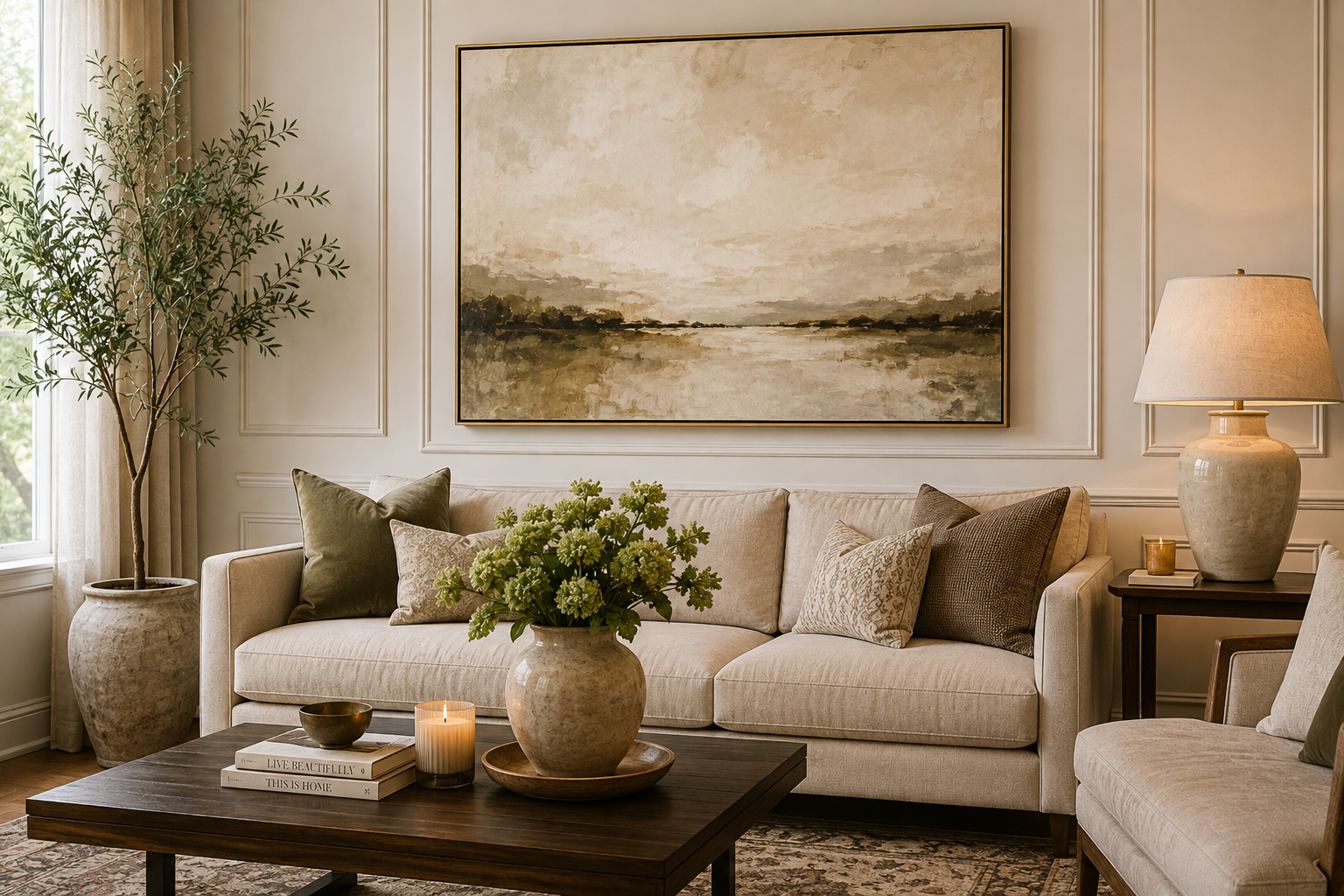
One large piece of artwork can have more visual impact than several small decorations.
This works especially well above a sofa, console table, bed, fireplace, or dining room sideboard.
Choose artwork large enough to relate to the furniture beneath it. A tiny picture floating above a long sofa can make both the wall and furniture feel smaller.
An oversized landscape, abstract painting, botanical piece, or vintage-inspired print can immediately create a stronger focal point.
The artwork does not have to be expensive.
A reasonably priced print placed inside a substantial frame can feel significantly more sophisticated than an expensive piece displayed in a frame that looks too small or lightweight.
For a timeless result, choose artwork that complements the colors already present in the room rather than selecting something only because it is currently popular.
Keep the surrounding wall relatively simple so the artwork has room to stand out.
2. Add Picture-Frame Molding
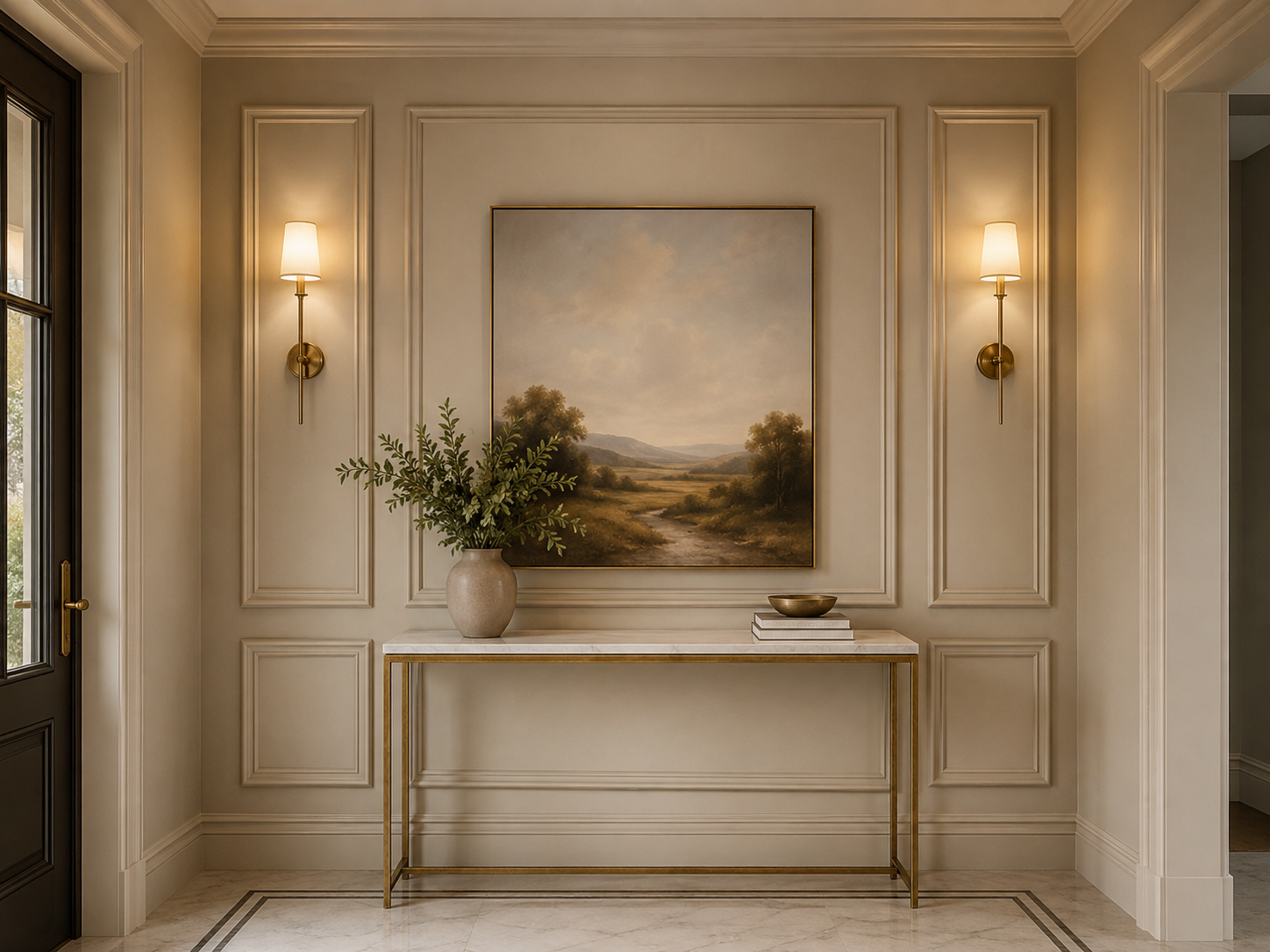
Wall molding can make a plain room feel architecturally richer.
Picture-frame molding creates rectangular or square sections across the wall, giving even a relatively simple space a more custom appearance.
It works beautifully in living rooms, dining rooms, bedrooms, hallways, and entryways.
For a subtle look, paint the molding the same color as the wall. The shadows created by the trim provide enough depth without adding another color.
If you prefer more contrast, use a slightly deeper shade on the walls and keep the trim lighter.
You can leave the framed sections empty for a clean look or place one piece of artwork inside selected panels.
Avoid filling every section with decorations.
The architectural detail itself should remain visible.
This idea works especially well when you want an expensive-looking result without covering the entire wall with artwork.
3. Hang a Large Statement Mirror
Mirrors are one of the easiest ways to decorate a wall while also making the room feel brighter and more open.
Instead of using several small mirrors, consider one substantial piece.
An oversized arched mirror can soften a room filled with straight lines. A rectangular mirror with a thin metal frame feels cleaner and more contemporary.
Antique-inspired frames can bring character to traditional or collected interiors.
Place a large mirror above a console, fireplace, dresser, or bathroom vanity.
You can also lean a tall floor mirror against a wall when there is enough room.
Pay attention to what the mirror reflects.
A mirror facing a beautiful window, artwork, greenery, or attractive furniture will improve the room much more than one reflecting clutter or an unfinished corner.
Choose a frame finish that relates to other materials already used in the space.
4. Create a Curated Gallery Wall
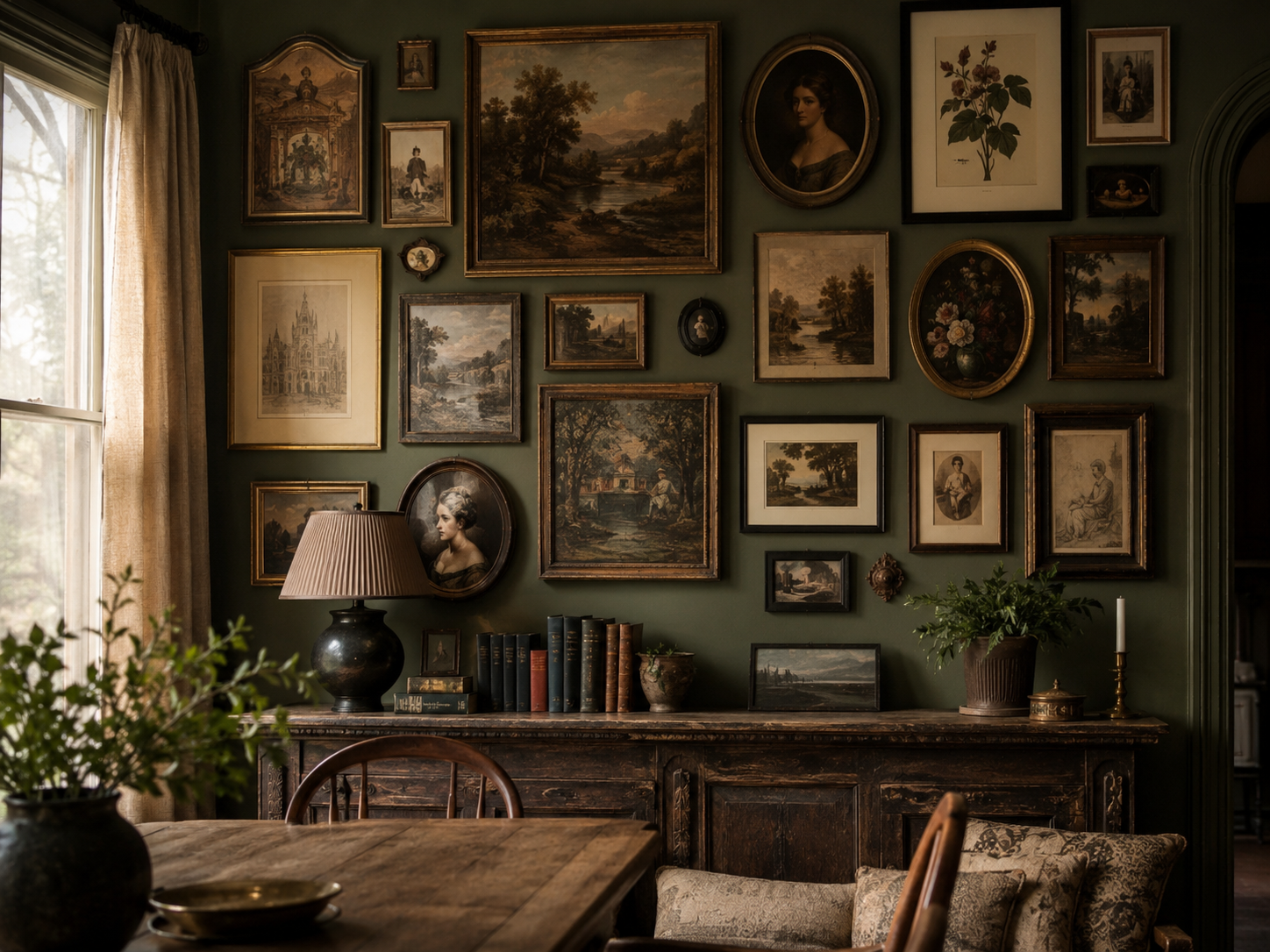
Gallery walls can look extremely elegant when they feel collected rather than random.
The key is consistency.
You do not necessarily need identical frames, but there should be something connecting the collection.
That could be similar frame colors, a repeated subject, a limited color palette, or artwork with a comparable style.
Mixing vintage photographs, landscapes, sketches, paintings, and small prints can create a more personal result.
Current interiors increasingly favor collected, lived-in spaces over rooms that appear completely coordinated, making thoughtful combinations of art and personal objects particularly relevant.
Lay the arrangement on the floor before hanging anything.
Begin with the largest piece and position smaller frames around it.
Keep the spacing relatively consistent so the collection still feels organized.
For a more expensive appearance, allow the gallery to occupy a substantial portion of the wall rather than creating a tiny cluster in the middle of a large empty space.
5. Decorate With Textiles
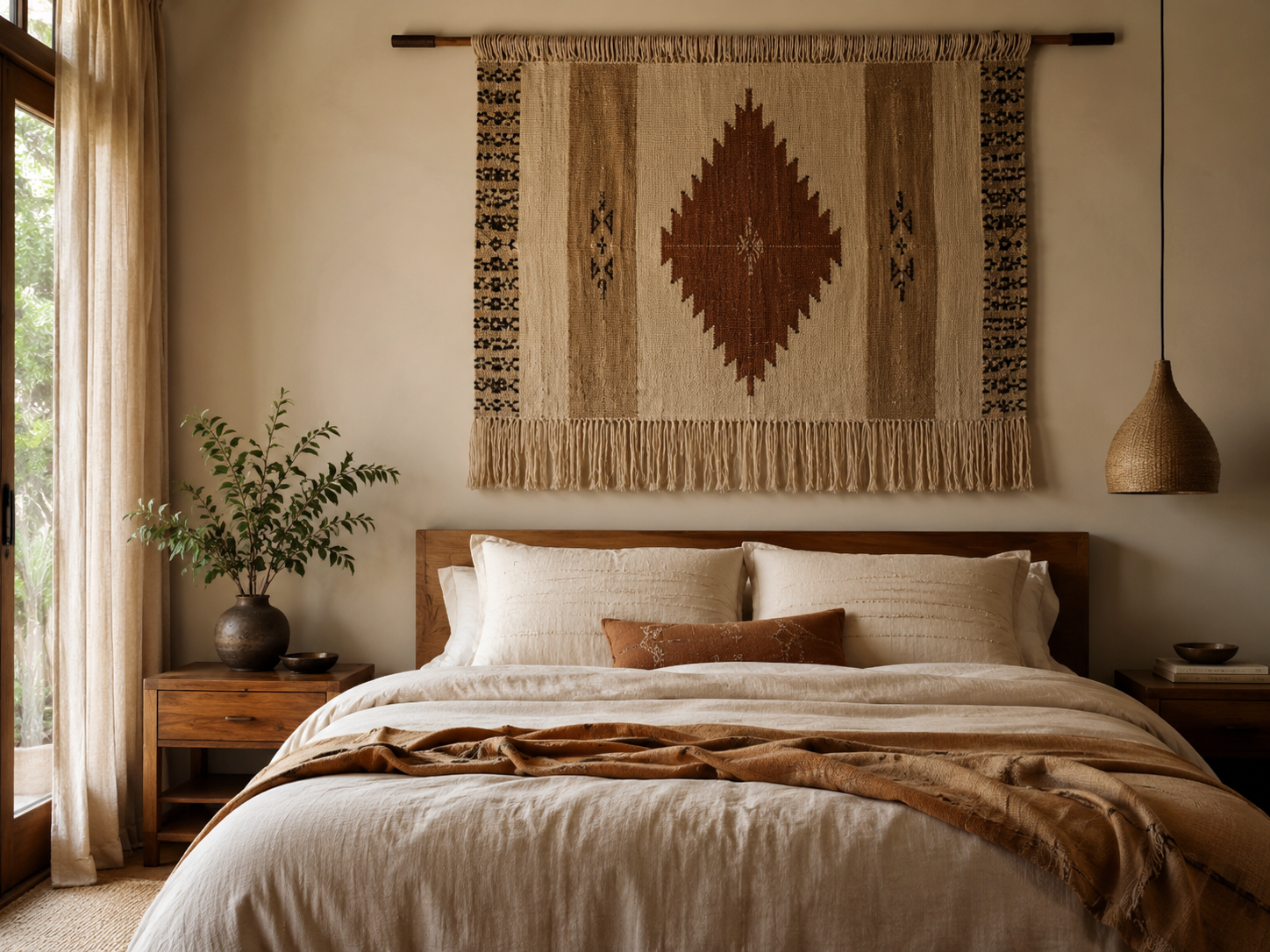
Wall decor does not have to be framed.
Textiles can introduce softness, texture, pattern, and warmth in ways that ordinary artwork cannot.
Consider a vintage textile, woven wall hanging, embroidered fabric, tapestry, quilt, or beautifully patterned material.
This can work particularly well above a bed, in a hallway, behind a console, or on a large living room wall.
Textiles are also useful when you want to decorate a substantial wall without installing something extremely heavy.
Choose colors that connect with the rug, upholstery, curtains, or pillows already in the room.
Recent design coverage has highlighted both tactile materials and patterned textiles as important ways to bring depth and individuality into interiors.
Avoid combining a very dramatic textile with several other competing wall features nearby.
Allow it to become the main attraction.
6. Use Wall Sconces as Decoration
Lighting can become part of the wall decor instead of existing only for practical reasons.
A pair of sconces can frame artwork, a mirror, fireplace, bed, or console table.
Their symmetry instantly adds structure to the wall.
For a traditional room, consider brass or bronze fixtures with fabric or pleated shades.
For a contemporary space, simple sculptural sconces in dark metal, aged brass, or plaster can work beautifully.
You can also use one decorative wall light beside a painting or reading chair for a less symmetrical arrangement.
Soft pools of light can give wall surfaces more depth in the evening, and current 2026 interiors are notably favoring layered, atmospheric lighting rather than relying exclusively on uniform overhead illumination.
Keep the scale appropriate.
Small sconces can disappear beside an oversized mirror, while very large fixtures may overpower delicate artwork.
Think about the wall as one complete composition rather than choosing each element separately.
7. Install One Long Picture Ledge
A picture ledge provides flexibility without making a wall look overly busy.
Instead of hanging every frame individually, place several pieces on one long narrow shelf.
Layer artwork of different sizes, allowing some frames to overlap slightly.
This creates depth while keeping the arrangement visually connected.
You can combine framed artwork with one ceramic piece, a small plant, or a sculptural object.
However, resist the urge to fill the entire ledge.
Leaving gaps between groups can make the display feel more deliberate.
A picture ledge is especially useful if you enjoy changing artwork because the arrangement can be updated without repeatedly adding new holes to the wall.
For a sophisticated look, choose a ledge that matches either the wall color or another wood or metal finish already used in the room.
8. Try a Natural or Textured Wall Finish
Sometimes the wall itself can become the decoration.
Limewash-inspired paint, plaster effects, grasscloth, wood paneling, and other tactile finishes can introduce enough movement that the room requires very little additional artwork.
Natural and tactile wall treatments are among the wall-focused ideas receiving significant attention in 2026 interiors, particularly materials that show texture, variation, and evidence of craftsmanship.
For an elegant result, consider using the treatment on one important wall rather than every surface.
A textured wall behind the bed, sofa, dining table, or entry console can become a subtle focal point.
Keep the remaining decor relatively restrained.
A textured wall paired with one large painting, simple sconces, or a sculptural mirror can look far more sophisticated than covering the surface with many smaller accessories.
The goal is depth, not visual clutter.
9. Style the Wall Around One Beautiful Console
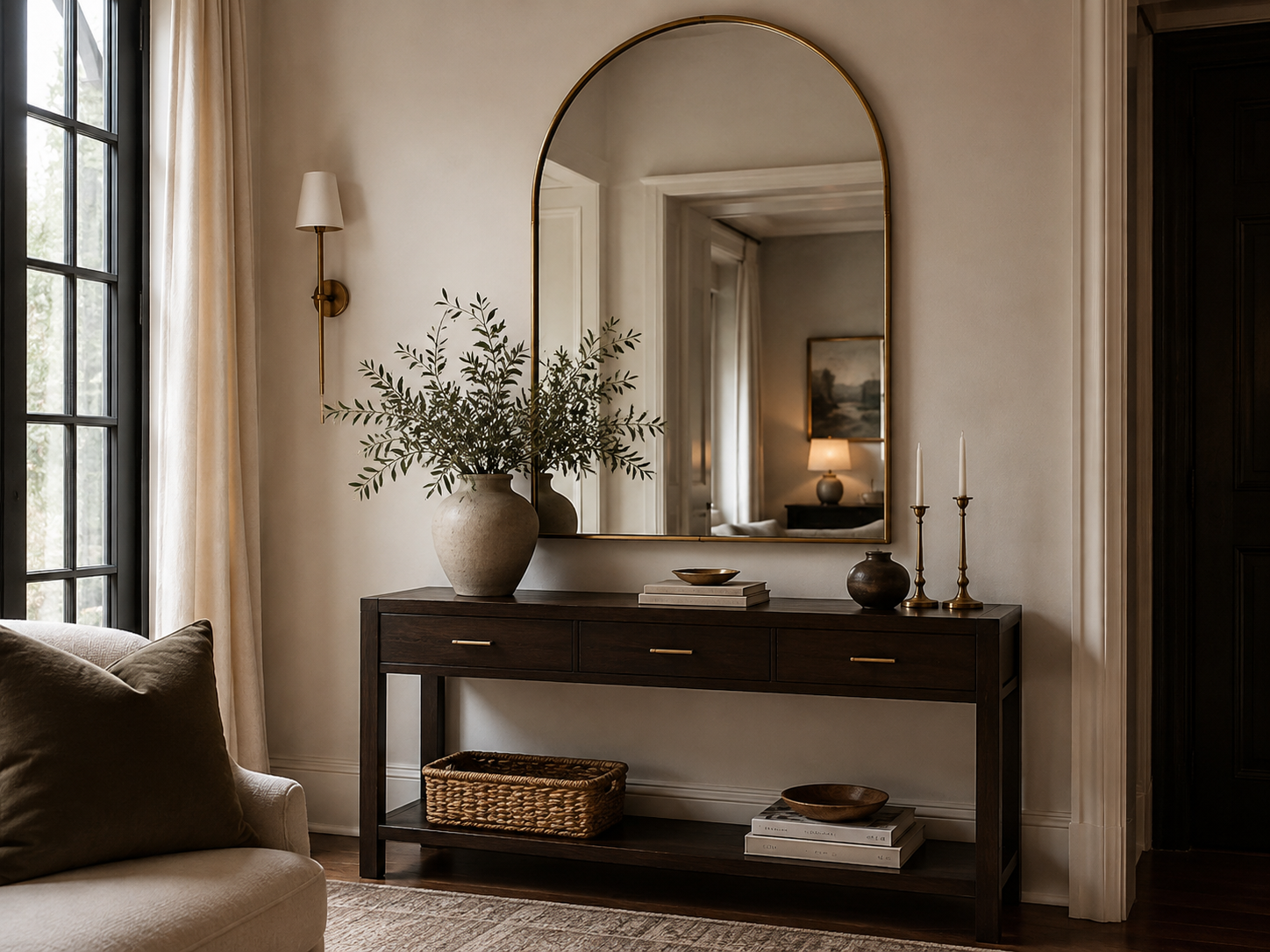
Wall decor often looks more convincing when it connects with furniture beneath it.
A console table gives you an anchor for creating a complete wall composition.
Start with one large piece above the console.
This could be a mirror, painting, framed textile, or oversized photograph.
Then add one substantial lamp, vase, sculpture, or arrangement of branches on the table.
You do not need to create perfect symmetry.
For example, place a tall lamp on one side and balance it with a lower stack of books and ceramic piece on the other.
The combination of furniture, wall decor, and lighting creates layers, which makes the area feel much more finished.
Avoid covering every inch of the console or wall.
Leaving some negative space allows each piece to feel more important.
This approach works beautifully in entryways, living rooms, dining rooms, and wide hallways.
How to Make Cheap Wall Decor Look Expensive
Presentation matters almost as much as the object itself.
Start with scale.
A small print can look more substantial when placed inside a larger mat and frame.
Choose frames that feel solid and coordinate with the room rather than using several unrelated finishes.
When hanging multiple pieces, keep spacing consistent.
Avoid positioning artwork too high above furniture. It should visually connect with the sofa, console, bed, or cabinet below it rather than floating near the ceiling.
You can also repeat materials.
If the room already contains aged brass, using a brass frame or picture light can help create cohesion.
If natural wood is dominant, introducing a wood frame in a related tone can produce the same effect.
Finally, do not underestimate empty space.
Expensive-looking rooms often allow individual pieces enough visual breathing room to be appreciated.
What to Put on a Large Empty Wall
Large walls can feel intimidating because small decorations often look lost.
Instead of trying to fill the wall with many objects, think in terms of scale.
One oversized painting may be enough.
Alternatively, create a gallery wall that occupies a substantial area rather than a small cluster.
Architectural molding can divide the surface and make the wall interesting even when little artwork is used.
A large mirror, textile, or pair of sconces can also work.
Another option is combining a long console with oversized artwork or a mirror above it.
Before purchasing anything, consider the furniture and architecture around the wall.
The best solution should feel connected to the entire room rather than simply filling an empty surface.
Wall Decor Mistakes That Can Make a Room Look Cheap
One of the most common mistakes is using decor that is too small for the wall.
Several tiny frames spread randomly across a large surface can create visual clutter without producing enough impact.
Avoid hanging artwork extremely high.
The pieces should relate visually to the furniture beneath them.
Do not use too many unrelated frame styles, colors, signs, mirrors, shelves, and decorative objects on one wall.
Variation can feel collected, but there should still be a clear visual connection.
Also avoid treating every empty wall as a problem that must be solved.
Some walls should remain relatively quiet so more important areas of the room can stand out.
Finally, avoid purchasing generic decorations simply because you need to fill space.
A room usually feels more personal when the objects have meaning, visual interest, or a clear connection to the overall design.
How to Choose Wall Decor for Each Room
The best wall decor depends partly on how the room is used.
In a living room, oversized art, gallery walls, mirrors, and architectural molding can create strong focal points.
Bedrooms often benefit from calmer arrangements, such as one large piece above the bed, a textile, or subtle molding.
Dining rooms can handle more dramatic artwork, mirrors, and sconces because they are often used for shorter periods and entertaining.
Hallways and entryways are ideal places for gallery walls, mirrors, and console-table arrangements.
In small rooms, avoid filling every wall.
Choose one area to decorate more strongly and allow the surrounding walls to remain simpler.
This creates contrast and makes the focal wall feel more intentional.
Final Thoughts
Making your walls look expensive is less about purchasing costly decor and more about making thoughtful decisions.
Oversized artwork, picture-frame molding, statement mirrors, curated gallery walls, textiles, sconces, picture ledges, textured finishes, and beautifully styled console walls can all elevate a room.
Pay particular attention to scale, spacing, materials, and how the wall decor relates to the furniture around it.
You do not need to use all nine ideas.
Choose the solution that makes the most sense for the architecture and style of your room.
A few well-placed pieces will almost always create a more sophisticated result than filling every available wall with decoration.
When each element has enough room to stand out, even affordable wall decor can feel polished, intentional, and surprisingly luxurious.


