
 Salud al Limite

Warm evenings outdoors are much more enjoyable when mosquitoes are not constantly flying around your patio, garden, or seating area.
That is one reason aromatic plants have become so popular around outdoor living spaces. Citronella, lemongrass, rosemary, mint, and catnip all contain strongly scented compounds, and oils derived from several aromatic plants are used in insect-repellent products. Citronella oil and catnip oil, for example, appear among active ingredients in EPA-registered skin-applied insect repellents.
There is one important distinction, however.
Simply placing a few scented plants around your patio should not be treated as guaranteed mosquito protection. The concentration of aromatic compounds released naturally by a living plant is very different from the concentration found in an extracted oil or formulated repellent. Extension guidance notes that scattered fragrant plants are unlikely to significantly reduce mosquito populations around a home.
That does not make these plants useless.
They can still be attractive additions to a garden, provide herbs for cooking, bring fragrance to outdoor spaces, and fit beautifully into a broader mosquito-management strategy.
Here are five aromatic plants worth considering for your patio or garden.
1. Citronella Grass

Citronella is probably the plant most closely associated with mosquitoes.
True citronella grass belongs to the Cymbopogon group of aromatic grasses, and citronella oil extracted from these plants is used in mosquito-repellent products. The EPA currently lists oil of citronella among ingredients found in registered skin-applied insect repellents.
Its long green blades give gardens a tropical appearance, making it especially attractive around patios, decks, pools, and outdoor seating areas.
Citronella grass can look particularly stylish when planted in a large container rather than several small pots. A substantial planter filled with tall grass can add height and movement to an outdoor arrangement.
Place containers near areas where people gather so you can enjoy the plant’s fresh citrus-like aroma.
It is also important not to confuse true citronella grass with plants sold as “citronella geranium” or “mosquito plants.” Citronella geraniums contain relatively little citronella oil, and there is limited scientific evidence that simply growing them provides meaningful mosquito protection.
For landscaping purposes, citronella grass works beautifully beside neutral planters, wood furniture, and lush green foliage.
2. Lemongrass
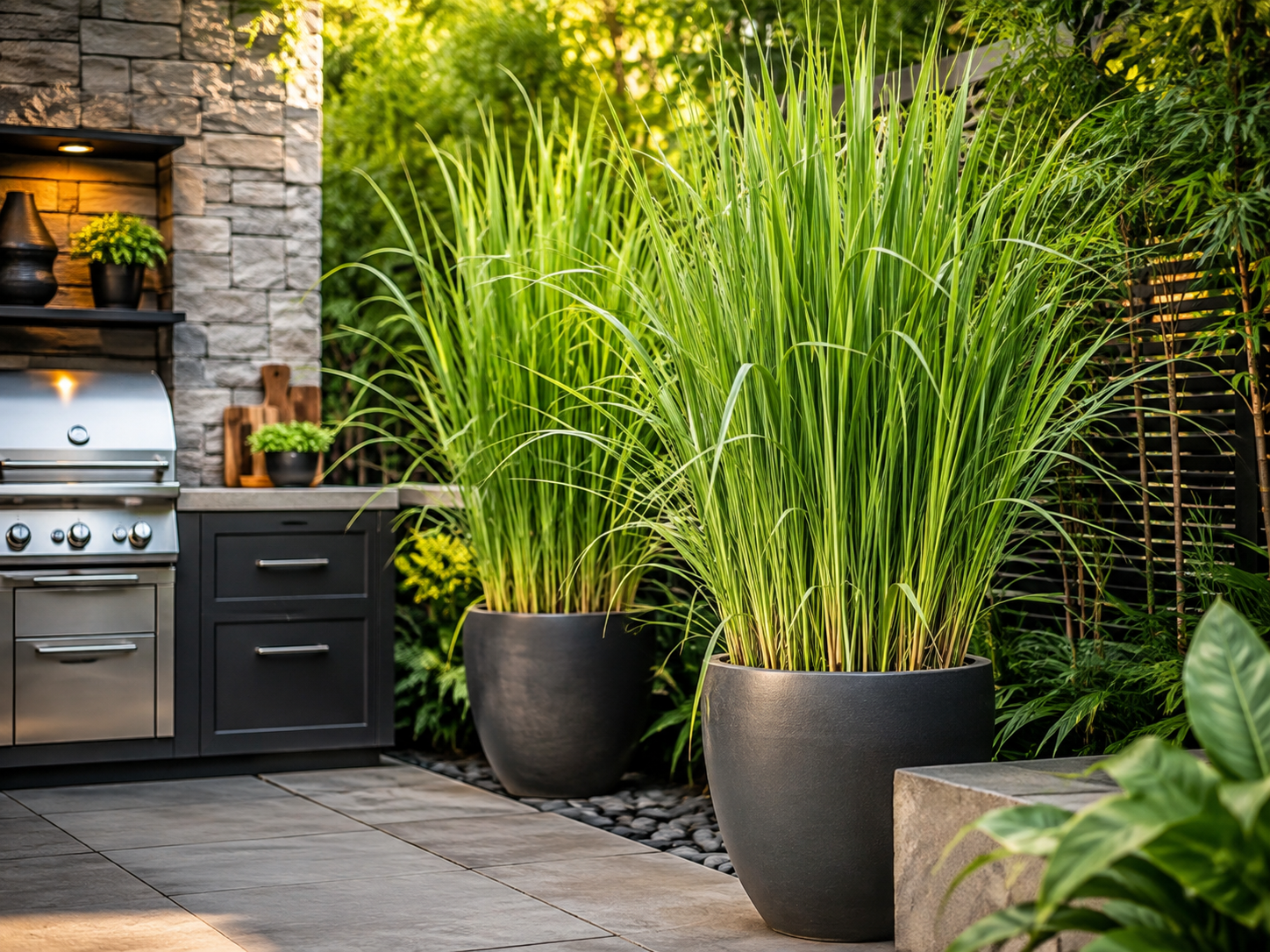
Lemongrass is closely related to citronella grass and provides a similarly fresh, citrusy fragrance.
Its tall, arching blades make it useful both as an ornamental plant and as an edible herb. Mississippi State Extension notes the relationship between citronella and lemongrass while highlighting lemongrass as the more useful option for cooking.
Lemongrass oil is also among botanical ingredients permitted in certain minimum-risk pesticide products in the United States.
For a stylish patio, grow lemongrass in a large terracotta, concrete, or matte-black container.
Its height can help frame a seating area while adding a relaxed tropical look.
You can also plant several together along the edge of a patio or outdoor kitchen. The repeating grasses create a more intentional landscape than scattering unrelated pots throughout the space.
Because lemongrass is useful in cooking, it works particularly well close to an outdoor kitchen or grill area.
Its combination of fragrance, greenery, and culinary usefulness makes it one of the most practical plants on this list.
3. Rosemary
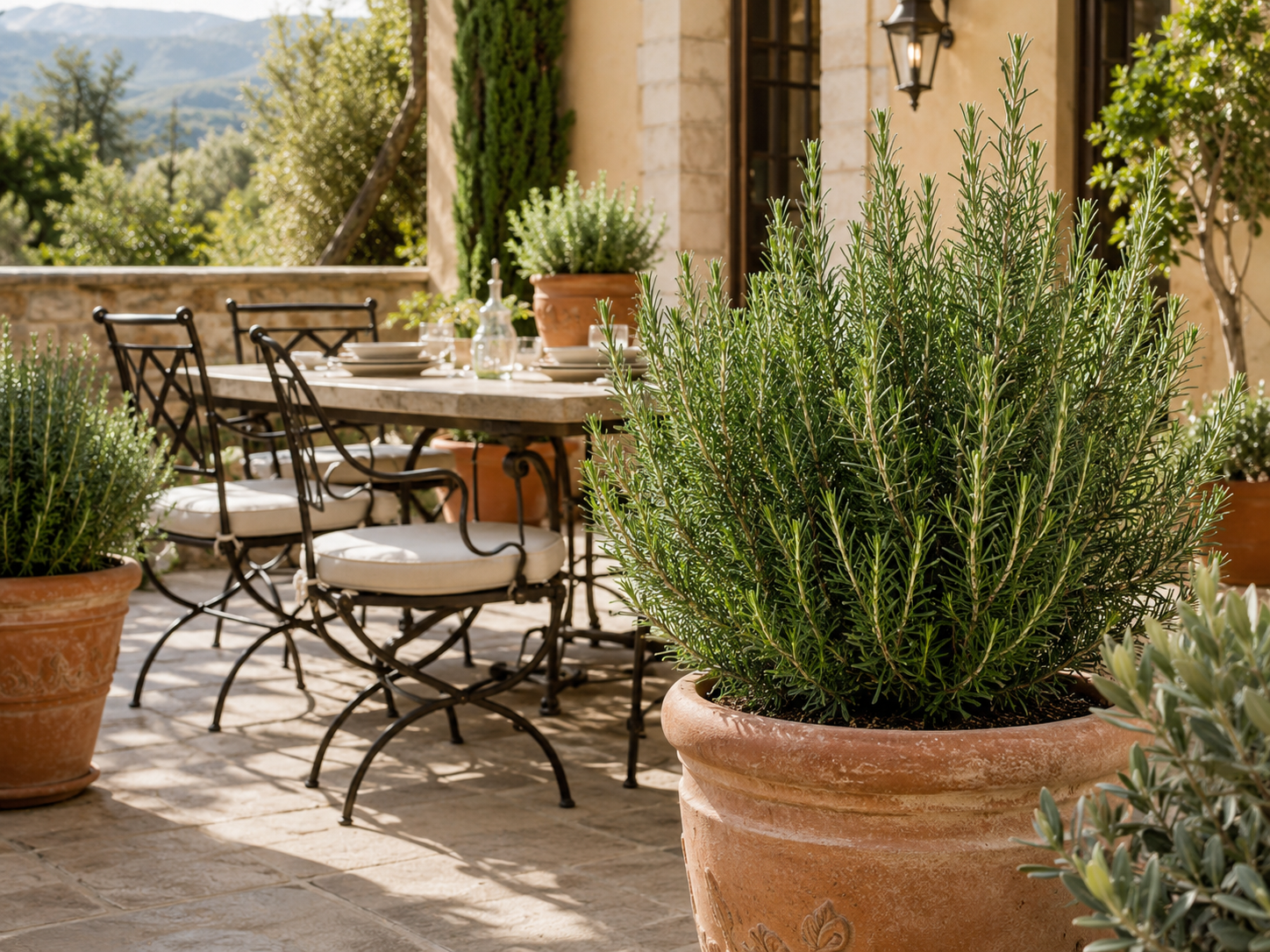
Rosemary is another aromatic plant worth using around outdoor living areas.
Its narrow leaves release a distinctive herbal fragrance when the stems are touched or trimmed. Rosemary oil is among botanical ingredients used in some minimum-risk pest-control formulations.
From a decorating perspective, rosemary has another advantage: it looks sophisticated.
A mature rosemary plant in a terracotta pot can give a patio a Mediterranean-inspired appearance. It pairs beautifully with stone flooring, warm wood furniture, linen cushions, and olive or citrus trees.
Place one near an outdoor dining table or kitchen so fresh sprigs are easy to reach while cooking.
You can also use several rosemary plants to create a low aromatic border around a sunny seating area.
Instead of mixing many different container styles, use matching terracotta or neutral ceramic pots. Repetition makes an outdoor space look more polished and expensive.
Even if you are primarily growing rosemary for cooking and decoration, its strong aroma makes it a logical addition to a garden designed around fragrant plants.
4. Mint
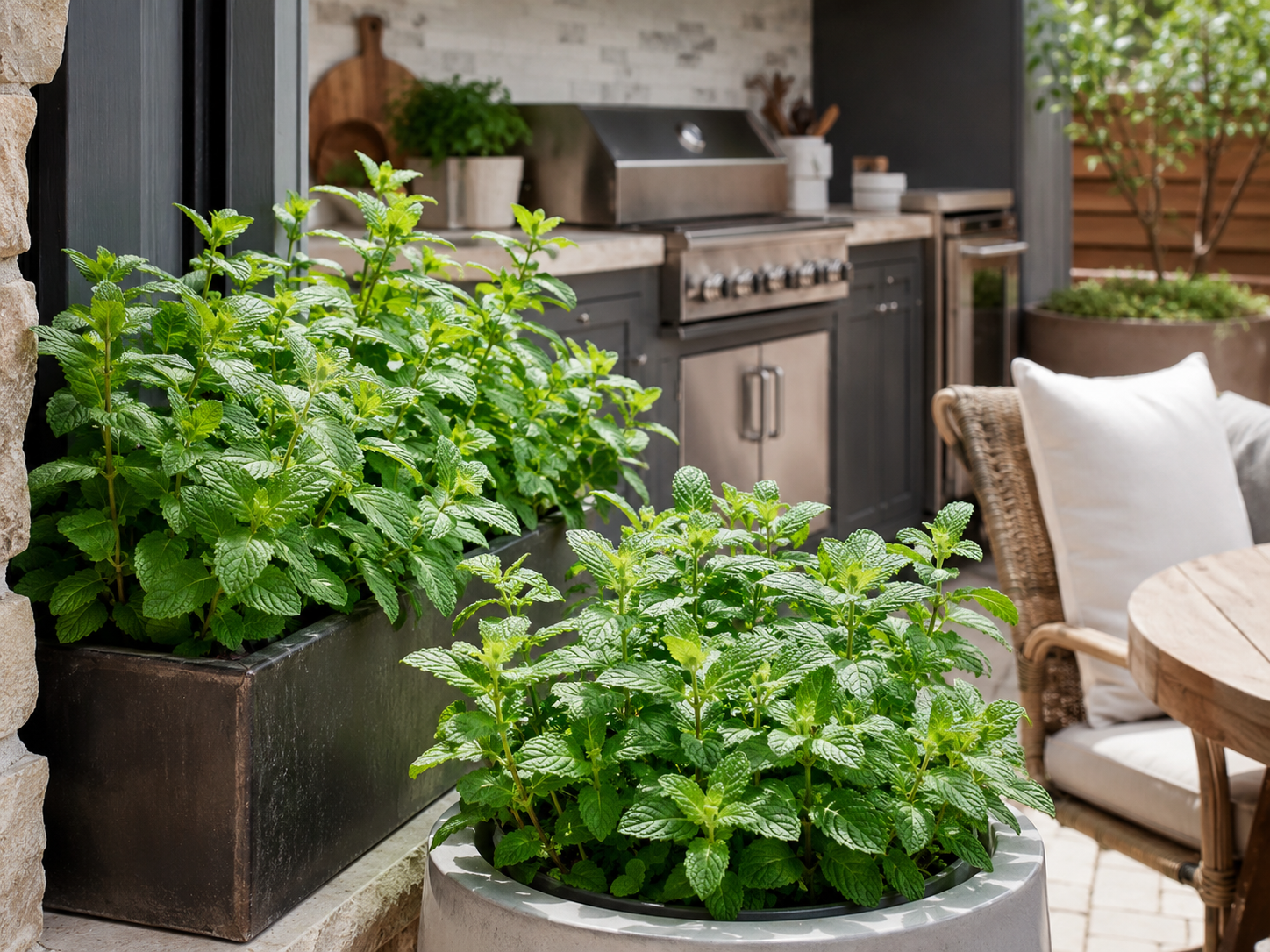
Mint provides one of the freshest fragrances you can bring into a patio garden.
Peppermint and spearmint oils are among botanical ingredients found in certain minimum-risk pest-control products.
Mint is especially convenient for outdoor kitchens because the leaves can also be used in drinks, desserts, salads, and other recipes.
Grow it in containers where the foliage is easy to reach. A small grouping of mint, rosemary, and other culinary herbs can create an attractive edible garden beside a dining area.
For a cleaner designer look, use matching pots and vary their heights rather than placing several identical small containers in one row.
Mint also works beautifully in window boxes or elevated planters where its foliage can spill gently over the sides.
Because aromatic leaves release more fragrance when touched or disturbed, placing herb containers near areas where you naturally interact with them can make their scents more noticeable.
The result is a patio that feels fresher and more connected to the garden.
5. Catnip
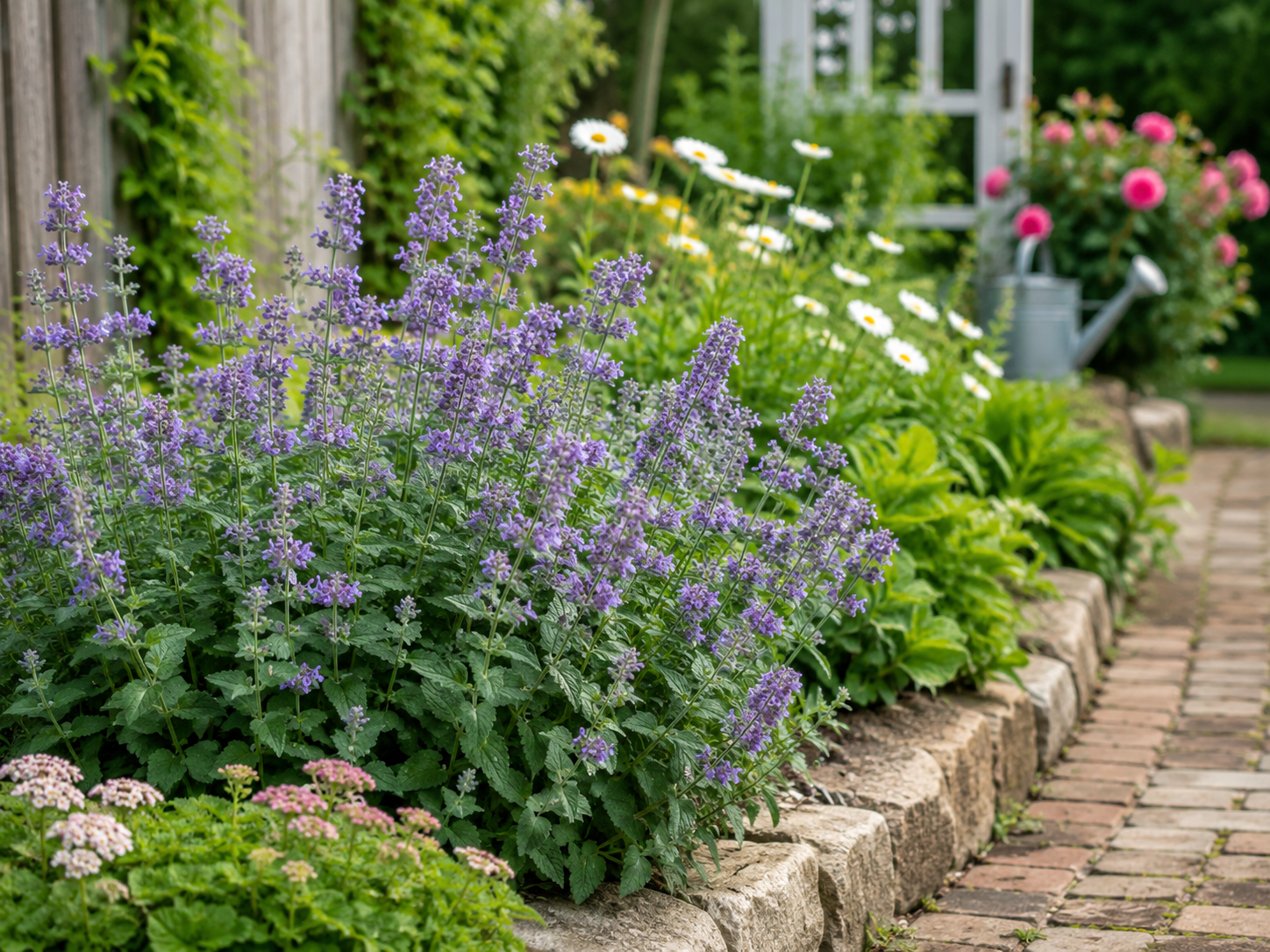
Catnip may be surprising, but it deserves a place on this list.
Catnip, or Nepeta cataria, contains aromatic compounds and catnip oil is currently listed by the EPA as an active ingredient in several registered skin-applied insect-repellent products.
That does not mean simply planting catnip around your chair provides the same protection as an EPA-registered formulation. The finished product has been specifically formulated and evaluated, while a living plant provides a much less controlled amount of aromatic compounds.
Still, catnip can be a useful garden plant if you like soft, natural-looking borders.
It works particularly well mixed with other herbs and flowering plants rather than displayed as a formal specimen.
Use it near garden edges, raised beds, or relaxed cottage-style planting areas.
If cats regularly visit your garden, remember that catnip may attract their attention, so choose its location accordingly.
For a more cohesive design, combine it with rosemary, ornamental grasses, and other textured foliage instead of filling the entire bed with one plant.
Where to Place These Plants Around Your Patio
Placement can make these plants more useful from a decorating perspective.
Concentrate aromatic plants near the places where you actually spend time: outdoor dining tables, lounge chairs, porches, patios, and outdoor kitchens.
Place larger plants such as citronella grass or lemongrass toward the back of an arrangement.
Use medium-height rosemary in the middle, then smaller mint or catnip plants toward the front.
This creates layers and makes a simple collection of herbs look like intentional landscaping.
You can also place tall containers on either side of a patio entrance to create symmetry.
Avoid covering the entire patio with tiny pots. A few larger, healthy plants generally create a more attractive and organized result.
The Biggest Mosquito-Control Mistake
One of the biggest mistakes is assuming that mosquito-repellent plants alone will solve a mosquito problem.
They will not.
Mosquitoes reproduce in standing water, so controlling breeding areas around the home is extremely important. The CDC recommends checking water-holding containers weekly and emptying, scrubbing, covering, turning over, or removing items such as buckets, toys, birdbaths, pools, tires, and flowerpot saucers.
Pay particular attention to saucers underneath your beautiful new patio plants.
Water that remains inside them can create exactly the type of standing-water environment you are trying to avoid.
Also check gutters, fountains, outdoor containers, children’s toys, and any low areas where rainwater collects.
Do Mosquito-Repellent Plants Really Work?
This is where it is important to separate an attractive gardening idea from proven personal protection.
Certain plant-derived oils are used in insect repellents, and citronella oil and catnip oil appear in EPA-registered products. However, simply growing aromatic plants in a yard has not been shown to offer the same reliable protection as a formulated repellent.
For protection from mosquito bites and mosquito-borne illnesses, the CDC recommends EPA-registered repellents with proven active ingredients such as DEET, picaridin, IR3535, oil of lemon eucalyptus, PMD, or 2-undecanone.
Think of aromatic plants as one attractive part of your outdoor environment—not as your only mosquito defense.
How to Create a Beautiful Mosquito-Smart Patio
Start by removing standing water.
Then create an attractive arrangement of fragrant plants around your outdoor living space.
Use one or two large containers of citronella grass or lemongrass to provide height.
Add rosemary beside the dining area and mint near the outdoor kitchen.
Use coordinated planters so the patio still feels elegant rather than looking like a collection of random herb pots.
You can also improve airflow around seating areas. Extension guidance notes that mosquitoes favor still, shady areas, so moving air can be another useful part of your outdoor setup.
Finally, use appropriate personal mosquito protection whenever bites or mosquito-borne disease are a concern.
Final Thoughts
Citronella grass, lemongrass, rosemary, mint, and catnip are five aromatic plants that can make a patio or garden feel greener, fresher, and more enjoyable.
Their scents and plant-derived oils explain why these plants are frequently connected with mosquito-repellent gardening.
But the smartest approach is not relying on the plants alone.
Combine attractive aromatic planting with eliminating standing water, improving airflow, and using proven mosquito protection when necessary.
That way, your patio can look beautiful while also being designed with mosquito control in mind.


