
 Salud al Limite

Kitchen design in 2026 feels warmer, more personal, and more connected to the rest of the home.
Instead of kitchens that look overly perfect or completely sterile, current design direction is moving toward natural materials, richer colors, smarter storage, tactile finishes, and spaces that feel comfortable enough for everyday living. Warm whites, earthy neutrals, greens, and browns are especially visible this year, while designers are also embracing more expressive stone, characterful furniture, and practical storage.
The good news is that you do not need to completely renovate your kitchen to update its style.
Many of the strongest ideas can be introduced through paint, lighting, stools, hardware, shelving, textiles, artwork, and countertop styling.
Whether your kitchen is large, small, modern, traditional, or somewhere in between, these 24 ideas can help make it feel more current, comfortable, and beautifully designed.
1. Replace Stark White With Warm Neutrals
Bright white kitchens are not disappearing, but warmer versions of neutral interiors feel especially appropriate in 2026.
Think creamy white, soft beige, mushroom, taupe, oatmeal, and warm greige.
These shades make a kitchen feel softer while still creating a bright and timeless foundation.
If replacing cabinetry is unrealistic, repainting the walls can be enough to shift the entire atmosphere.
Warm neutrals also pair beautifully with wood, stone, brass, bronze, black, and stainless steel.
For a layered look, avoid choosing the exact same neutral for every surface. Use slightly different shades on the walls, cabinets, tile, and textiles.
2. Bring More Natural Wood Into the Kitchen
Wood is one of the easiest ways to prevent a kitchen from feeling cold.
You can introduce it through cabinetry, a kitchen island, open shelving, stools, cutting boards, flooring, or smaller decorative pieces.
Medium and darker woods can add especially beautiful contrast to cream or beige kitchens.
Do not feel that every wood tone has to match perfectly.
A walnut island can work with oak flooring, for example, as long as the undertones feel harmonious.
If you already have an all-white kitchen, even a few substantial wood accessories can make the room feel warmer.
3. Try Soft Green Cabinetry
Green continues to be a beautiful kitchen color because it feels natural without being completely neutral.
For 2026, muted and earthy greens are especially easy to work with.
Consider olive, sage, moss, eucalyptus, or a deep forest green.
Use green on all the cabinetry for a stronger statement, or paint only the island if you want a smaller commitment.
Green works particularly well with natural wood, cream stone, aged brass, and warm white walls.
Keep the surrounding palette controlled so the cabinetry remains the focal point.
4. Create a Two-Tone Kitchen
Using two finishes can make cabinetry feel more custom.
One simple approach is to keep upper cabinets light and use a deeper shade on the lower cabinets.
You could also use one color around the perimeter and another on the island.
Cream and walnut, warm white and olive, beige and dark wood, or soft taupe and burgundy can all create interesting combinations.
The goal is not to create a sharp division.
Repeat elements from both finishes elsewhere in the kitchen so the design feels connected.
5. Make the Island the Main Feature
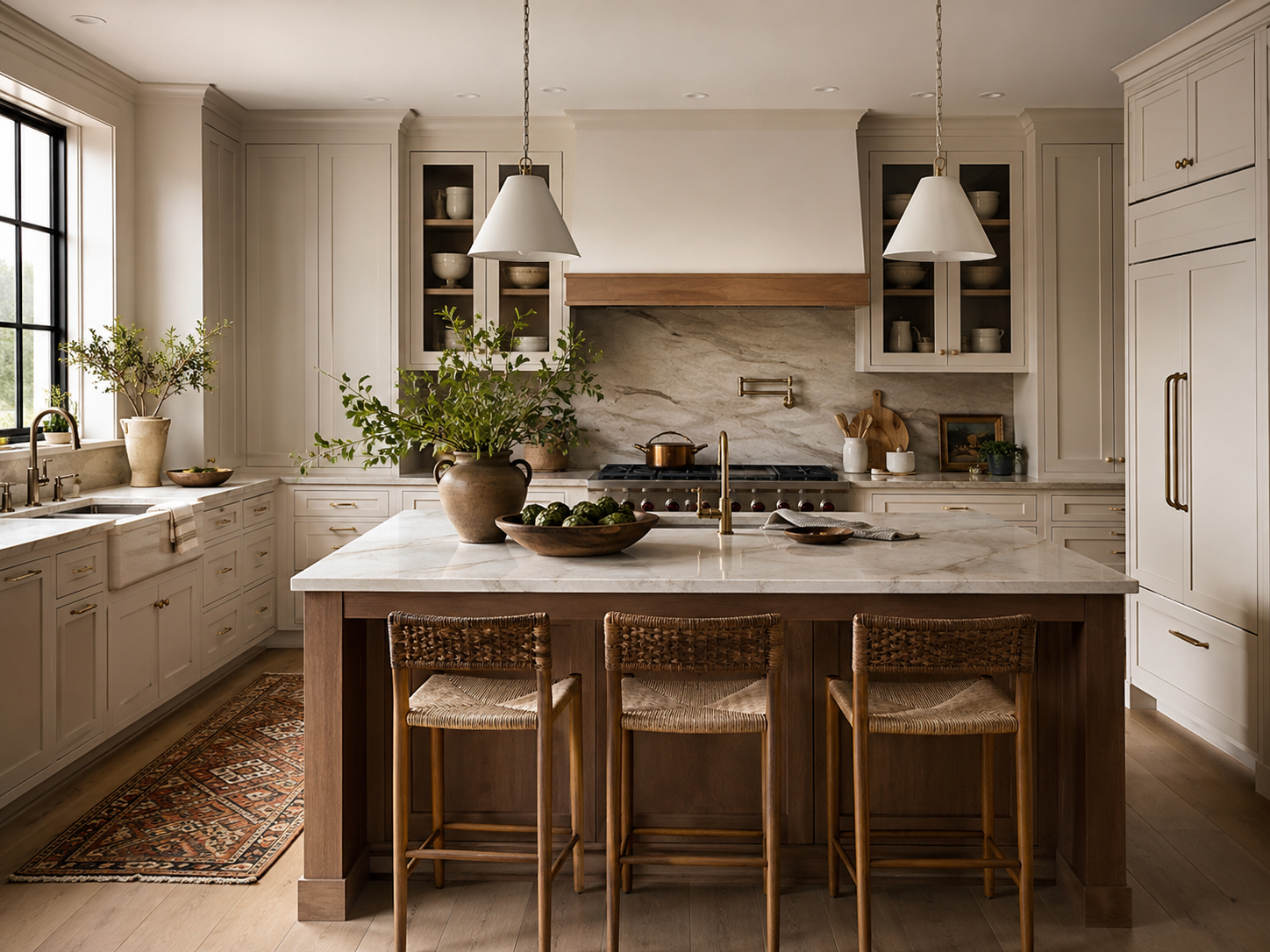
Instead of treating the kitchen island as simply another cabinet, allow it to become the visual center of the room.
Use a contrasting color, beautiful wood, fluted detailing, interesting stone, or decorative paneling.
If the island is already attractive, avoid covering the entire surface with decorations.
A large bowl, vase of branches, or simple tray may be enough.
Make sure there is still plenty of clear space for preparing food and everyday use.
A beautiful island should remain functional.
6. Use Statement Stone Strategically
Stone is becoming more expressive in kitchens.
Rather than relying only on quiet white surfaces, designers are experimenting with stronger veining, deeper colors, and stones that naturally create visual movement. Architectural Digest highlighted earthy and dusky-red stone among notable kitchen directions in 2026.
You do not need dramatic stone on every surface.
Use it on an island, backsplash, countertop, or small coffee station.
When the stone has a strong pattern, keep nearby decorative accessories relatively simple.
This allows the natural material to become the artwork.
7. Extend the Countertop Material Up the Wall
A slab backsplash can create a clean and luxurious appearance.
Using the same stone or countertop material vertically eliminates some grout lines and visually connects the work surface with the wall.
This approach works particularly well behind a range or sink.
For a more affordable version, use the slab only in one focal area and keep the remaining backsplash simpler.
Choose a material with enough visual interest that it does not require additional decoration.
8. Add Character With Handmade Tile
Perfectly uniform tile is not the only option.
Slightly irregular ceramic tiles, zellige-inspired finishes, hand-painted patterns, and textured surfaces can make a kitchen feel more personal.
The variation in shape and surface catches light differently throughout the day.
If you love patterned tile but worry about making the kitchen too busy, use it in a small pantry, coffee area, or behind open shelving.
For a quieter look, choose handmade-style tile in a single neutral shade.
9. Consider Stone or Textured Flooring
Kitchen floors are becoming another opportunity to add character.
Tumbled limestone, travertine, patterned tile, natural stone, and wide-plank wood can introduce texture and warmth. Designers interviewed by House Beautiful identified stone, mixed-stone mosaics, and softer matte wood flooring among notable 2026 directions.
If replacing the floor is not realistic, introduce similar warmth through a washable runner.
A rug can soften the room while adding pattern and helping define areas such as the sink, range, or breakfast zone.
10. Layer the Lighting
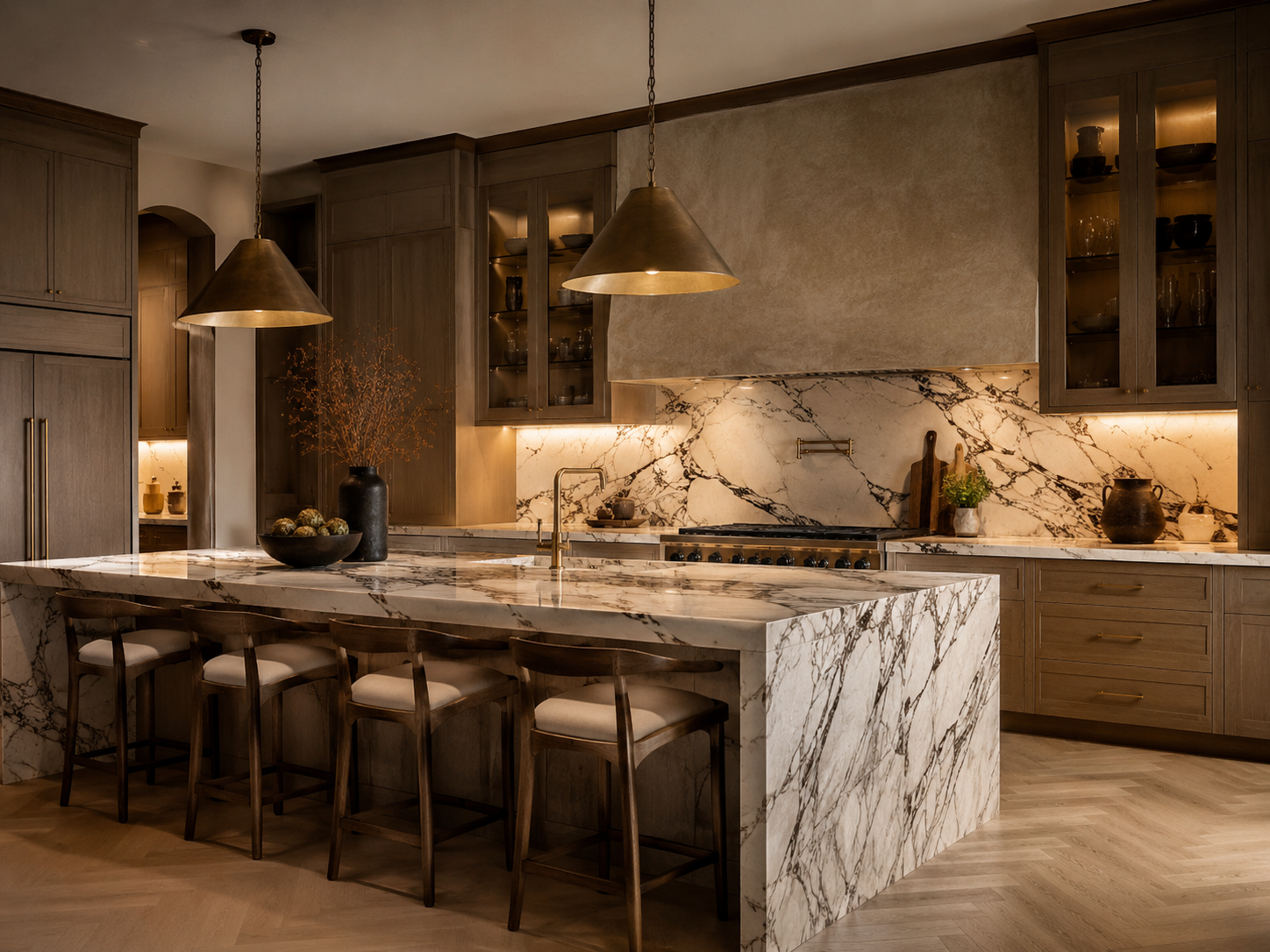
One ceiling light rarely creates the most flattering kitchen.
Use several types of lighting for different purposes.
Pendant lights can highlight an island, under-cabinet lighting helps with food preparation, sconces add atmosphere, and ceiling fixtures provide general illumination.
Layered lighting is also recommended by designers as a way to make kitchens transition more comfortably from practical daytime use to a softer evening atmosphere.
Whenever possible, use warm-toned bulbs rather than harsh blue-white lighting.
The room will immediately feel more inviting.
11. Use More Decorative Light Fixtures
Kitchen lighting does not have to look purely functional.
A beautiful pendant, small chandelier, ceramic fixture, or fabric-shaded lamp can make the room feel connected to the rest of the home.
Choose fixtures based on the scale of the room.
Tiny pendants can look lost above a large island, while oversized fixtures may overwhelm a compact kitchen.
You can also place a small lamp on a countertop in a safe location away from water and cooking heat.
It creates a surprisingly cozy atmosphere after dark.
12. Add an Appliance Garage
Countertop appliances are useful, but several of them displayed at once can create visual clutter.
An appliance garage allows commonly used items such as a toaster, blender, or coffee machine to remain accessible while disappearing when they are not needed.
Designers continue to emphasize clear countertops and hidden appliance storage as ways to make kitchens feel calmer and more polished.
If custom cabinetry is not possible, simply decide which appliances actually need to remain on display.
Store less frequently used pieces inside existing cabinets.
13. Introduce a Freestanding Larder
One of the more charming 2026 kitchen ideas is the return of the freestanding larder.
Unlike a standard built-in pantry, a larder can look more like a beautiful piece of furniture.
It can include drawers, shelves, door racks, spice storage, and spaces for dry goods while adding character to the kitchen.
Designers are embracing larders partly because they provide practical storage while making kitchens feel less rigidly fitted and more collected over time.
Paint one the same color as the cabinetry for a seamless appearance, or choose a contrasting shade to create a focal point.
14. Use Furniture-Style Storage
Not everything in a kitchen needs to look like traditional cabinetry.
A vintage cupboard, hutch, narrow sideboard, or freestanding cabinet can provide extra storage while making the room feel more personal.
This is especially useful in kitchens with an empty wall.
Use the piece for dishes, linens, serving pieces, cookbooks, or pantry items.
Make sure its scale works with the room.
One substantial furniture piece will usually look better than several small storage units.
15. Style Open Shelves Carefully
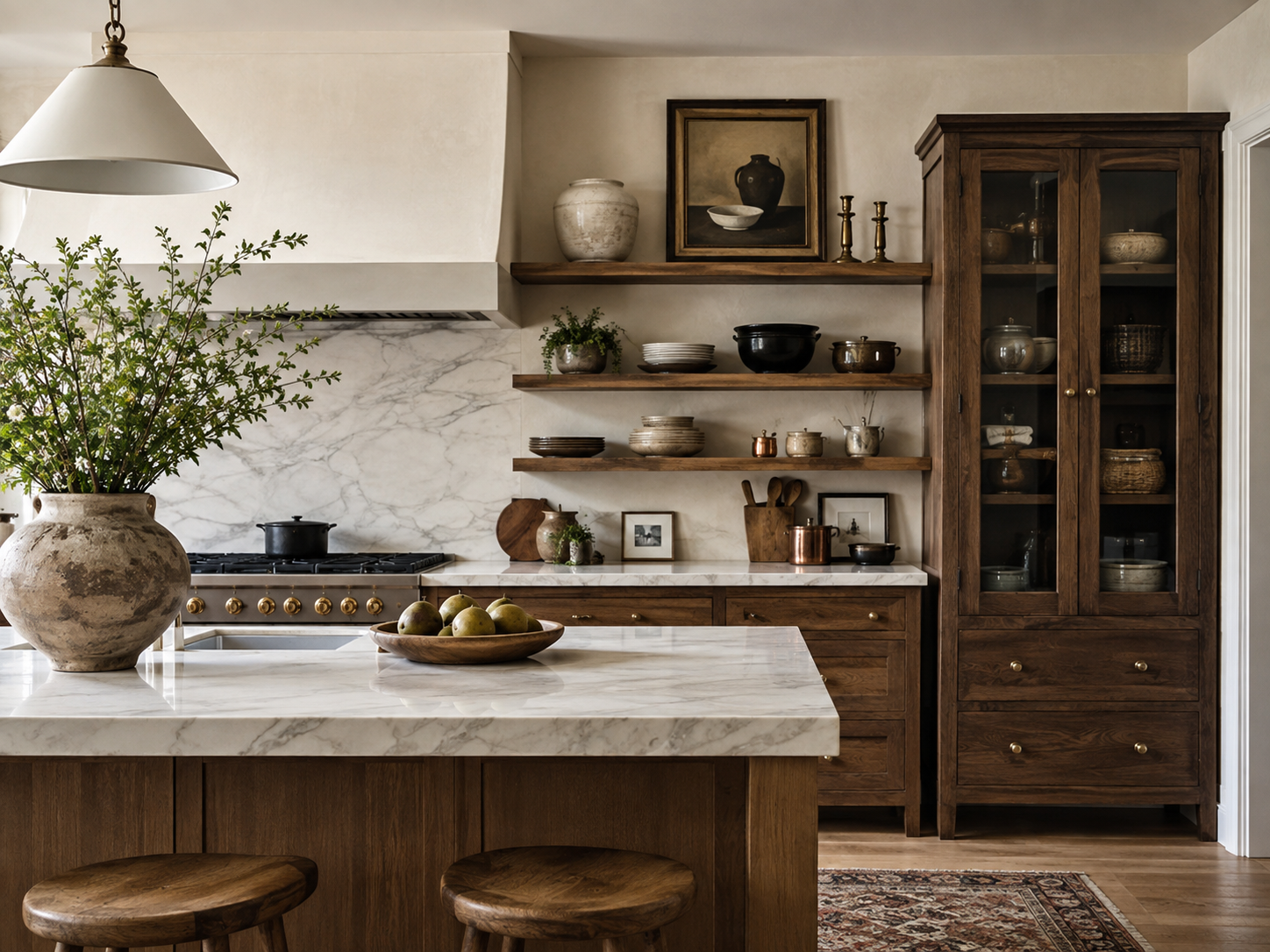
Open shelving can still look beautiful when it is edited.
Avoid turning shelves into storage for every mismatched dish in the kitchen.
Choose items that share similar tones or materials.
For example, combine cream ceramics, clear glass, a few wooden boards, and one small piece of artwork.
Designers recommend maintaining cohesion in color, scale, and material so open shelves read as an intentional collection rather than clutter.
Leave some empty space around the objects.
Not every inch needs to be filled.
16. Display Beautiful Everyday Objects
Useful objects can become part of the decor.
A wooden cutting board, ceramic utensil holder, fruit bowl, linen towel, or attractive salt container can remain visible without making the room feel cluttered.
The trick is choosing everyday pieces that coordinate with the overall kitchen.
If you have several brightly colored packages, plastic bottles, and unrelated containers on the counter, the space can quickly feel visually busy.
Decanting frequently used products into simple containers can create a cleaner look.
17. Add Art That Does Not Look Like Kitchen Art
Your artwork does not need to feature lemons, wine bottles, or cooking utensils simply because it hangs in a kitchen.
Treat the kitchen like any other living space.
Consider a vintage landscape, abstract painting, botanical print, small portrait, or photograph.
Current designer advice increasingly treats the kitchen as a living space deserving meaningful, collected artwork rather than purely themed decoration.
One beautiful piece can add more personality than several generic signs.
18. Introduce Vintage or Antique Details
A completely new kitchen can sometimes feel too perfect.
Vintage pieces introduce age and character.
Try an antique stool, aged brass tray, old painting, vintage pottery, wooden breadboard, or traditional cabinet.
You do not need to turn the entire room into a vintage kitchen.
One or two older elements can create enough contrast against modern cabinetry and appliances.
Choose pieces you genuinely like rather than buying something simply because it looks old.
19. Upgrade the Cabinet Hardware
Changing handles and knobs can refresh cabinetry without repainting or replacing it.
Aged brass, unlacquered brass, bronze, polished nickel, dark metal, and ceramic hardware can all create very different effects.
Consider the cabinet style before choosing.
Simple cabinetry can handle more decorative hardware, while detailed cabinets may look better with understated pulls.
Do not feel every piece of metal in the kitchen has to match exactly.
Two complementary finishes can create a layered appearance.
20. Make the Range Hood Part of the Design
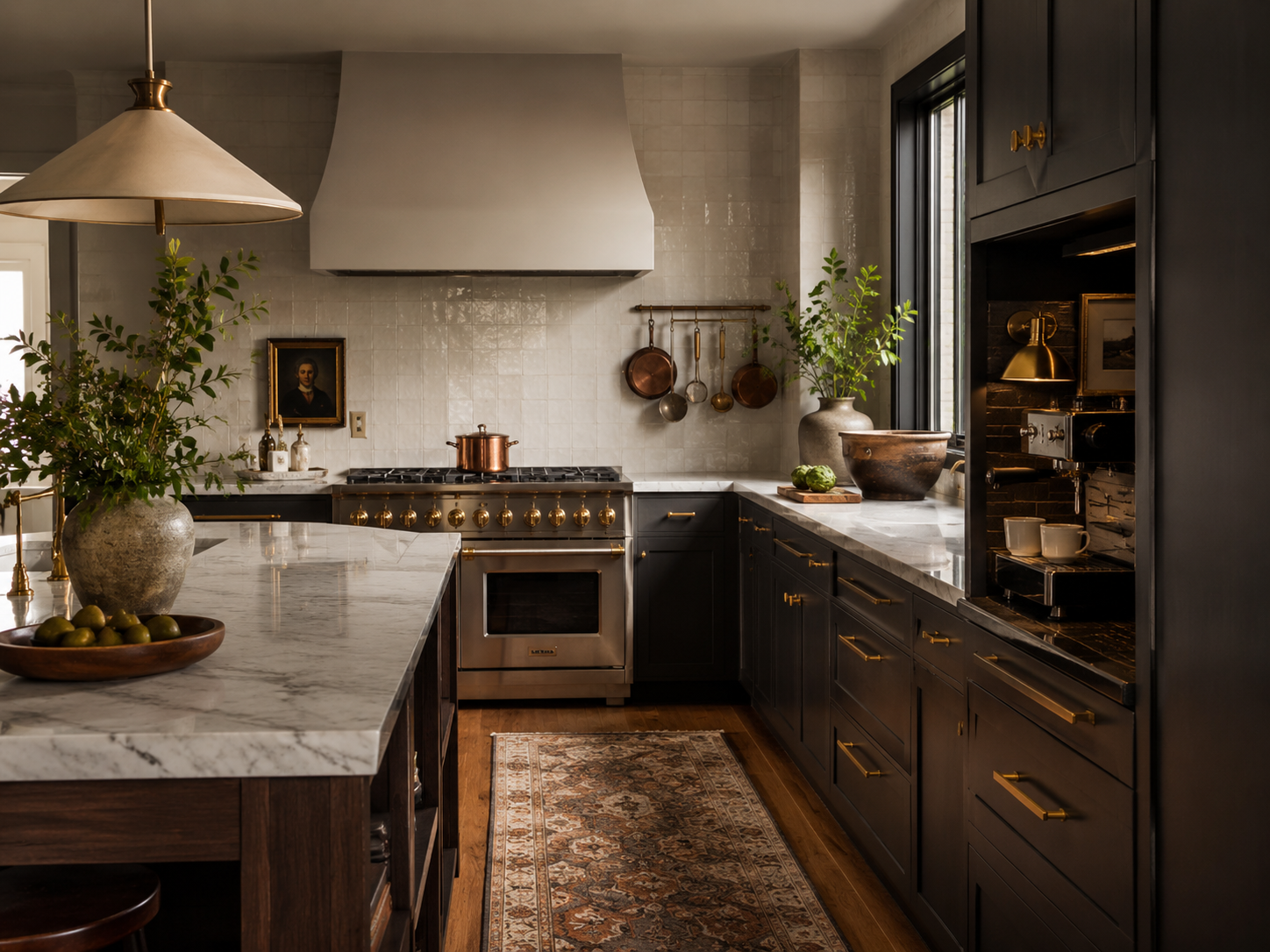
The range hood occupies a highly visible position, so treat it as an architectural feature.
Cover it in plaster, stone, wood, painted cabinetry, or another finish that connects with the kitchen.
For a softer look, match the hood to the wall.
For stronger contrast, use a material or color already present on the island.
Keep the proportions balanced with the range beneath it.
An oversized hood can become dramatic, but it should not overwhelm the rest of the kitchen.
21. Add a Small Breakfast or Coffee Zone
Creating separate zones makes a kitchen easier to use and style.
Dedicate one small area to coffee, tea, or breakfast.
Use a tray to group the coffee machine, mugs, sugar container, and other essentials.
If cabinetry allows, hide the entire station behind doors when it is not in use.
This prevents commonly used items from spreading across several countertops.
A defined zone also makes the kitchen look more organized.
22. Add Soft Textiles
Kitchens contain many hard surfaces, including stone, tile, metal, glass, and cabinetry.
Textiles provide contrast.
Use a Roman shade, café curtain, linen towel, seat cushion, washable runner, or upholstered barstool.
Keep fabrics away from open flames and areas where they may become heavily splashed.
Repeating one color from the cabinetry or artwork in the textiles can help connect the entire room.
23. Bring in Greenery or Fresh Branches
Plants and branches soften the straight lines of cabinetry.
A vase of leafy branches on the island can create a strong visual feature without requiring several decorative objects.
Small herbs work well near a sunny kitchen window.
If you have limited counter space, keep the greenery simple.
One larger arrangement will often create more impact than several tiny plants scattered around the room.
Choose plants based on the actual light conditions rather than appearance alone.
24. Leave Some Space Empty
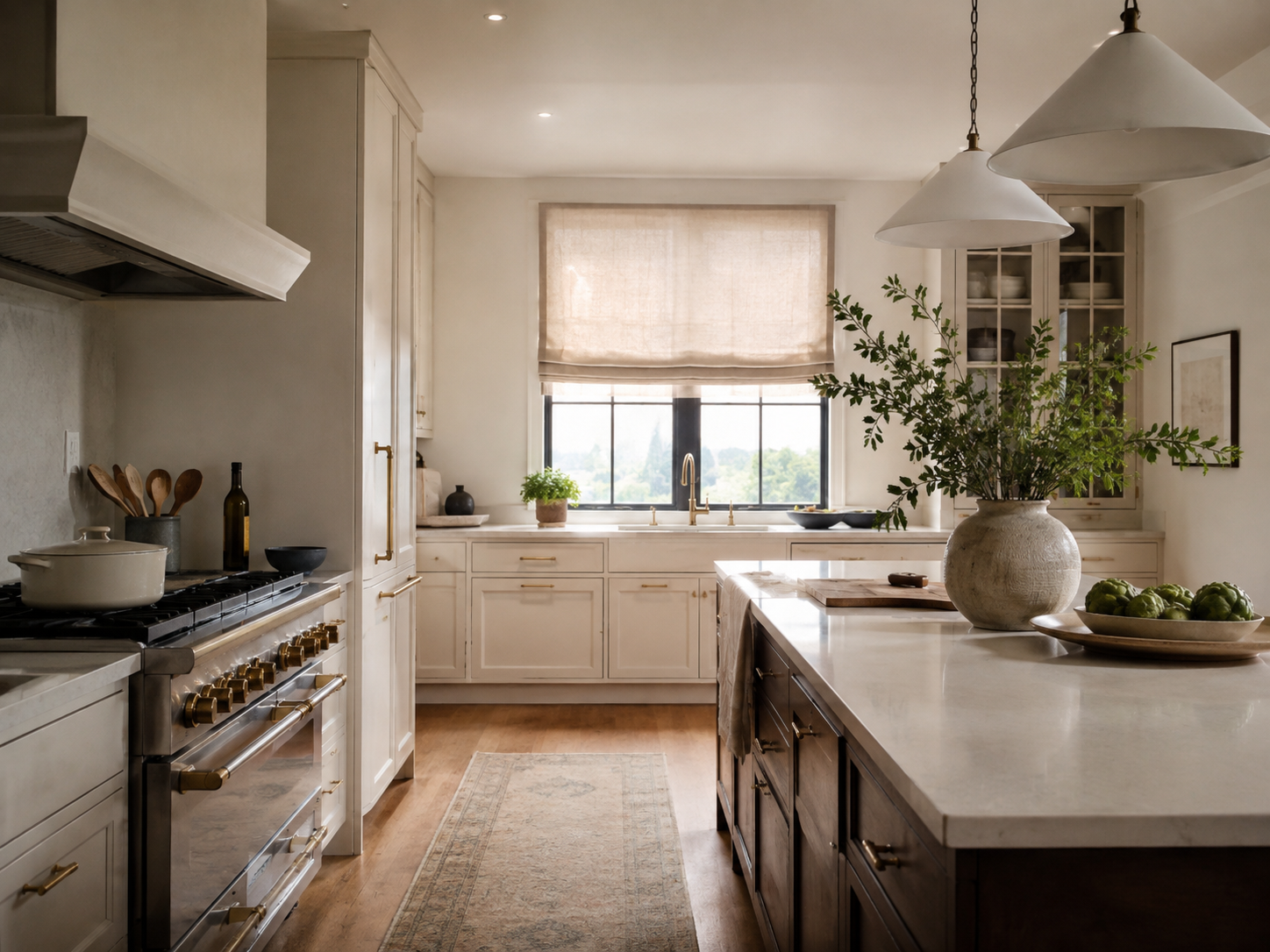
One of the easiest ways to make a kitchen look more polished is to stop decorating before every surface is full.
Leave sections of the countertop completely clear.
Do not place artwork on every wall or accessories on every shelf.
Designers emphasize negative space and clear counters because visually calm kitchens tend to feel more intentional and elevated.
Choose fewer pieces and give them enough room to stand out.
This approach is especially important in a small kitchen, where too many accessories can make the room appear even smaller.
How to Make Your Kitchen Look More Expensive in 2026
Start with the elements that create the most visual impact.
Clear unnecessary items from the countertops, replace dated hardware, improve the lighting, and introduce one or two substantial natural materials.
Wood, stone, ceramic, linen, and aged metal can add depth even when used in small amounts.
Do not try to make everything a statement.
If the backsplash is dramatic, keep the countertop styling simple. If the cabinetry has a strong color, allow quieter walls and flooring to balance it.
Consistency usually looks more expensive than excess.
How to Update Your Kitchen Without Renovating
You can embrace many 2026 kitchen ideas without removing cabinets or replacing countertops.
Start with paint.
Changing the walls from cool gray to warm beige, cream, or a muted earthy shade can immediately transform the atmosphere.
Next, change the cabinet hardware and introduce more flattering lighting.
Add a washable runner, wooden accessories, one piece of artwork, and a few coordinated countertop items.
If you have open shelving, restyle it with fewer pieces.
You can also replace barstools or add a small freestanding cabinet to introduce a completely different material or color.
These smaller changes can make an existing kitchen feel noticeably more current.
Kitchen Styling Mistakes to Avoid
Avoid following every trend at the same time.
A kitchen with dramatic stone, colorful cabinetry, patterned tile, several metal finishes, statement lighting, open shelving, and numerous accessories may become visually overwhelming.
Choose the ideas that work naturally with what you already have.
Do not sacrifice practical storage simply to create a certain aesthetic.
Avoid overcrowding countertops with decorative objects.
Do not choose lighting based only on appearance; the kitchen still needs enough illumination for cooking and cleaning.
And before investing in expensive finishes, consider how difficult they will be to maintain in your household.
The best kitchen should look beautiful while still making everyday life easier.
Final Thoughts
Kitchen style in 2026 is less about creating a perfectly uniform room and more about building a space that feels warm, functional, layered, and personal.
Warm neutrals, natural wood, green cabinetry, expressive stone, layered lighting, characterful storage, vintage details, art, textiles, and thoughtful organization can all help make a kitchen feel more current.
You do not need to use all 24 ideas.
Choose a few that complement the kitchen you already have and introduce them gradually.
Sometimes something as simple as changing the lighting, clearing the counters, adding wood, or painting the walls can make a surprisingly large difference.
The goal is not simply to create a trendy kitchen.
It is to create a kitchen that feels beautiful now, works well every day, and still feels like your home.


