
 Salud al Limite

Luxury living rooms in 2026 are becoming warmer, softer, and much more personal.
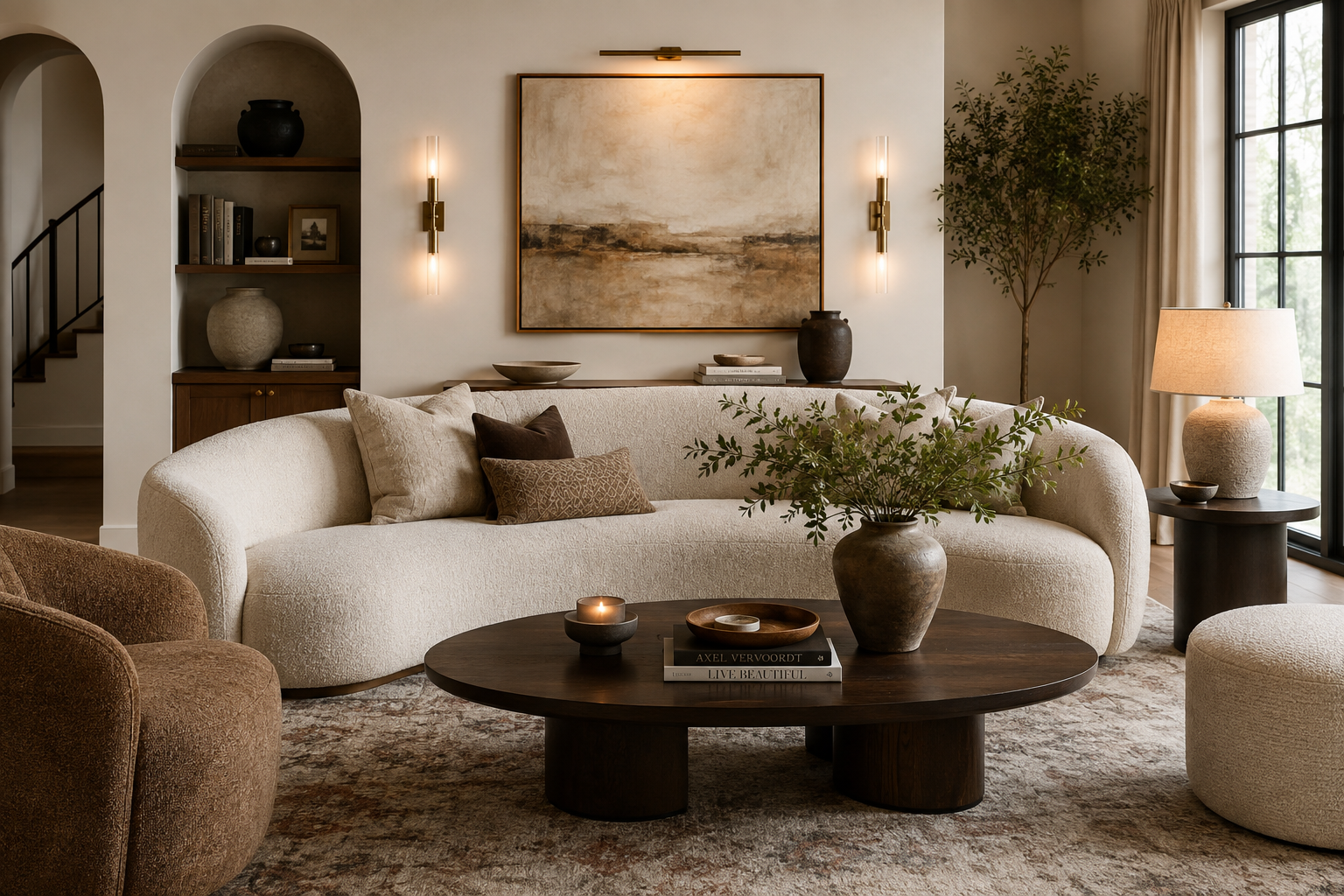
Instead of rooms that feel perfectly staged or dominated by cool gray and stark white, current interiors are moving toward richer materials, warmer neutrals, deeper wood tones, layered lighting, comfortable furniture, and objects that make a room feel collected over time. Homes & Gardens describes the broader 2026 shift as one toward interiors that feel personal, comforting, and full of soul, while cooler neutral living-room palettes are increasingly giving way to warmer alternatives.
The good news is that a luxurious living room does not require filling the space with expensive designer furniture.
Scale, texture, lighting, color, and careful styling often have a bigger impact than simply spending more money.
A substantial piece of artwork, beautifully proportioned sofa, elegant lamp, dark wood table, or carefully layered rug can completely change the appearance of a room.
Here are 10 luxury living room ideas for 2026 that can help your space feel sophisticated, comfortable, and beautifully designed.
1. Build the Room Around Warm Neutrals
Neutral living rooms remain timeless, but the most current versions feel warmer and richer.
Instead of cold gray or stark white, consider cream, oatmeal, mushroom, camel, warm taupe, soft beige, and chocolate-inspired tones.
Homes & Gardens reports that cooler whites and grays have been losing favor in 2026 living rooms, while softer, warmer neutrals remain relevant. House & Garden has similarly highlighted increasingly saturated browns among this year’s interior directions.
A warm neutral palette creates an elegant background without making the room feel empty.
Use several slightly different tones instead of matching everything exactly.
For example, combine cream walls with an oatmeal sofa, camel chair, dark brown table, and ivory curtains.
The subtle variation creates depth.
Then introduce black, brass, bronze, dark wood, or olive accents to keep the room from feeling flat.
2. Choose One Sculptural Sofa
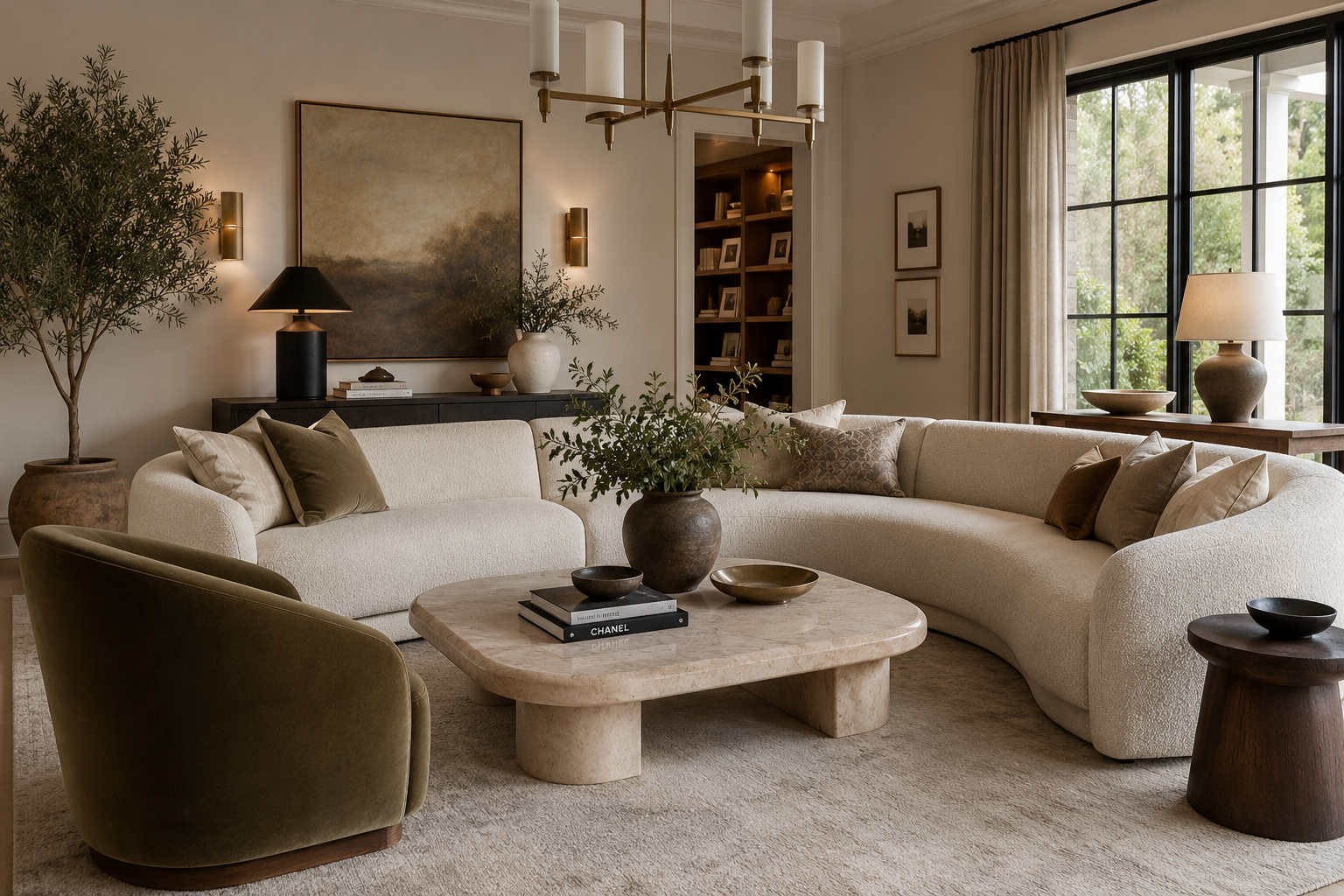
In a luxury living room, the sofa should feel intentional.
Curved and softer furniture forms continue to influence 2026 interiors, reflecting a wider move away from rigid shapes toward more fluid silhouettes.
A softly curved sofa, rounded sectional, or piece with generous upholstered arms can instantly make the room feel more sophisticated.
You do not need every piece of furniture to be curved.
In fact, the sofa often looks more impressive when contrasted with a rectangular coffee table, structured console, or architectural fireplace.
Choose upholstery with texture.
Bouclé, linen blends, velvet, brushed fabrics, and substantial woven materials can make a simple silhouette feel richer.
Keep decorative pillows controlled.
Instead of covering the entire sofa, use a few larger pillows in complementary textures and tones.
3. Introduce Dark Wood for Depth
Dark wood is one of the easiest ways to add richness to a living room.
Walnut, chocolate-stained oak, mahogany-inspired finishes, and other deep woods can create beautiful contrast against cream upholstery and lighter walls.
Current 2026 interiors are embracing richer woods and warmer palettes as part of the move away from overly pale, uniform spaces.
Use dark wood through a coffee table, side table, console, bookshelf, or vintage cabinet.
You do not need a matching furniture set.
A dark walnut coffee table can sit beside a lighter oak floor as long as the overall palette feels intentional.
The variation can actually make the room feel more collected and high-end.
4. Layer the Lighting Like a Luxury Hotel
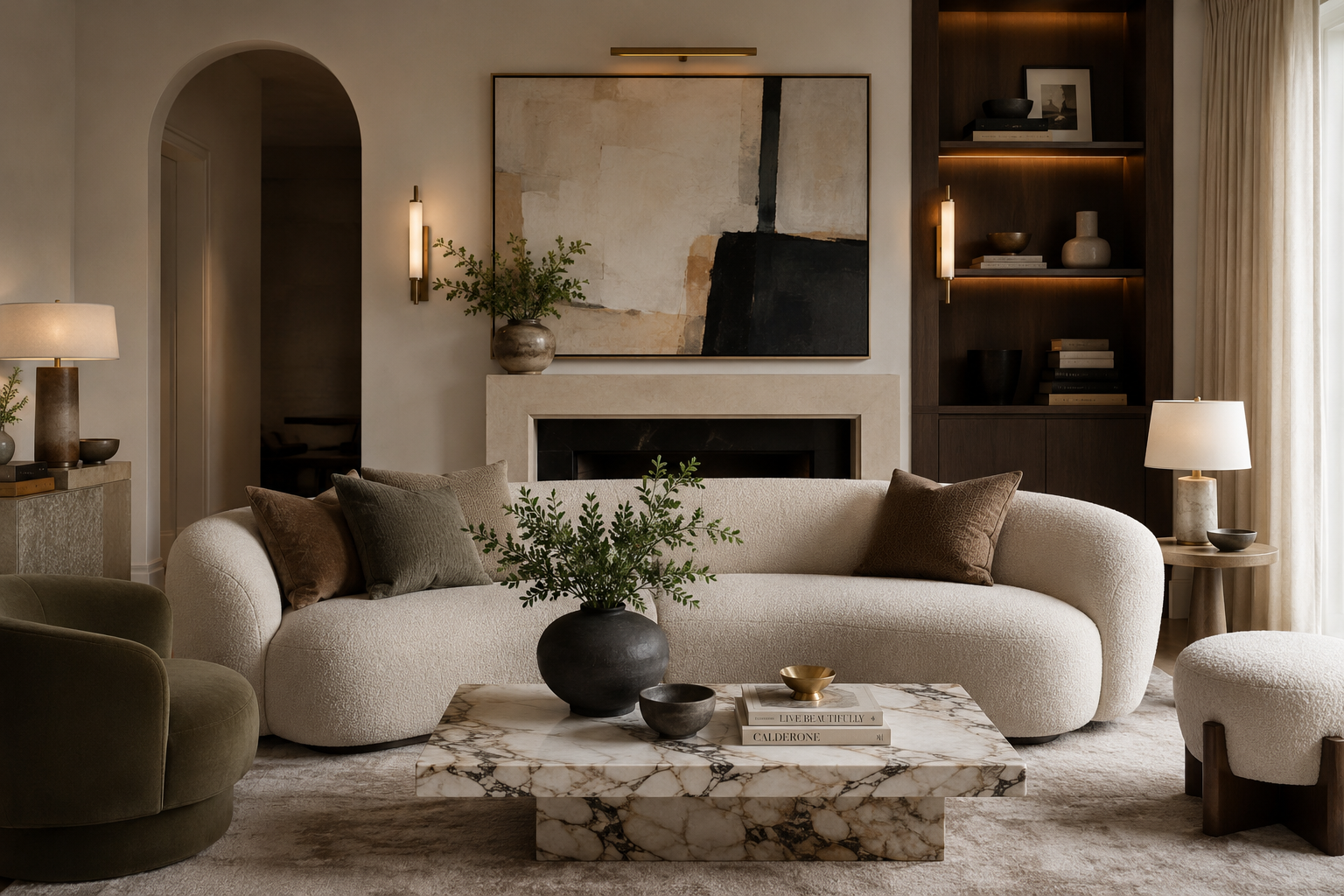
One ceiling fixture is rarely enough to create a luxurious atmosphere.
Use several sources of light throughout the living room.
Combine a statement ceiling fixture with table lamps, floor lamps, sconces, or picture lights.
Layered, ambient lighting remains an important part of current interiors because it allows a room to transition from functional daytime use to a softer atmosphere in the evening.
Use warm bulbs and place lighting at different heights.
A floor lamp near a reading chair, sconces beside artwork, and a ceramic lamp on a console can create much more depth than a row of bright recessed lights.
The fixtures themselves can also become decorative objects.
Brass, bronze, ceramic, stone, glass, and pleated shades can all introduce another layer of texture.
5. Make One Piece of Art the Focal Point
Luxury does not require covering every wall.
One oversized piece of artwork can create more impact than several unrelated decorations.
Hang a large painting above the sofa, console, fireplace, or sideboard.
Choose a frame with enough visual weight to complement the scale of the artwork.
Landscapes, abstract paintings, botanical pieces, and vintage-inspired art can all work.
The piece should connect with at least a few colors already present in the room.
If the artwork is dramatic, keep the surrounding wall relatively simple.
You can add a picture light or pair of sconces to make the display feel even more intentional.
Current 2026 design coverage increasingly emphasizes homes that feel personal and collected rather than generic, making art a particularly effective way to give a room identity.
6. Add Natural Stone in a Statement Piece
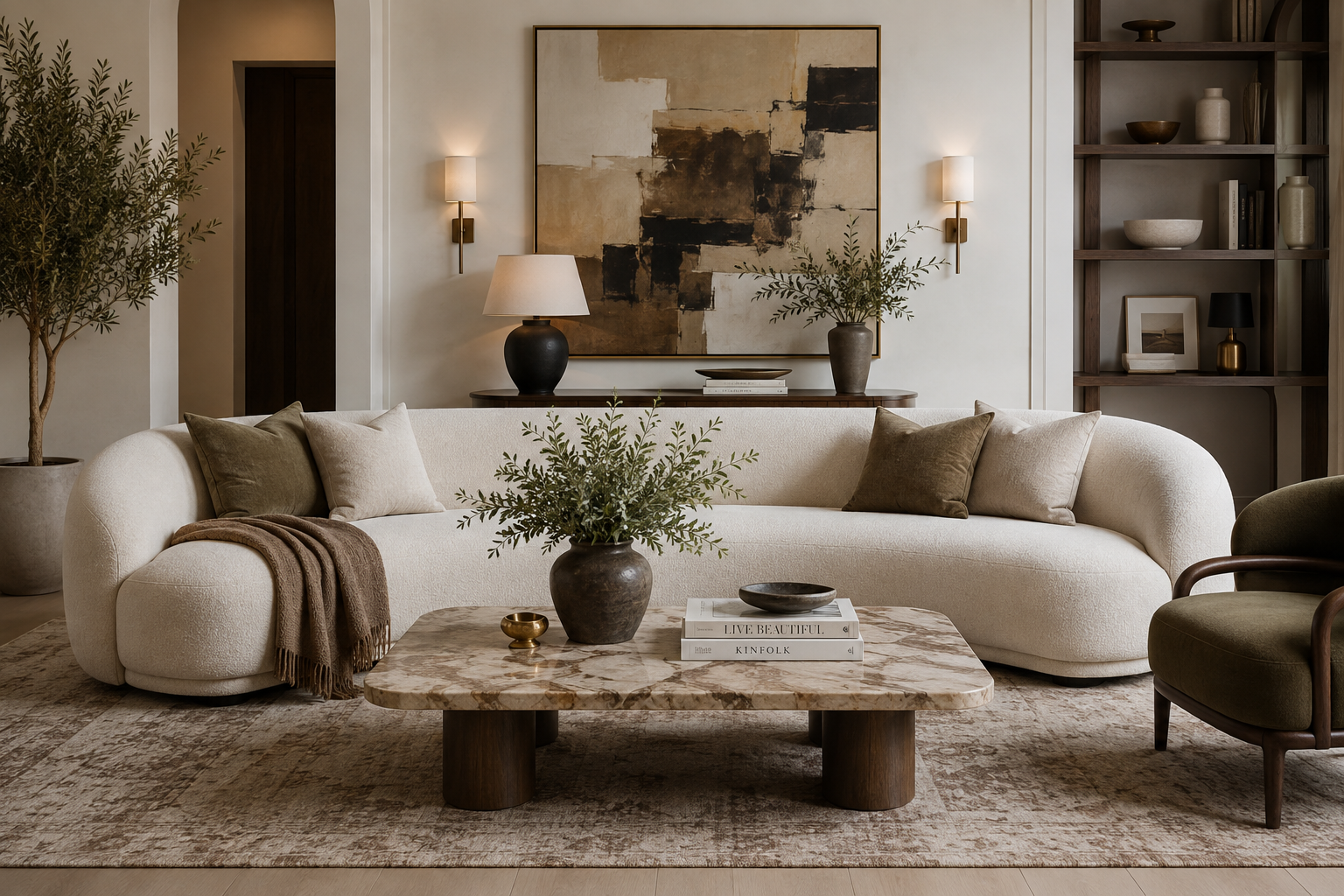
Stone immediately brings weight and permanence into a room.
You do not need an entire marble wall.
A substantial stone coffee table, fireplace surround, side table, pedestal, or sculptural accessory can be enough.
Look for marble, travertine, limestone, or stone-inspired finishes with visible movement.
Pair the harder surface with softer materials such as wool, linen, velvet, and upholstered seating.
This contrast prevents the room from feeling cold.
Natural materials and tactile surfaces are a recurring theme in 2026 interiors, alongside a broader interest in rooms that feel layered and materially rich.
If you already have a stone fireplace, allow it to become a major feature instead of surrounding it with too many decorative objects.
7. Mix Smooth and Textured Fabrics
Luxury rooms rarely rely on one texture.
Layer smooth upholstery with heavier woven fabrics, wool rugs, linen curtains, velvet pillows, or tactile throws.
Better Homes & Gardens identifies patterned and tactile textiles among notable 2026 design directions, reflecting the wider desire for interiors with more visual and physical depth.
Start with the largest pieces.
A neutral sofa and substantial rug create the foundation.
Then layer a velvet chair, textured pillows, linen drapery, or one patterned ottoman.
You do not need many colors when the textures are interesting.
A room decorated almost entirely in cream, brown, and olive can still feel rich when the surfaces are varied.
8. Use a Large Rug to Anchor the Furniture
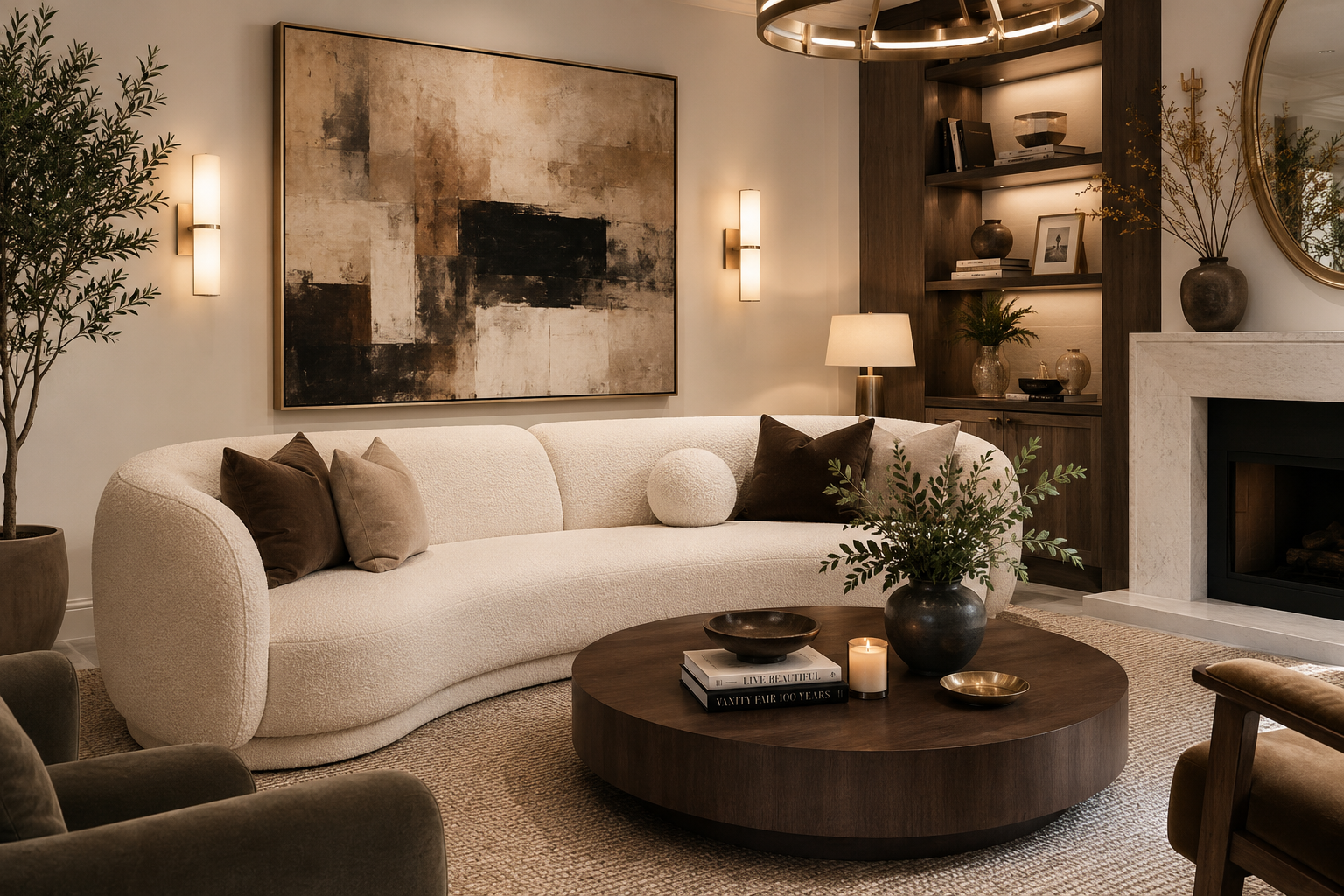
An undersized rug can make even beautiful furniture look disconnected.
A larger rug helps define the seating area and makes the entire arrangement feel more substantial.
Whenever possible, the front legs of the sofa and chairs should sit comfortably on the rug.
In a larger living room, you may be able to place all the furniture completely on it.
Choose a rug with enough visual interest to support the room without competing with the artwork or upholstery.
Vintage-inspired patterns, subtle geometrics, warm neutrals, and softly faded designs work especially well in luxury interiors.
For additional depth, layer a smaller patterned rug over a larger natural-fiber base.
The most important factor is proportion.
A properly sized rug can make a living room immediately feel more complete.
9. Mix Modern Furniture With Vintage Character
A room filled entirely with new furniture can sometimes feel like a showroom.
Adding one or two older pieces creates contrast and personality.
Try a vintage side table, antique cabinet, aged mirror, old ceramic vessel, sculptural chair, or traditional artwork.
Vogue’s 2026 trend coverage emphasizes lived-in interiors and rooms with character, while current design commentary more broadly favors personal spaces over generic, cookie-cutter styling.
The vintage piece does not need to dominate the room.
One old table beside a modern sofa may be enough.
You can also mix polished materials with patinated ones—for example, a new linen sofa with an aged brass lamp and worn wood side table.
That contrast helps the room feel as if it developed naturally over time.
10. Style Less, but Make Every Piece Count
One of the biggest differences between a sophisticated living room and an overcrowded one is restraint.
Do not fill every table, shelf, and wall.
Choose fewer objects with stronger scale.
On a coffee table, try one large ceramic bowl, a stack of two books, and a vase of branches rather than ten small decorative pieces.
On a console, use one lamp, a substantial vase, and one sculptural object.
Leave some surfaces partially empty.
This negative space allows the selected pieces to stand out and keeps the room visually calm.
The broader 2026 movement toward more personal interiors does not necessarily mean adding more objects; thoughtful editing still matters, especially when the goal is an elegant and comfortable room.
How to Make a Living Room Look Expensive Without Spending a Fortune
Start with the elements that occupy the most visual space.
A properly sized rug, full-length curtains, substantial artwork, and a well-proportioned sofa can transform the room more effectively than dozens of small accessories.
Next, improve the lighting.
Replace harsh bulbs, introduce a table or floor lamp, and create softer pools of light around the room.
Add natural materials.
Wood, stone, linen, ceramic, wool, and metal usually provide more visual depth than large amounts of plastic or shiny synthetic decor.
Upgrade small details gradually.
Better pillow covers, substantial curtain rods, attractive frames, and coordinated hardware can all help.
Finally, remove unnecessary clutter.
Sometimes making a room look more expensive requires taking things away rather than adding something new.
Best Colors for a Luxury Living Room in 2026
Warm neutrals remain one of the easiest foundations.
Cream, taupe, mushroom, caramel, chocolate brown, olive, burgundy, muted blue, and warm earthy shades all work particularly well with current 2026 interiors.
For a timeless combination, try:
Cream + walnut + olive
Warm white + chocolate brown + brass
Taupe + burgundy + natural wood
Oatmeal + black + aged bronze
Beige + muted blue + dark wood
You do not need to use every color equally.
Choose one dominant neutral, one supporting shade, and one deeper accent.
This creates a much calmer result.
Luxury Living Room Mistakes to Avoid
Avoid purchasing an entire matching furniture set.
A little variation in shape, material, and age generally creates more character.
Do not use furniture that is too small for the room.
Large spaces need pieces with enough scale to visually hold their own.
Avoid hanging tiny artwork above a long sofa.
The artwork should relate proportionally to the furniture beneath it.
Do not depend exclusively on overhead lighting.
Layering lighting sources usually creates a warmer and more inviting atmosphere.
Avoid filling every surface with accessories.
Finally, do not follow every 2026 trend in one room.
Choose the ideas that naturally complement your home.
Luxury should feel intentional, not forced.
How to Create a Luxury Living Room in a Small Space
Small rooms can still feel sophisticated.
Choose furniture with the correct proportions instead of trying to squeeze in a large sectional.
One comfortable sofa and one sculptural chair may work better than several small seats.
Use a large mirror to reflect light.
Hang curtains high and close to the ceiling.
Choose fewer but larger decorative pieces.
A substantial lamp, one piece of artwork, and a larger rug can make the room feel more confident and less cluttered.
Use closed storage when possible so everyday items do not dominate the room.
And do not assume everything must be pale.
A small room can still handle dark wood, olive, chocolate, or burgundy when balanced with enough light and quieter surfaces.
Final Thoughts
Luxury living rooms in 2026 are not about creating spaces that look untouchable.
The strongest interiors feel warm, comfortable, layered, and personal. Current design coverage consistently points toward richer color, tactile materials, softer forms, characterful pieces, and rooms that feel collected rather than generic.
Warm neutrals, sculptural seating, dark wood, layered lighting, oversized artwork, natural stone, rich textiles, properly scaled rugs, vintage pieces, and thoughtful styling can all make a living room feel much more elevated.
You do not need to use all 10 ideas.
Choose the ones that complement the architecture, size, and furniture you already have.
The goal is not simply to make the room look expensive.
It is to create a living room that feels beautiful, comfortable, and sophisticated enough to enjoy every day.


