
 Salud al Limite

The entryway creates the first impression of a home. It is the space that welcomes guests, introduces the decorating style, and sets the mood for everything that follows.
However, creating a luxurious entrance does not mean filling the space with expensive furniture or dramatic decorations. The most elegant entryways and hallways are usually defined by balance, good lighting, quality-looking materials, thoughtful proportions, and a controlled color palette.
Even a narrow hallway or small entrance can feel sophisticated when every element has a clear purpose. A beautiful mirror can reflect light, a slim console can provide function, and one carefully selected piece of artwork can give the area personality without creating clutter.
Whether you are decorating a spacious foyer or improving a compact corridor, these ideas will help you create a polished entrance and a hallway that feels connected to the rest of your home.
What Makes an Entryway Look Luxurious?
A luxury entryway feels calm, intentional, and beautifully organized.
The space should not contain too many unrelated colors, small decorations, or pieces of furniture. Instead, it should include a few strong elements that work together.
An elegant entrance often includes:
- A defined focal point
- Warm and layered lighting
- A properly sized mirror or artwork
- Furniture that fits the available space
- Coordinated materials and finishes
- Minimal visible clutter
The goal is to make the area feel complete without overwhelming it.
Start by looking at the architecture of the space. Consider the width of the hallway, the ceiling height, the natural light, the flooring, and the location of nearby doors.
These details will help you choose furniture and decorations that feel proportional rather than forced.
1. Begin With a Sophisticated Color Palette
Color has a major influence on how luxurious an entryway or hallway feels.
Warm neutrals such as creamy white, beige, taupe, mushroom, and soft gray create an elegant foundation. These shades reflect light and make narrow areas feel more open.
For greater depth, introduce a darker accent through the front door, console table, mirror frame, or lighting. Black, deep brown, bronze, muted green, and charcoal can add contrast without making the space feel heavy.
You can also use a richer wall color in a hallway with good lighting. Deep olive, smoky blue, warm brown, or burgundy can create a dramatic and sophisticated atmosphere.
The most important rule is consistency. Limit the palette to a few related colors and repeat them through the furniture, artwork, rug, and accessories.
A controlled color scheme will always feel more polished than a space filled with competing shades.
2. Add a Statement Mirror
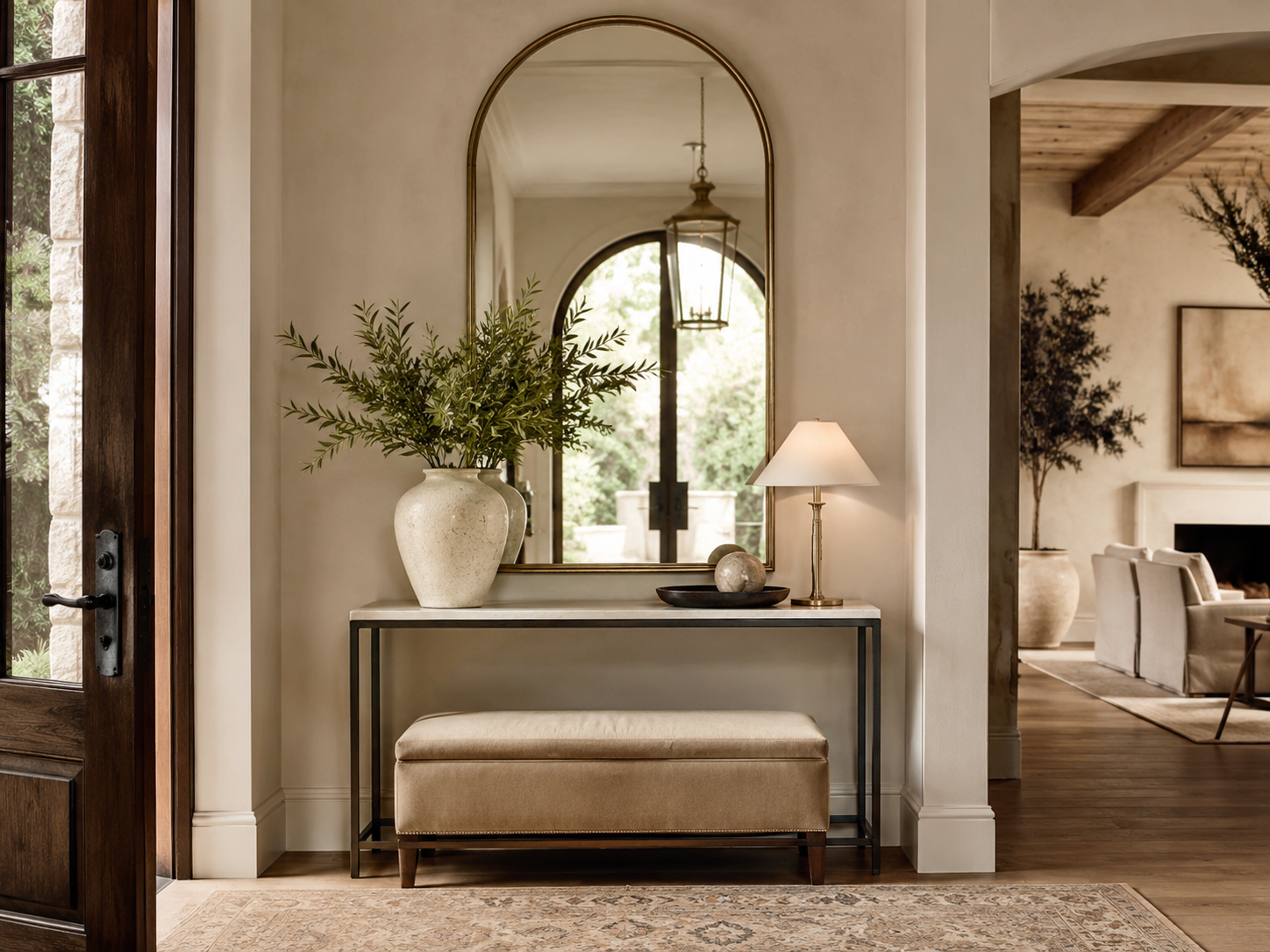
A mirror is one of the most useful pieces you can place in an entryway.
It reflects light, creates visual depth, and gives you a convenient place to check your appearance before leaving the house. It can also serve as the main focal point above a console table.
Choose a mirror that is large enough to relate to the furniture beneath it. A very small mirror above a wide console can look disconnected and unfinished.
Arched mirrors create a soft and elegant effect, while round mirrors balance hallways filled with straight architectural lines. Rectangular mirrors with thin black, brass, bronze, or wood frames can work beautifully in modern and transitional homes.
In a narrow hallway without space for furniture, a tall wall mirror can make the corridor appear wider and brighter.
Avoid surrounding the mirror with too many small accessories. Allow it to remain the strongest visual feature.
3. Choose a Slim and Elegant Console Table
A console table gives the entryway structure and provides a practical surface for everyday items.
In a small entrance or narrow hallway, choose a slim design that does not interrupt movement. Before purchasing one, measure the depth carefully and make sure people can walk past it comfortably.
Furniture with open legs feels visually lighter and allows more of the floor to remain visible. Floating consoles are also useful in compact spaces because they provide function without appearing bulky.
Natural wood adds warmth, while black, dark brown, stone, or metal can create a more dramatic look. A console with drawers provides hidden storage for keys, mail, chargers, and other small objects.
Style the surface with only a few pieces. A lamp, decorative bowl, vase, or stack of books may be enough.
The goal is to create a balanced arrangement rather than covering the entire table.
4. Upgrade the Lighting
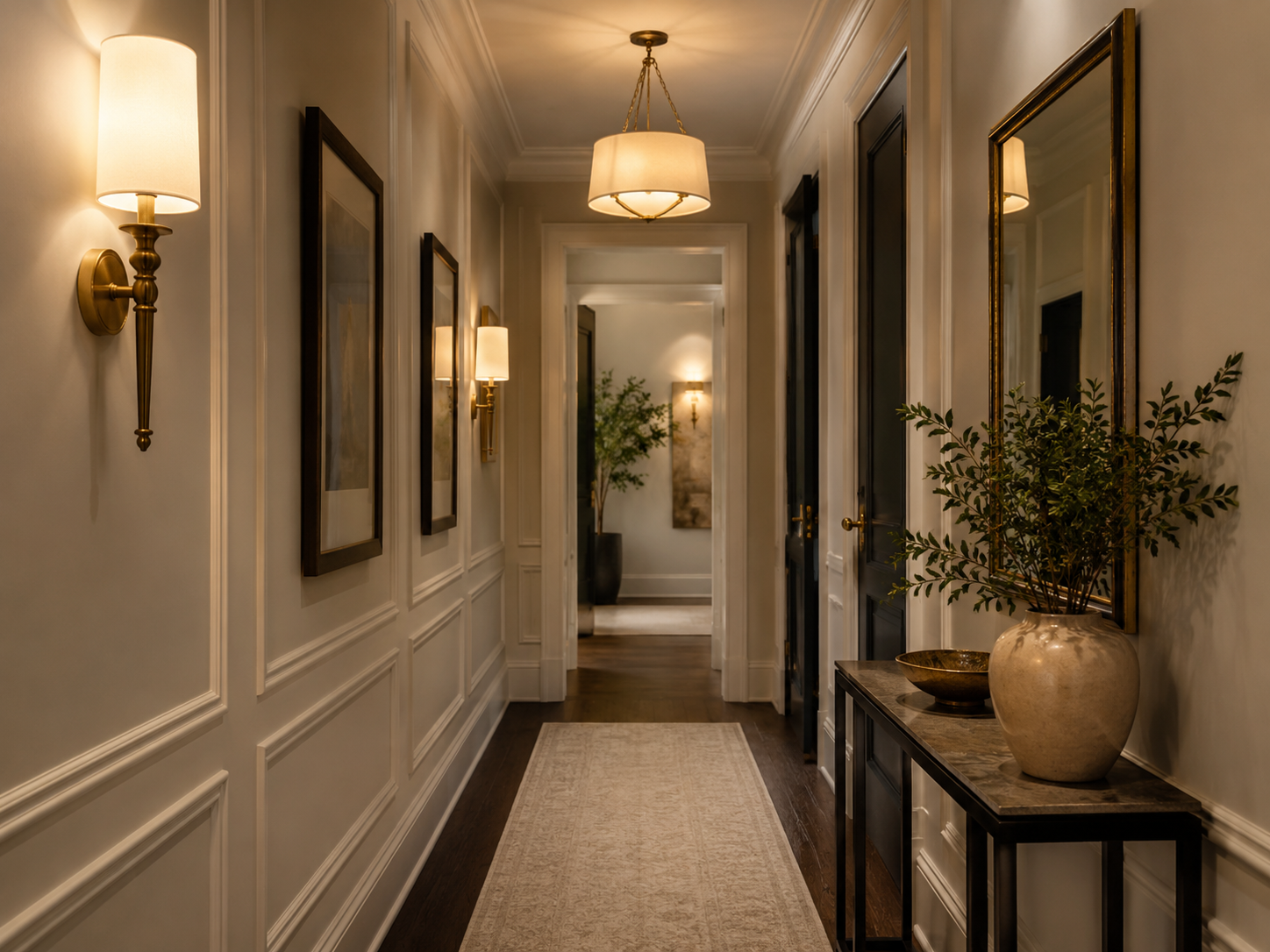
Lighting is one of the details that most strongly separates a basic hallway from a luxurious one.
A single harsh ceiling light can make the entrance feel flat and uninviting. Instead, combine several sources of light whenever possible.
A pendant or small chandelier can create a strong focal point in an entryway with a high ceiling. In a narrow corridor, wall sconces or repeated ceiling fixtures can guide the eye through the space.
A table lamp placed on a console adds warmth and creates a softer atmosphere in the evening. Picture lights can also be used to highlight artwork and make the hallway feel more curated.
Choose warm or neutral white bulbs instead of cold blue lighting. Softer light complements wood, stone, brass, and neutral walls.
The scale of the fixture is important. A light that is too small may look insignificant, while an oversized chandelier can overwhelm a compact entrance.
5. Use Artwork to Create Personality
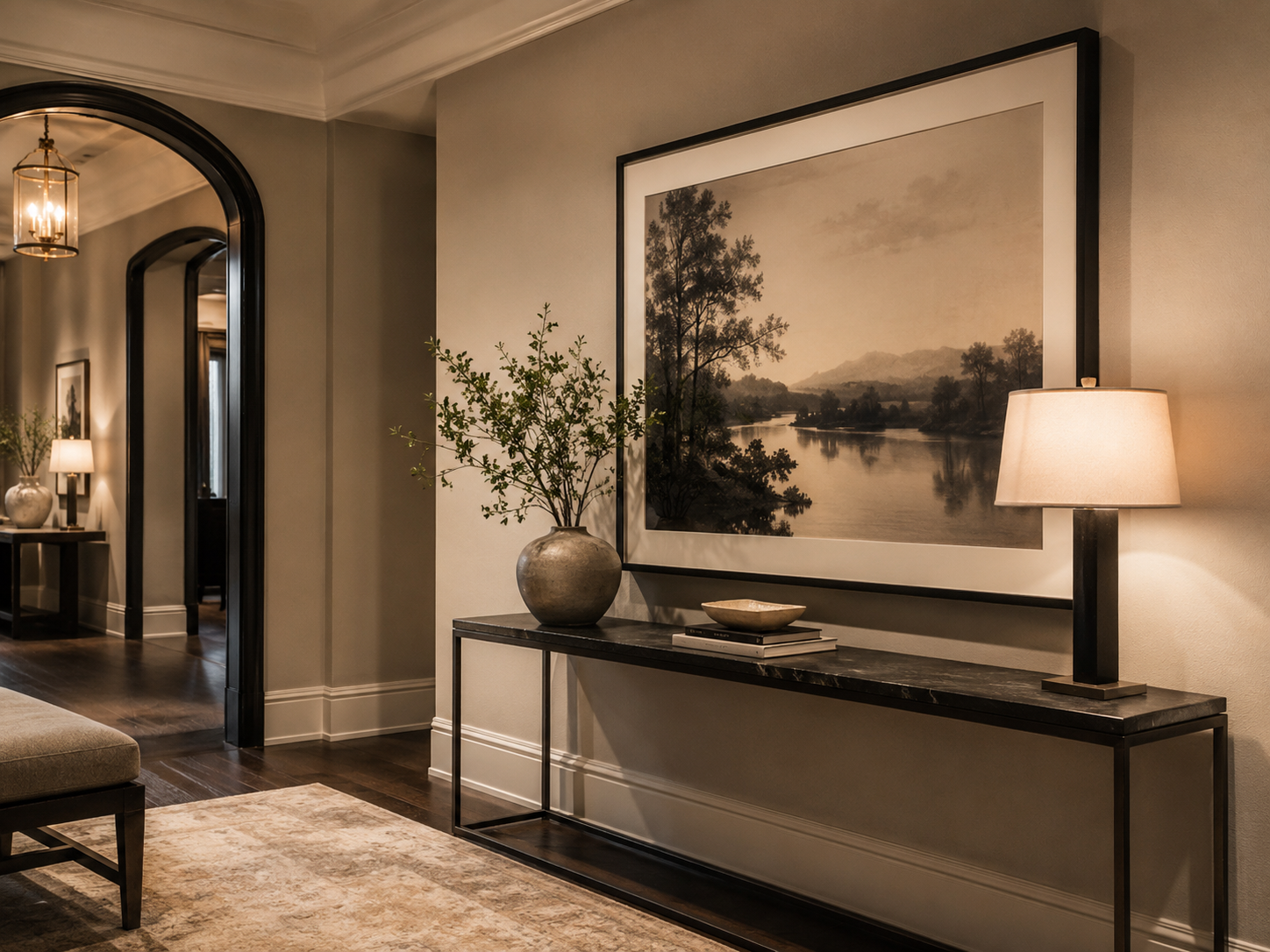
Artwork can transform a plain hallway into a more refined and memorable space.
For a clean and luxurious look, use one large piece rather than several tiny frames. Large artwork creates stronger visual impact and usually makes the hallway appear more intentional.
A gallery wall can also work, but the frames should be carefully aligned and connected through a consistent color, material, or theme.
Black, wood, bronze, or brass frames are versatile choices. Avoid combining too many unrelated frame styles in a narrow corridor.
Landscape paintings, abstract art, architectural photography, and neutral textured pieces can all work well in elegant interiors.
Hang artwork at a comfortable viewing height and consider the proportions of the wall. A small picture placed alone on a wide wall may make the area feel unfinished.
If the hallway is narrow, framed artwork should not project too far from the wall.
6. Add a Runner That Fits the Space
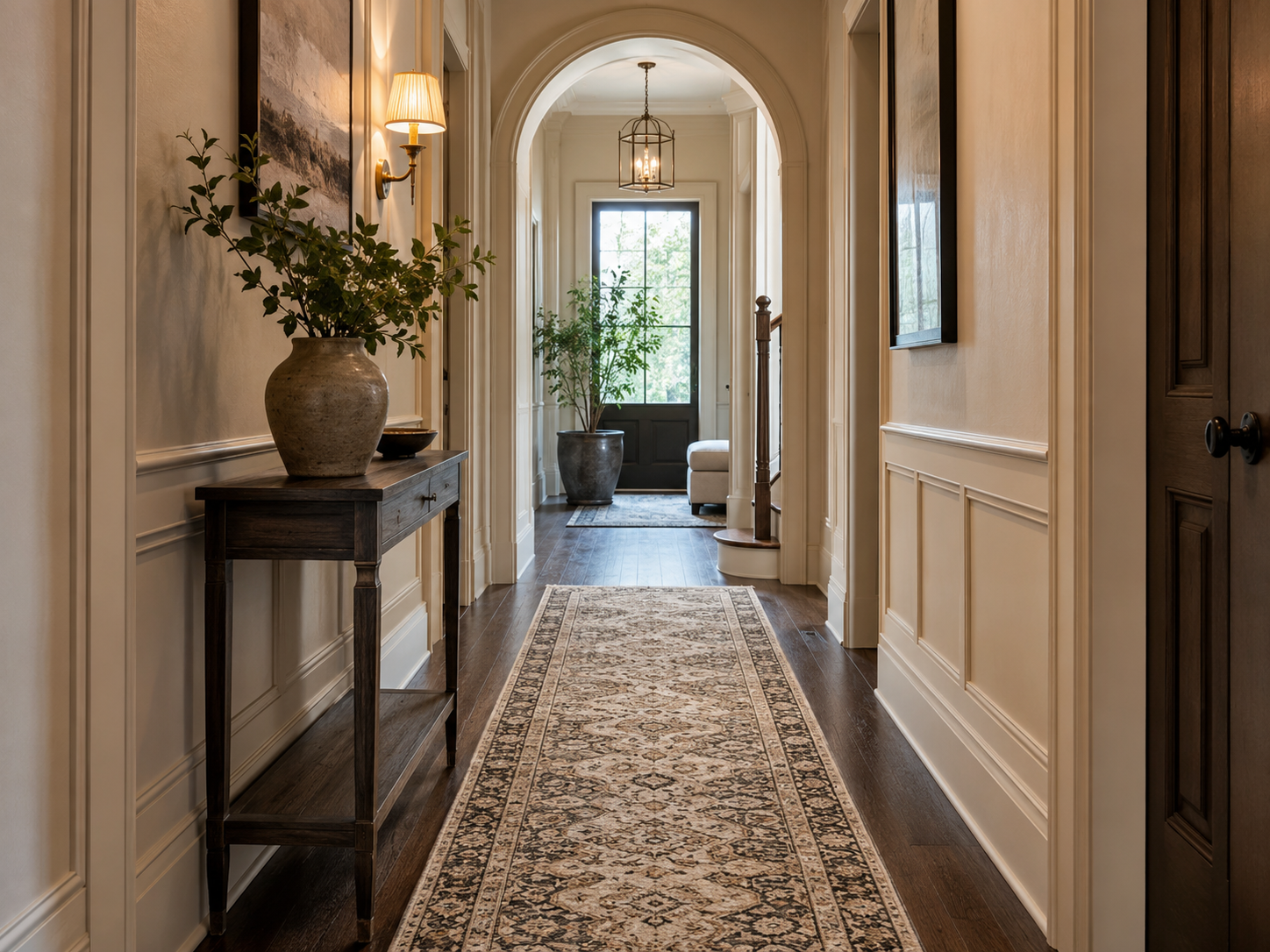
A hallway runner adds softness, color, and visual direction.
It can make a long corridor feel more inviting while also reducing noise and protecting the floor. However, the rug must fit the proportions of the hallway.
Choose a runner that leaves a visible border of flooring along both sides. It should feel generous without touching every wall.
For an elegant result, consider a faded vintage-style pattern, subtle geometric design, or textured neutral weave. Beige, taupe, charcoal, muted blue, and warm brown are easy to coordinate with many interiors.
A runner with too many bright colors may dominate a narrow space, so keep the overall palette controlled.
Make sure the rug lies flat and use a non-slip pad beneath it. Safety is especially important near stairs and frequently used doorways.
7. Finish With Refined and Functional Accessories
The final decorative layer should make the entryway more useful without creating clutter.
A decorative bowl or tray can hold keys. A woven basket can store shoes, umbrellas, or pet accessories. A small bench can provide a place to sit while putting on shoes.
Large planters or branches add natural movement and soften spaces filled with hard surfaces. One substantial plant usually looks more elegant than several tiny pots.
Books, ceramic objects, candles, and sculptural accessories can add interest to a console table, but use them selectively.
Try grouping objects in small arrangements instead of spreading them across every available surface. Combine different heights and shapes while repeating similar colors or materials.
Always leave some empty space. Negative space allows each object to stand out and keeps the entrance feeling calm.
How to Decorate a Small Luxury Entryway
A small entryway benefits from fewer pieces and stronger visual organization.
Use a wall-mounted console or narrow table rather than deep furniture. Add one large mirror to reflect light and make the space feel more open.
Hooks can provide practical storage when there is no room for a coat cabinet. Choose a coordinated finish so they feel like part of the design.
Keep the floor as clear as possible. Baskets should fit neatly beneath a bench or console instead of interrupting the walkway.
Light colors, good illumination, and furniture with visible legs can make a compact entrance feel more spacious.
Most importantly, avoid decorating every wall. One focal point is usually enough.
How to Make a Narrow Hallway Look Wider
Narrow hallways need light, simplicity, and carefully selected proportions.
Paint the walls in a soft shade and use the same or a closely related color on the trim to create a more continuous appearance. A lighter ceiling can draw the eye upward.
Mirrors positioned along one wall can reflect light and create depth. Vertical artwork or tall wall details can also emphasize height without using valuable floor space.
Avoid deep furniture. A floating ledge, narrow console, or simple wall hooks may provide enough function.
Use repeated lighting fixtures to create rhythm and guide the eye through the hallway.
Keep the runner centered and make sure decorations do not block doors or pathways.
Entryway and Hallway Mistakes to Avoid
One of the most common mistakes is choosing furniture that is too large for the space. A deep console or oversized bench can make the entrance difficult to use.
Another mistake is using too many small decorations. Tiny frames, bowls, signs, and ornaments can create visual clutter rather than elegance.
Avoid poor lighting, undersized rugs, and artwork that does not relate to the wall or furniture beneath it.
Visible clutter can also reduce the luxurious effect. Shoes, mail, cables, and everyday objects should have a designated storage area.
Finally, do not decorate the entryway as if it were separate from the rest of the home. Repeat a few colors, materials, or finishes from nearby rooms to create visual continuity.
Final Thoughts
Creating a luxury entryway is not about spending the most money. It is about selecting the right elements and giving each one enough space to make an impact.
A sophisticated color palette, statement mirror, slim console table, layered lighting, artwork, a properly sized runner, and refined accessories can completely transform an entrance or hallway.
Begin by removing unnecessary clutter and identifying the natural focal point of the space. Then add furniture and decorations that fit the proportions and connect with the rest of the home.
With thoughtful styling, even a small entryway or narrow hallway can feel elegant, welcoming, and beautifully designed.


