
 Salud al Limite

A beautiful patio does not need to be filled with furniture, decorations, or expensive accessories. In fact, some of the most inviting outdoor spaces are also the simplest.
Minimalist patio design focuses on clean lines, practical furniture, natural materials, and a calm color palette. Every element has a clear purpose, and the space feels open rather than overcrowded.
Whether you have a spacious backyard, a narrow terrace, or a small apartment patio, the right choices can make the area feel elegant, relaxing, and thoughtfully designed.
The secret is to create balance. A comfortable seating area, soft lighting, greenery, and a few carefully chosen details are often enough to transform an ordinary patio into a space you will want to use every day.
Here are 10 minimalist patio ideas you will want to copy.
1. Start With a Neutral Color Palette
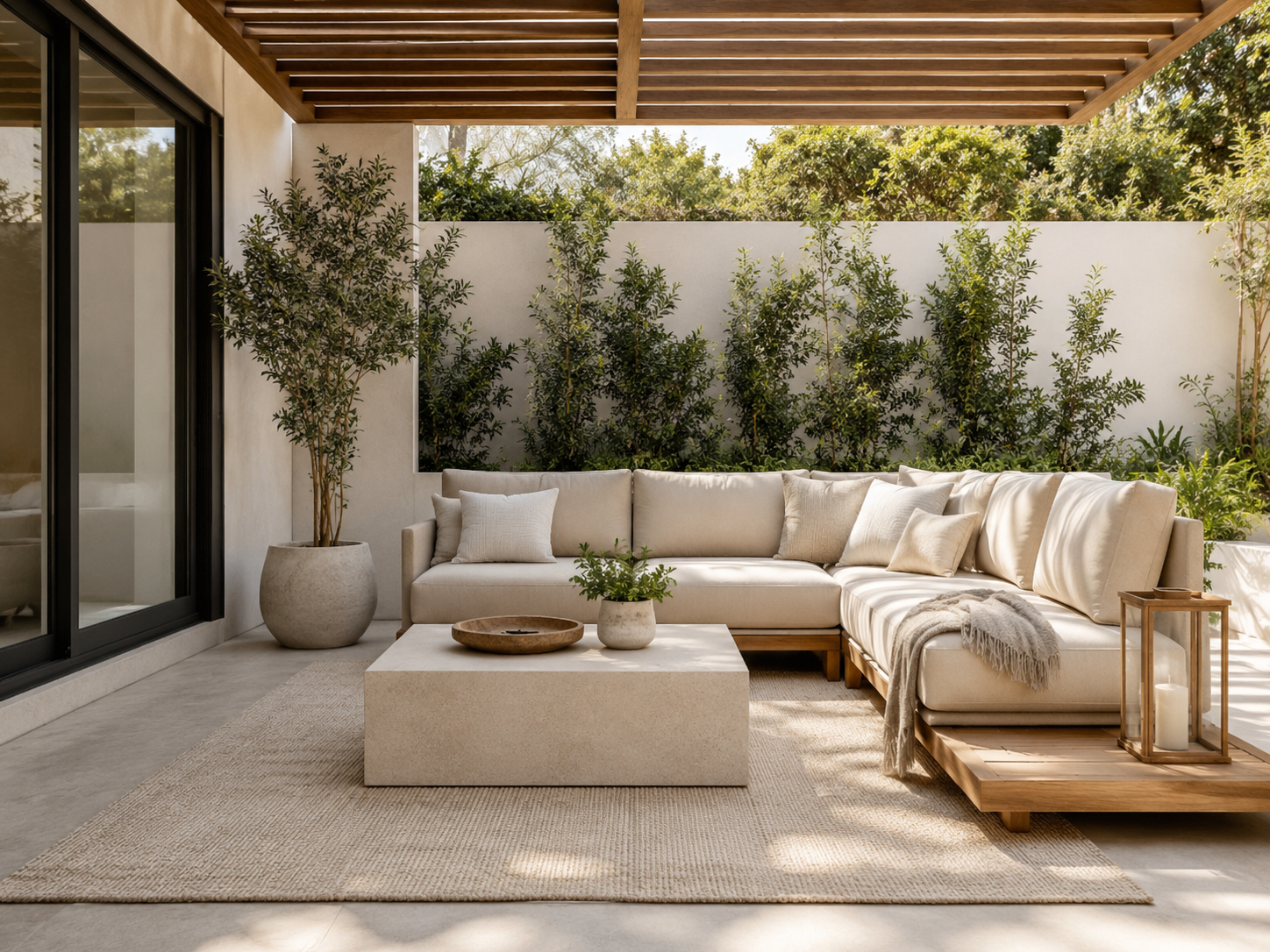
A neutral color palette creates a calm foundation and makes an outdoor space feel more sophisticated.
Use shades such as warm white, beige, taupe, soft gray, sand, and natural wood. These colors blend easily with the surrounding landscape and allow plants to become the main source of color.
For example, pair a beige outdoor sofa with cream cushions, a light gray rug, and wooden side tables. Add black or dark bronze accents for subtle contrast.
Avoid using too many unrelated colors. A controlled palette makes the patio feel larger, cleaner, and more intentional.
You can still introduce personality through texture. Linen-look cushions, woven baskets, stone planters, and textured rugs prevent the neutral scheme from feeling flat.
2. Choose Low-Profile Furniture
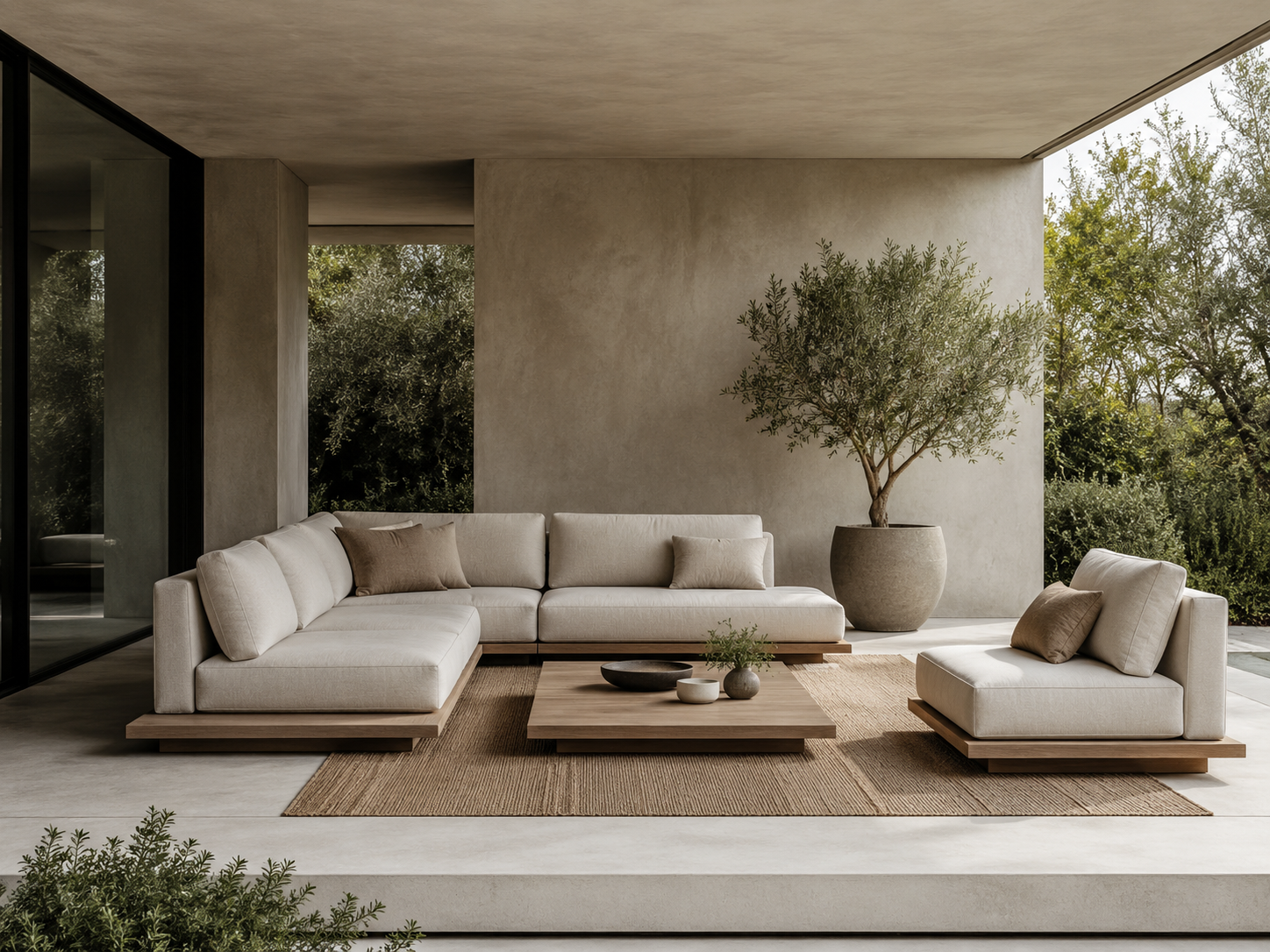
Furniture with a low profile creates a modern, relaxed appearance and keeps the patio feeling visually open.
Look for sofas, lounge chairs, and coffee tables with simple shapes and clean lines. Avoid furniture with oversized backs, heavy ornamentation, or bulky frames that may overwhelm the space.
A low outdoor sectional can create a comfortable seating area without blocking the view of the garden. In smaller patios, two streamlined chairs and a compact table may be all you need.
The furniture should fit the scale of the area. Leaving open space around each piece helps the patio feel organized rather than crowded.
3. Create One Clear Seating Zone
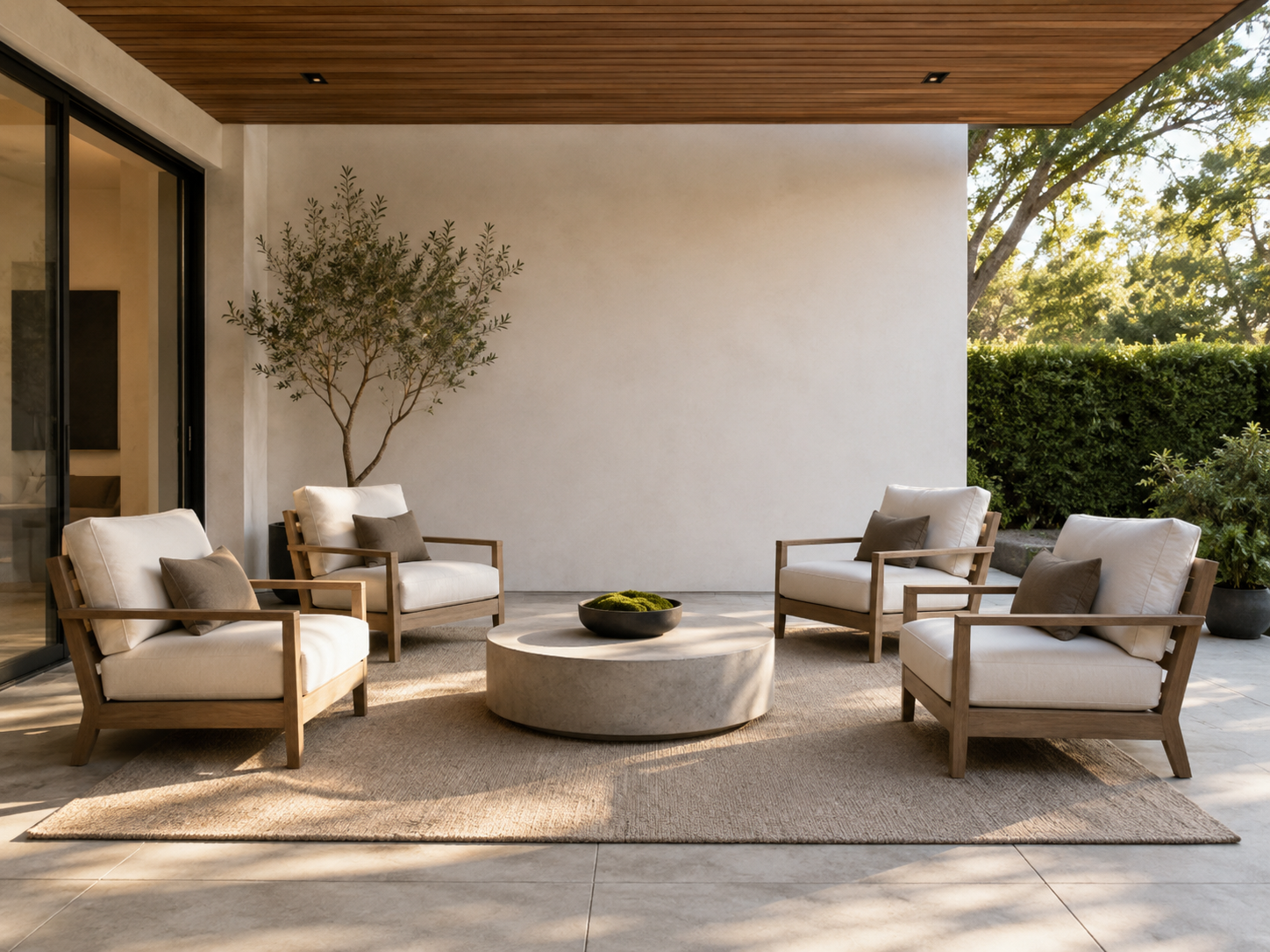
A minimalist patio should have a clear purpose.
Instead of placing furniture randomly around the space, create one defined seating zone. Position the sofa or chairs around a central coffee table, fire bowl, or outdoor rug.
This arrangement makes the patio feel more welcoming and encourages conversation.
In larger spaces, you can create additional zones for dining or lounging, but each area should remain visually simple. Use rugs, planters, or changes in flooring to define the spaces without adding walls or bulky dividers.
A clear layout makes even a small patio feel more functional.
4. Add an Outdoor Rug
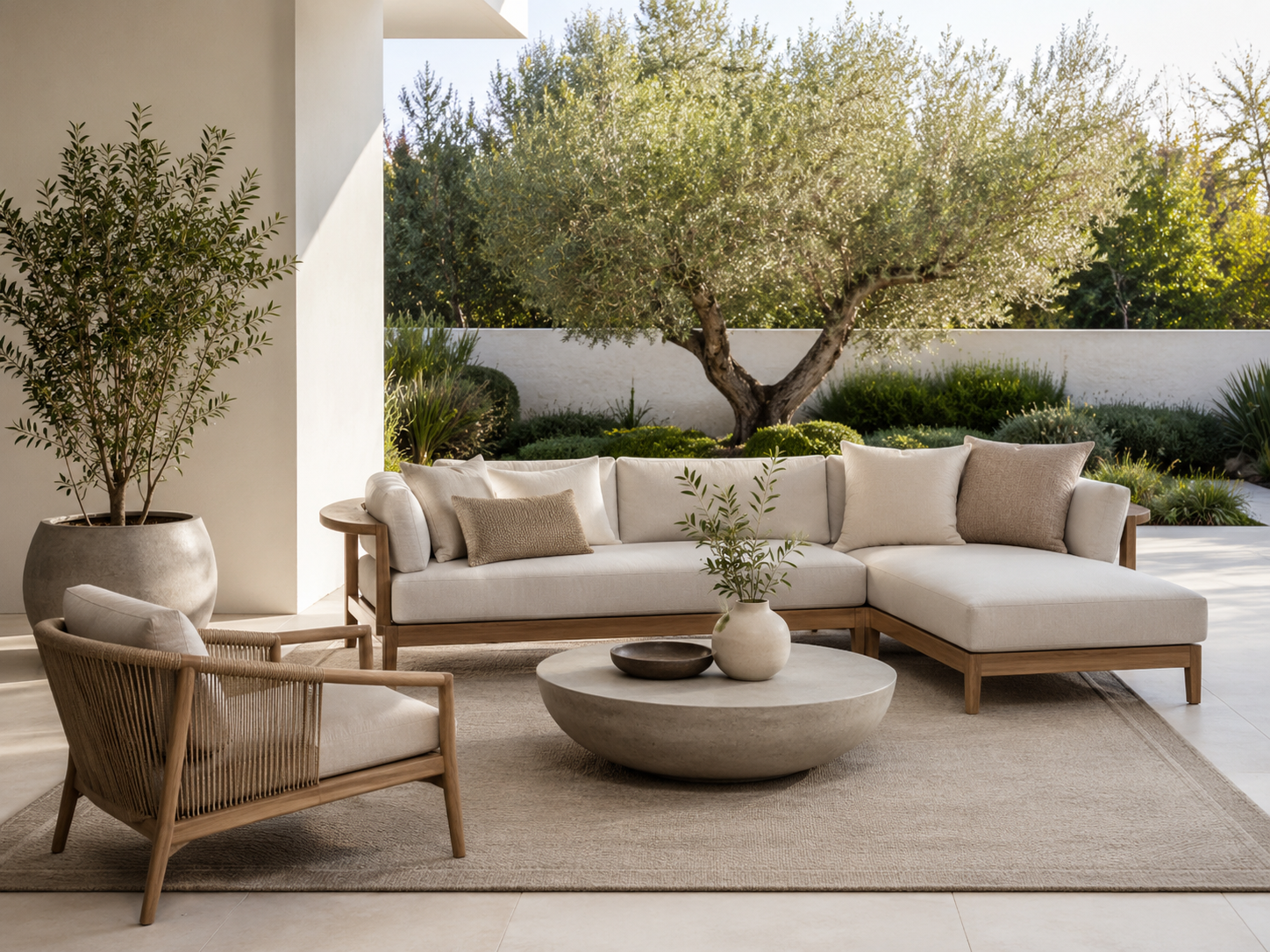
An outdoor rug can make a patio feel like an extension of the home.
Choose a rug large enough to connect the main furniture. At least the front legs of the chairs or sofa should rest on it. A rug that is too small may make the furniture look disconnected.
For a minimalist look, select a solid color, subtle stripe, or understated geometric pattern. Beige, gray, cream, and muted brown are easy to combine with outdoor furniture.
Make sure the rug is designed for exterior use so it can resist moisture, sunlight, and frequent cleaning.
The added texture makes the seating area feel warmer and more complete.
5. Use Large Planters Instead of Many Small Pots
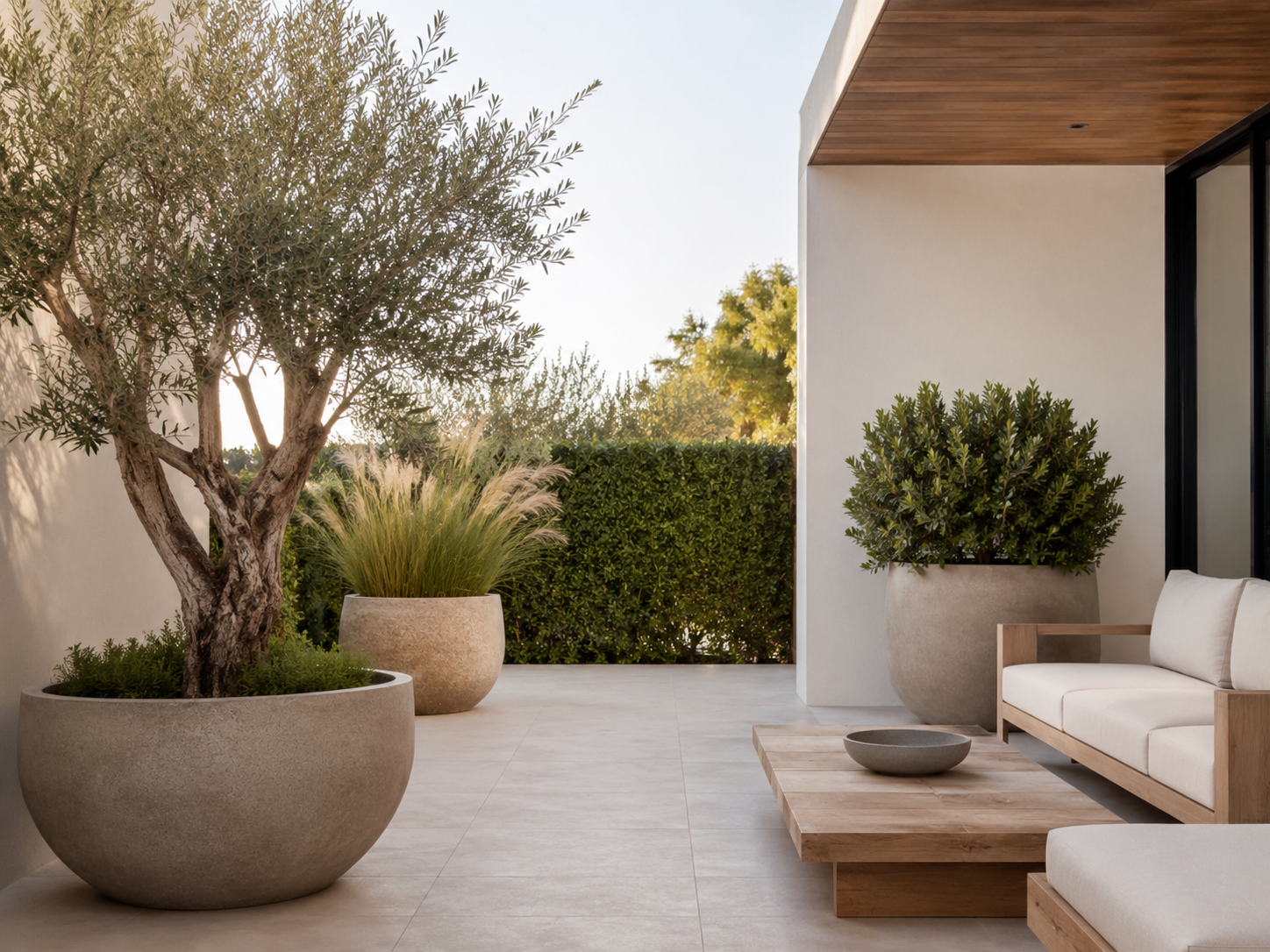
Greenery is essential in a beautiful patio, but too many small pots can create clutter.
Choose a few larger planters and fill them with sculptural plants, small trees, grasses, or lush greenery. Olive trees, palms, ornamental grasses, and simple shrubs work especially well in minimalist outdoor spaces.
Place the planters near corners, beside the seating area, or along an empty wall.
Use containers in similar colors or materials to maintain a cohesive appearance. Concrete, terracotta, matte black, and natural stone planters can all create an elegant effect.
A few strong plants will usually have more visual impact than many unrelated pots.
6. Incorporate Warm Wood
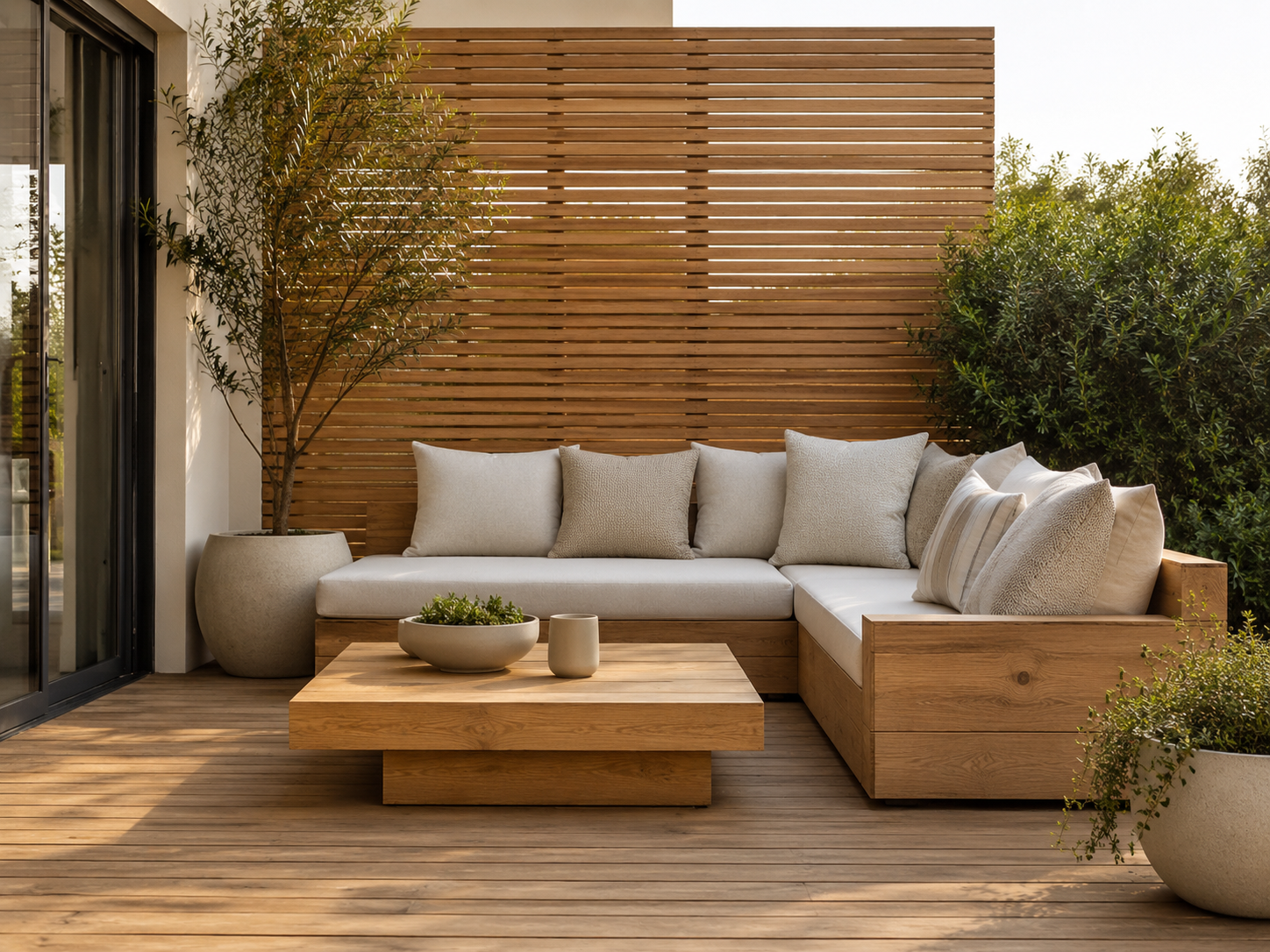
Wood introduces warmth and prevents a minimalist patio from feeling cold or overly modern.
Use it through furniture, a slatted privacy wall, a coffee table, decking, or a simple bench. Light and medium wood tones create a relaxed, natural mood, while darker wood can feel more dramatic and refined.
You do not need to use wood everywhere. One or two wooden elements can create enough warmth to balance stone, concrete, or metal surfaces.
Choose exterior-grade materials and finishes that can withstand sunlight and moisture.
The combination of wood, greenery, and neutral fabrics creates a timeless outdoor look.
7. Add Soft, Layered Lighting
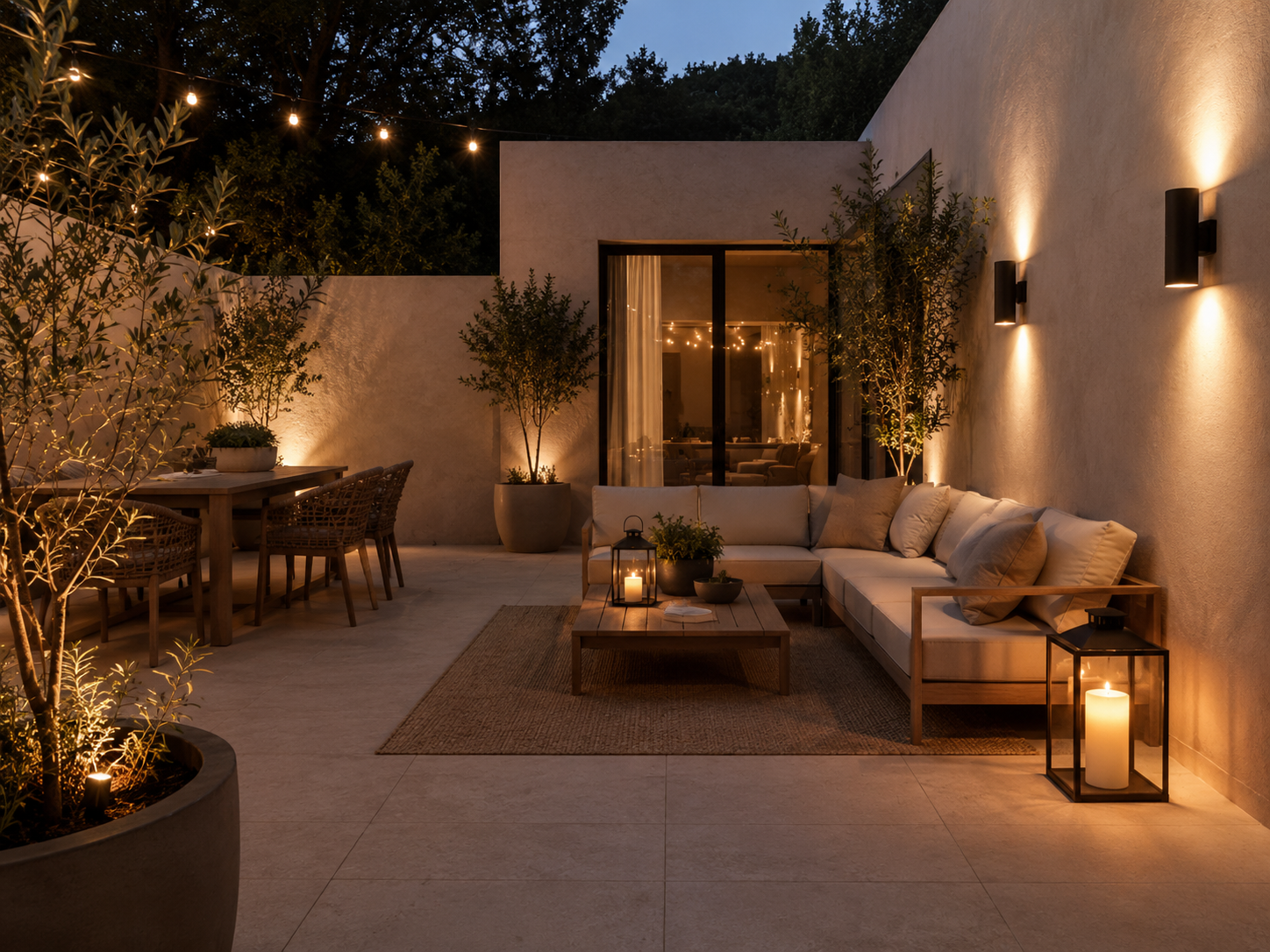
Patio lighting should create atmosphere without overpowering the design.
Instead of relying on one bright fixture, use several softer sources of light. Wall sconces, low garden lights, portable lamps, lanterns, and subtle string lights can create a warm and inviting effect.
Place lights near pathways, seating areas, steps, and plants. This improves safety while adding depth to the space.
Warm white lighting usually feels more elegant and relaxing than cold blue light.
Keep visible cables and excessive fixtures to a minimum. The best minimalist lighting feels integrated into the design rather than added as an afterthought.
8. Introduce a Simple Fire Feature
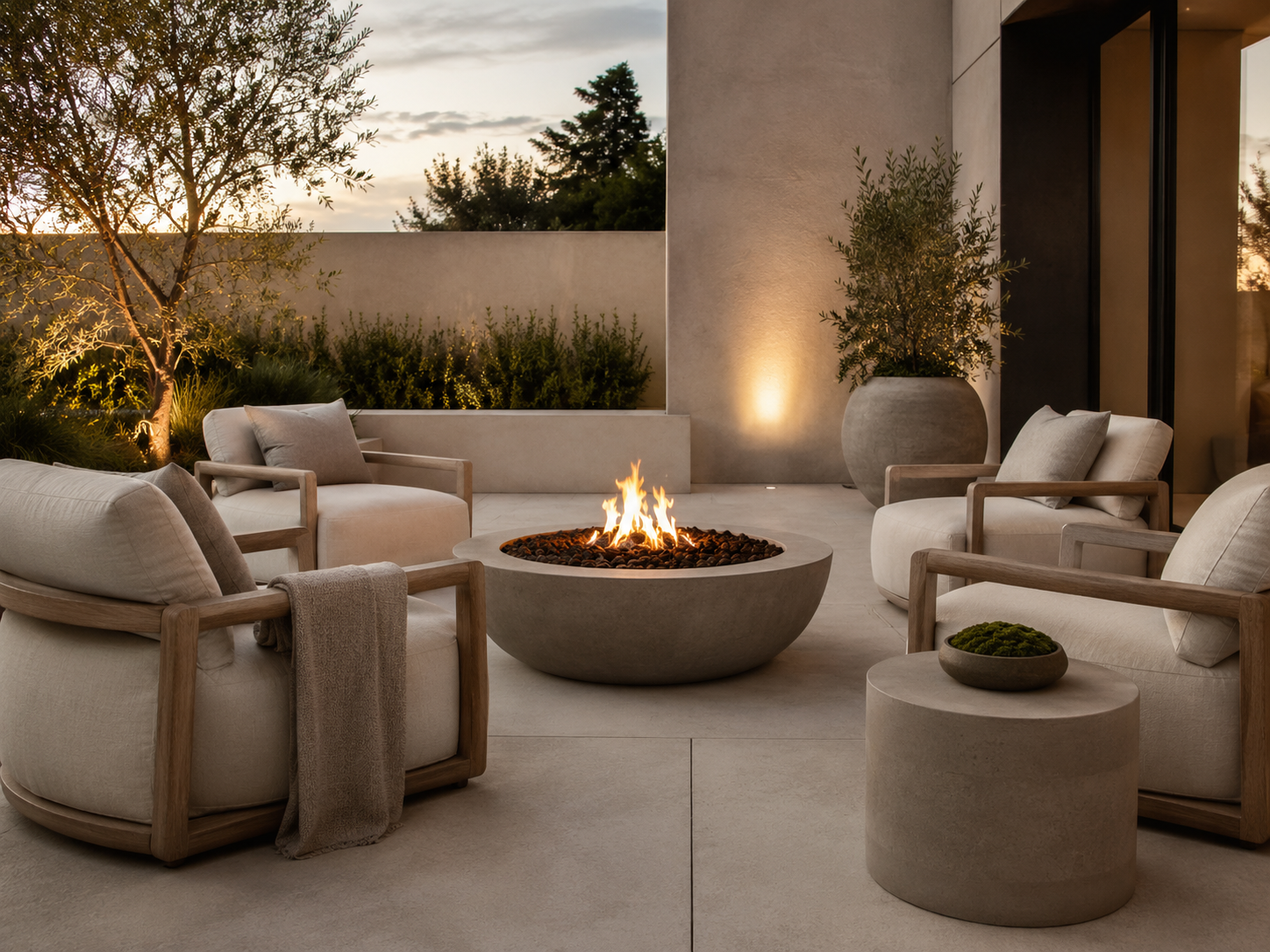
A fire feature can become the focal point of a minimalist patio.
Choose a fire bowl, rectangular fire table, or built-in fire pit with a clean and understated design. Concrete, stone, and dark metal finishes work especially well.
Arrange the seating around the fire feature to create a cozy conversation area.
In a small patio, a compact tabletop fire bowl may provide a similar atmosphere without taking up too much space.
Before installing any fire feature, make sure it is suitable for the size and location of the patio. Follow local safety rules and keep it away from flammable furniture or overhead coverings.
9. Use Built-In Seating
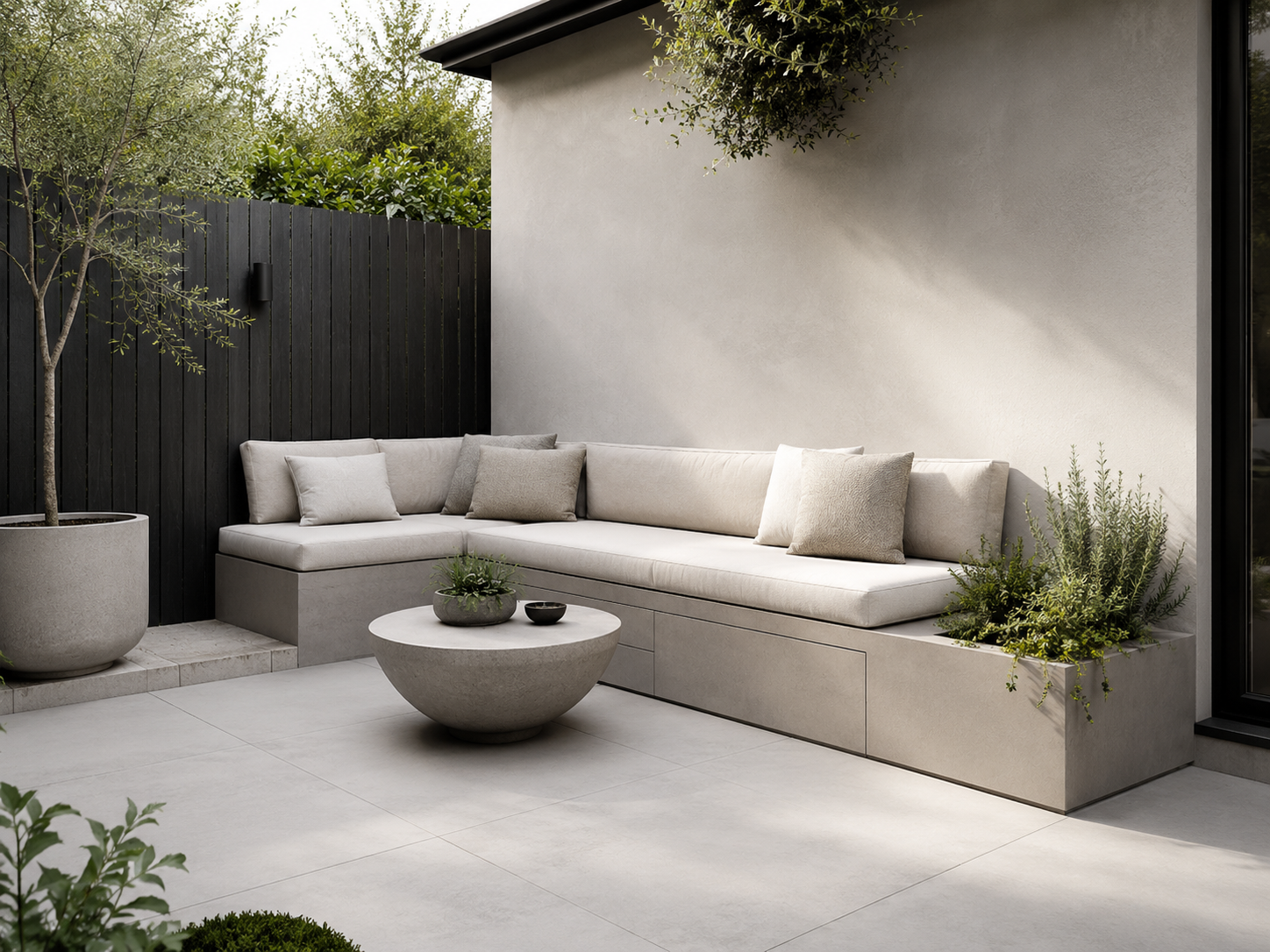
Built-in seating is practical, modern, and especially useful in smaller outdoor areas.
A simple bench placed along a wall or fence saves space and creates a clean, custom appearance. It can also include hidden storage beneath the seat for cushions, gardening tools, or outdoor accessories.
Add a few neutral cushions for comfort, but avoid covering the entire bench with too many pillows.
Built-in seating works well with wood, concrete, brick, or stone. The material can either match the patio flooring or provide gentle contrast.
This idea makes the most of unused edges and keeps the central area open.
10. Keep the Final Styling Simple
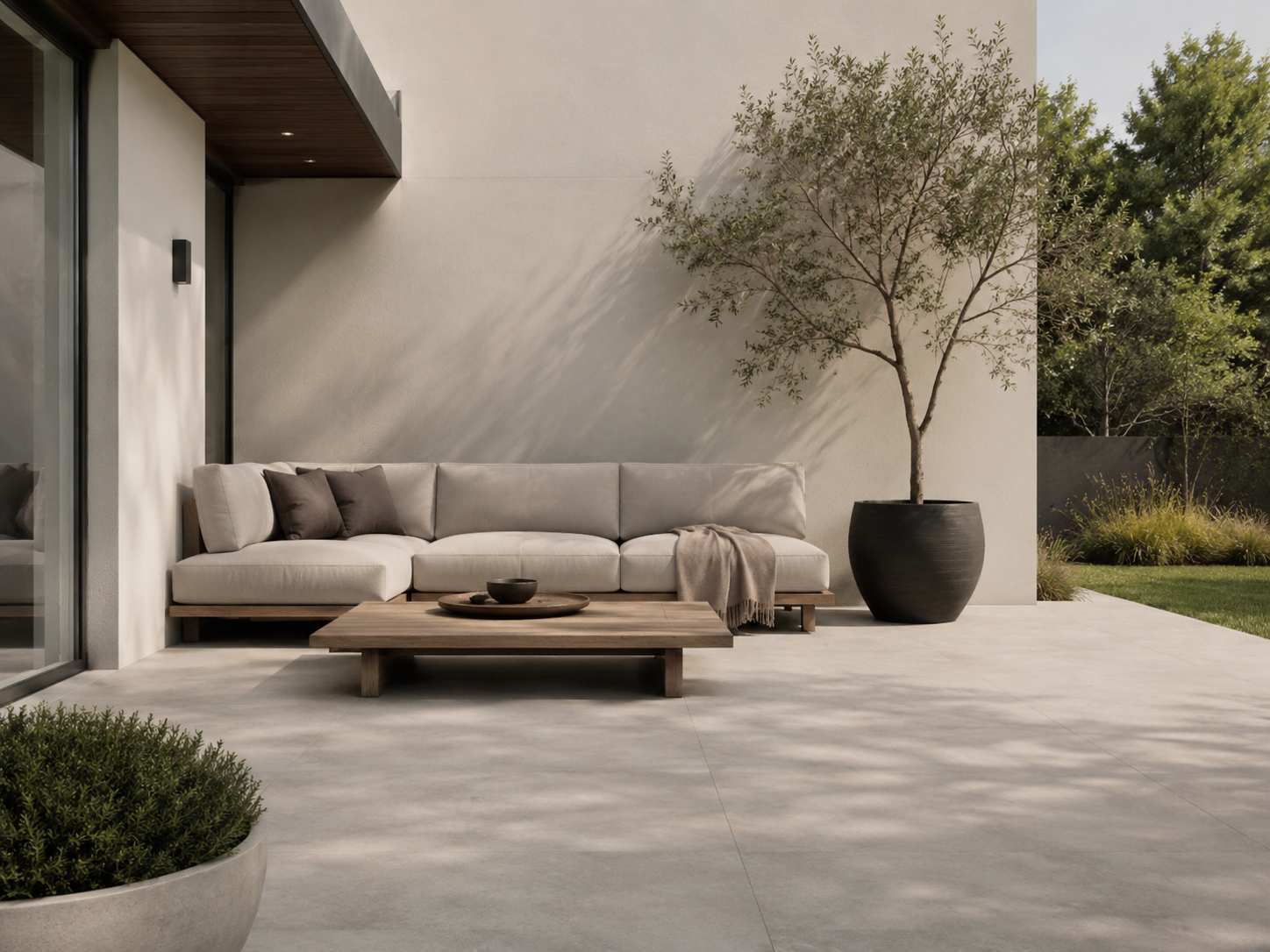
The last step is resisting the urge to overdecorate.
A minimalist patio does not need accessories on every surface. One large planter, a tray on the coffee table, a folded throw, and a few cushions may be enough.
Select accessories that are both attractive and useful. A decorative basket can hold blankets, while a ceramic tray can organize candles or drinks.
Leave some empty space on tables and around the furniture. Negative space helps each item stand out and gives the patio a more polished appearance.
Review the space regularly and remove anything that no longer serves a purpose.
How to Make a Small Patio Feel Larger
Small patios benefit from furniture with open legs, simple shapes, and lighter colors.
Choose pieces that fit the space instead of forcing a large outdoor sofa into a narrow area. Folding chairs, compact bistro tables, and built-in benches can provide function without blocking movement.
Use vertical surfaces for greenery. Wall planters, climbing plants, and narrow trellises add life without taking up valuable floor space.
A large outdoor mirror can also reflect light and create the illusion of depth, but it should be installed securely and positioned away from intense direct sunlight.
Keeping the floor visible and the layout uncluttered will make the patio feel more open.
How to Make a Patio Look More Expensive
An expensive-looking patio is usually defined by consistency rather than price.
Repeat the same materials and colors throughout the space. For example, use black metal on the light fixtures, planters, and furniture frames. Repeat warm wood in the seating and side tables.
Invest in fewer, better-looking pieces instead of filling the area with inexpensive accessories.
Cushions should fit the furniture properly, and outdoor fabrics should look clean and well maintained. Large planters, layered lighting, and a properly sized rug can also make the space feel more luxurious.
Most importantly, keep the patio organized. A clean outdoor area will always appear more polished.
Final Thoughts
The best minimalist patio ideas combine comfort, simplicity, and natural beauty.
A neutral palette, low-profile furniture, large planters, warm wood, soft lighting, and a clear seating area can completely transform an outdoor space.
You do not need to use all 10 ideas at once. Begin with the layout, remove unnecessary clutter, and choose one or two upgrades that will make the greatest difference.
With a few thoughtful changes, your patio can become a stylish and relaxing extension of your home—one you will want to enjoy throughout the year.


