
 Salud al Limite

Your front yard is one of the first things people notice about your home, but creating a beautiful outdoor space does not always require a major landscaping budget.
The most expensive-looking front yards are often successful because they feel intentional. Clean edges, coordinated plants, attractive pathways, balanced greenery, and a few carefully chosen details can completely change the appearance of a home.
The same principle applies to small gardens. Limited square footage does not mean you have to sacrifice style. In fact, smaller spaces can feel incredibly charming when every plant, planter, and decorative element has a purpose.
Whether you have a large front lawn, a narrow entrance, or only a tiny garden beside your home, these ideas can help you create an outdoor area that feels polished, welcoming, and thoughtfully designed.
Below, you will find nine front yard ideas that can make your exterior look more expensive, followed by six small garden ideas that can make even a compact outdoor space look amazing.
9 Front Yard Ideas That Look Expensive
1. Create Clean Landscape Edges
One of the simplest ways to make a front yard look more expensive is to define the borders clearly.
Overgrown grass and uneven flower beds can make an otherwise beautiful yard feel neglected. Clean edging immediately creates structure and makes the entire landscape appear more intentional.
Use stone, brick, metal edging, or a crisp natural cut between the lawn and planting beds.
Curved borders can create a softer, more traditional appearance, while straight lines work beautifully with modern homes.
You do not need to redesign the entire yard. Simply cleaning and redefining the existing edges can create a noticeable improvement.
2. Frame the Entrance With Matching Plants
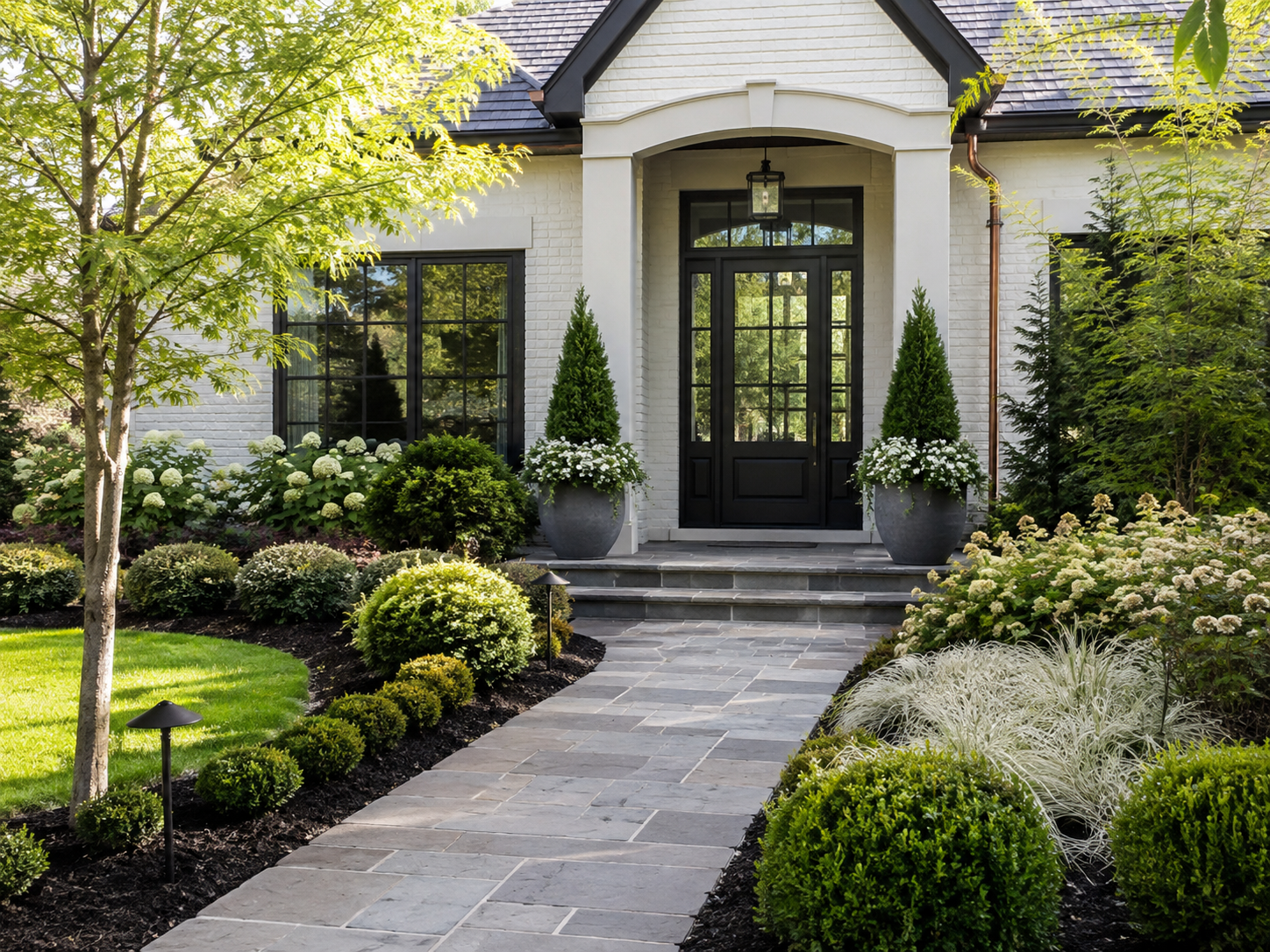
Symmetry is an easy way to create an elegant first impression.
Place matching planters, shrubs, or small trees on both sides of the walkway or front door. Repeating the same shape and greenery helps the entrance feel balanced and professionally designed.
Large planters tend to look more luxurious than several tiny containers.
Choose pots that complement the home’s exterior materials. Black, stone, terracotta, and warm neutral finishes are versatile choices.
For the plants, consider structured greenery, ornamental grasses, hydrangeas, or compact evergreen shrubs depending on your climate.
3. Upgrade the Walkway
The pathway leading to your home has a major impact on curb appeal.
Cracked concrete or an undefined walking area can make the entrance feel unfinished. Stone pavers, brick, gravel, or large stepping stones can create a much more polished appearance.
You do not necessarily need to replace the entire walkway.
Adding a border, repairing damaged sections, placing low plants along the sides, or introducing small landscape lights can dramatically improve what you already have.
A slightly curved walkway can create a softer garden-inspired look, while large rectangular pavers feel more contemporary.
4. Layer Plants Instead of Using One Height
Professional landscapes rarely use plants of the same size everywhere.
Creating layers makes a front yard feel fuller and more established.
Place taller shrubs or ornamental trees toward the back of a planting bed. Use medium-height plants in the middle and low flowers, grasses, or ground cover near the front.
This arrangement creates depth and keeps every plant visible.
Repeating the same plants in several areas can also make the design feel more cohesive.
Instead of buying many unrelated varieties, choose a smaller plant palette and repeat it throughout the yard.
5. Add Outdoor Lighting
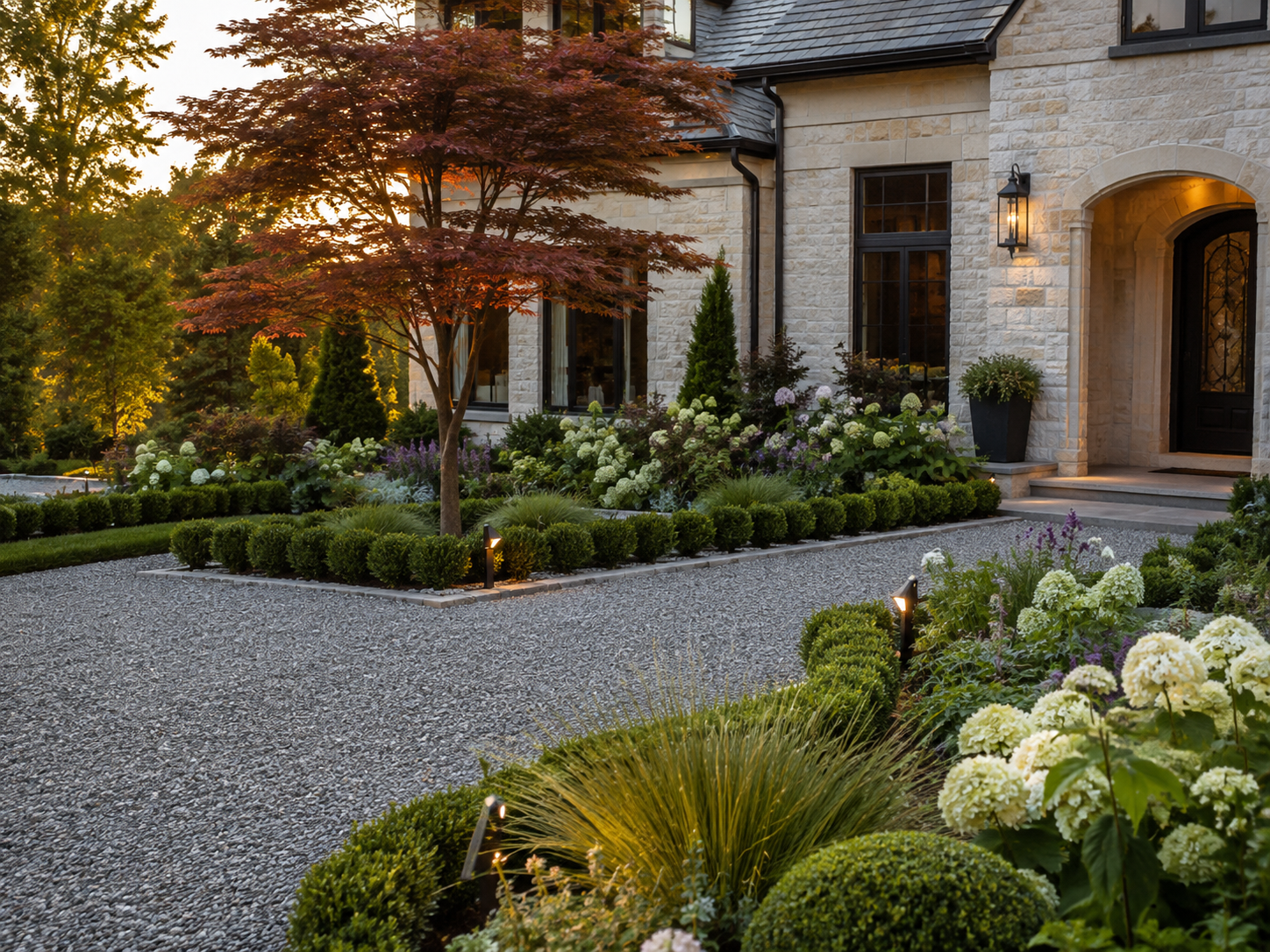
Good lighting can make even a simple front yard feel sophisticated after sunset.
Use subtle pathway lights to guide visitors toward the entrance. Small uplights can highlight a beautiful tree, textured wall, or architectural detail.
Warm lighting usually creates a more inviting effect than extremely bright white fixtures.
The goal is not to illuminate every inch of the yard. Strategic pools of light create more depth and atmosphere.
Solar fixtures can provide an affordable option, especially along walkways and garden borders.
6. Use Gravel for a Designer Look
Gravel can be both practical and beautiful.
It works well around pathways, garden beds, seating areas, and spaces where grass is difficult to maintain. Light gravel can create a Mediterranean feel, while darker stone works beautifully with modern architecture.
Combine gravel with structured plants, oversized planters, or stepping stones to create a clean and intentional arrangement.
Avoid using several different types of stone in the same small area. Repeating one material usually creates a more expensive-looking result.
7. Add One Beautiful Focal Tree
A single well-placed tree can give the front yard structure and character.
Instead of filling the space with many small plants, consider using one ornamental tree as a focal point.
Olive trees, Japanese maples, flowering trees, and compact evergreens can all create visual impact depending on your climate and home style.
Surround the base with simple ground cover, mulch, or gravel to keep the arrangement clean.
The tree should enhance the house rather than hide it, so always consider its mature size before planting.
8. Keep the Color Palette Simple
A front yard can quickly look chaotic when every flower is a different color.
For a more polished appearance, choose a limited palette and repeat it throughout the landscape.
White flowers combined with green foliage create a classic and elegant look. Soft pink, lavender, and green can create a romantic garden, while ornamental grasses and deep green shrubs feel more contemporary.
Repeating colors helps visually connect different sections of the yard.
You can still introduce seasonal flowers, but keep the overall palette consistent.
9. Improve What You Already Have
An expensive-looking landscape is often more about maintenance than money.
Trim overgrown shrubs, remove dead plants, refresh mulch, clean pathways, repair damaged planters, and keep the lawn edges neat.
Wash the front steps and remove weeds growing between pavers.
These simple tasks allow the best features of the yard to stand out.
Before purchasing new plants or decorations, improve the condition of what is already there. A clean, healthy garden usually looks more luxurious than an overcrowded one filled with expensive accessories.
6 Small Garden Ideas That Look Amazing
Small gardens require a slightly different approach. Instead of adding more, focus on making every inch of the space useful and visually interesting.
10. Use Vertical Space
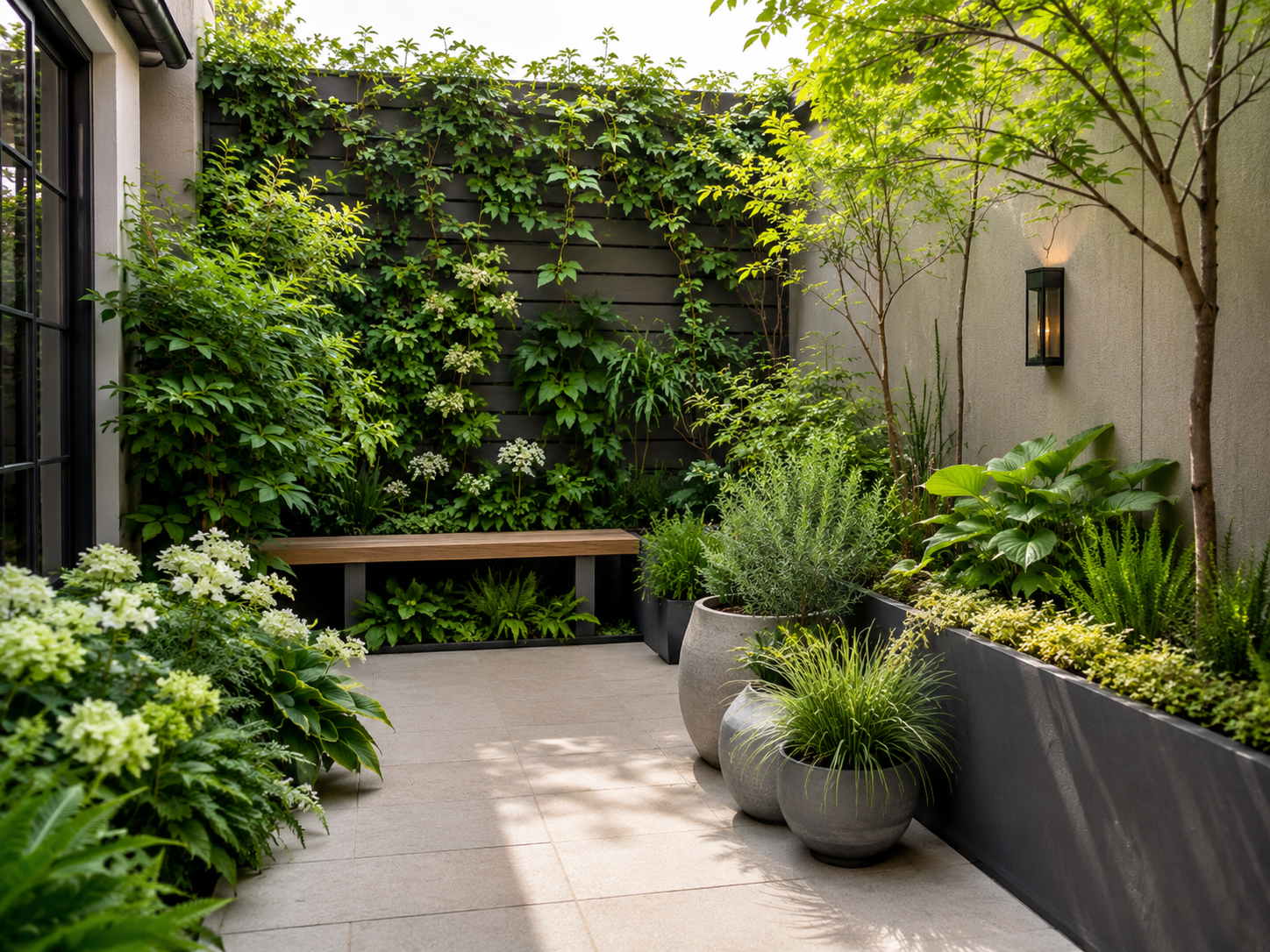
When floor space is limited, look upward.
Climbing plants, wall trellises, hanging planters, and vertical garden systems can provide greenery without occupying valuable ground area.
A vine growing against a fence or exterior wall can soften hard surfaces and make the garden feel more established.
You can also mount small herb planters or flower boxes vertically to create a living wall effect.
11. Build Around One Main Feature
A small garden often looks better when it has one obvious focal point.
This could be a beautiful planter, compact tree, garden bench, fountain, sculpture, or flowering shrub.
Once the focal point is selected, keep the surrounding elements quieter.
Too many competing features can make a tiny space feel cluttered.
One strong visual destination gives the garden structure and makes it feel intentionally designed.
12. Use Curved Garden Beds
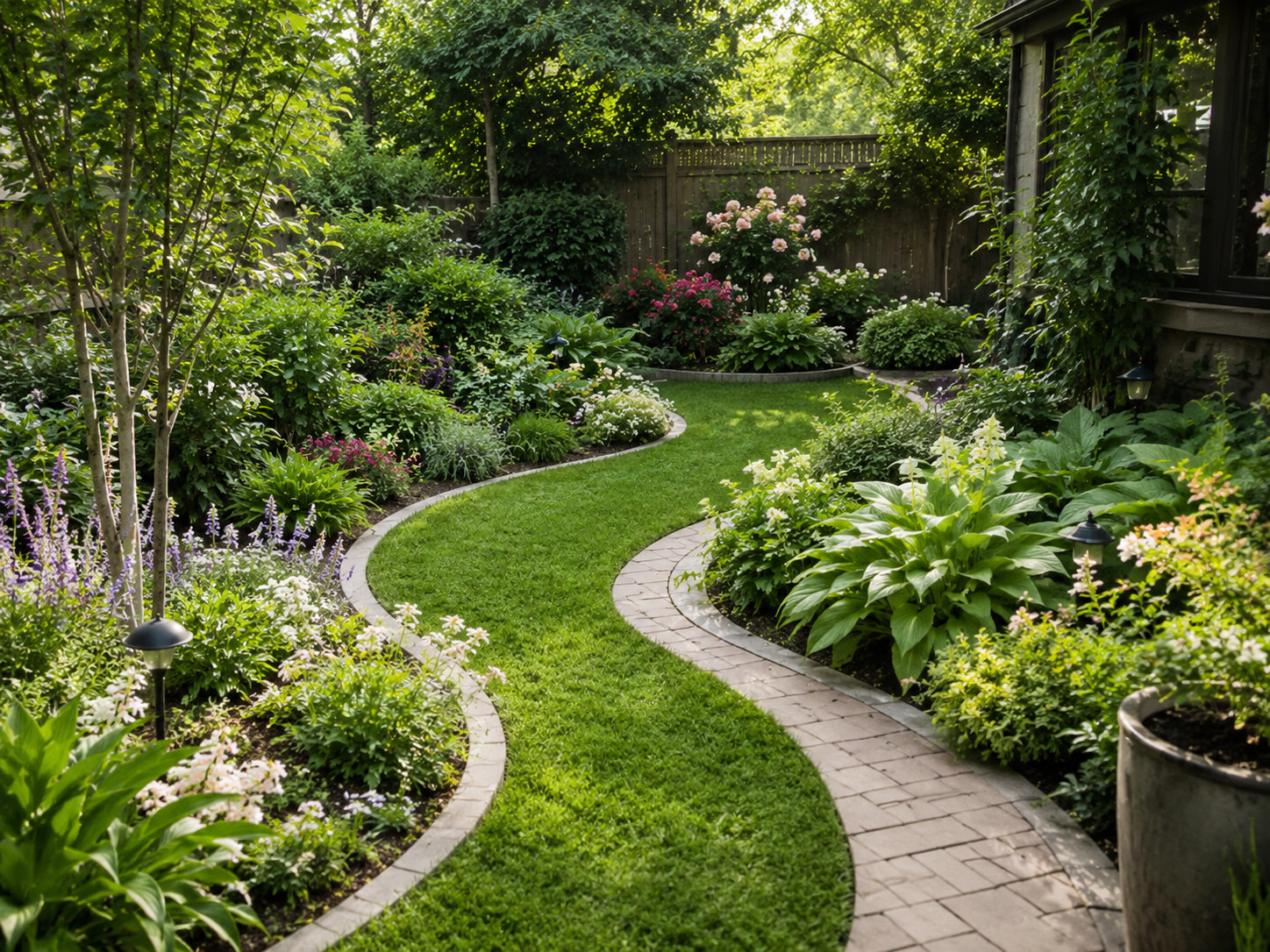
Curves can make a small garden feel larger because they prevent the eye from seeing the entire space at once.
Create a gently curved planting bed, gravel path, or border instead of relying only on straight lines.
You do not need complicated shapes. One simple curve can add movement and soften the edges of a compact yard.
Combine the shape with low-growing plants so the pathway remains visible.
13. Choose Multi-Purpose Furniture
If your small garden includes a seating area, choose furniture carefully.
A narrow bench can provide seating while taking up less space than several chairs. A storage bench can also hide cushions, garden tools, or outdoor accessories.
Small stools can function as side tables or extra seating when guests arrive.
Avoid oversized outdoor furniture that dominates the garden.
Pieces with open legs tend to feel lighter and allow more of the ground to remain visible.
14. Mix Greenery With a Few Flowers
A small garden does not need dozens of colorful flowers to feel beautiful.
Start with several shades and textures of green, then introduce a controlled amount of seasonal color.
Combine leafy shrubs, grasses, herbs, and flowering plants at different heights.
Greenery creates continuity while flowers provide small moments of interest.
This approach also allows the garden to remain attractive when certain flowers are not blooming.
15. Make Every Corner Feel Intentional
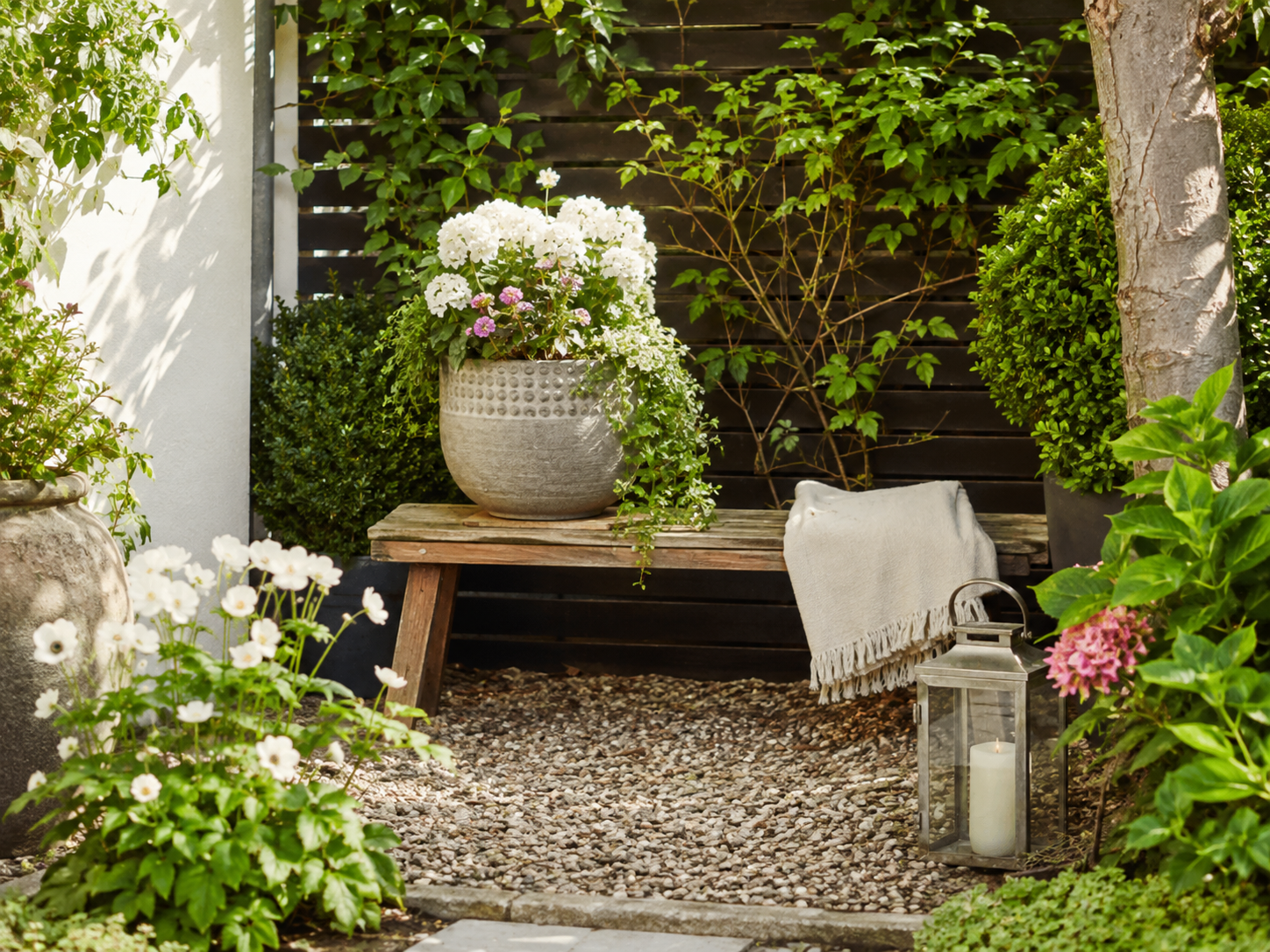
Unused corners can become some of the most charming areas in a small garden.
Add one large planter, a narrow bench, a small tree, or a cluster of coordinated pots to transform an empty area.
Avoid filling every corner. Leaving some breathing room helps the garden feel larger.
Think of each section as a small visual moment rather than trying to fit every possible feature into the space.
A simple corner with one beautiful plant and a clean background can sometimes have more impact than an elaborate arrangement.
How to Make a Front Yard Look Expensive on a Budget
Start with maintenance before buying anything new.
Clean pathways, remove weeds, trim shrubs, refresh mulch, and improve the lawn edges. These changes cost very little but can dramatically improve curb appeal.
Next, concentrate your budget on a few visible elements.
A pair of large planters by the entrance may create more impact than ten small pots scattered across the yard.
Lighting is another relatively simple improvement that can dramatically change the appearance of the home at night.
Whenever possible, repeat materials. Using the same stone around several garden beds or the same planter style near the entrance creates consistency.
The more intentional the landscape feels, the more expensive it tends to look.
How to Make a Small Garden Feel Bigger
Avoid covering every available area with plants or furniture.
Leaving some open space allows the garden to breathe and makes individual features more noticeable.
Create depth by layering plants at different heights and placing taller greenery toward the back.
Vertical elements such as trees, trellises, and climbing plants draw the eye upward.
Light-colored gravel, simple pathways, and repeated plant varieties can also make the space feel more continuous.
If the garden includes a fence or wall, treat it as part of the design instead of ignoring it. Paint, climbing greenery, or a simple wall planter can turn the boundary into an attractive feature.
Front Yard and Small Garden Mistakes to Avoid
Avoid buying too many different plants without a clear plan.
A limited selection of repeated varieties usually creates a more cohesive landscape than dozens of unrelated plants.
Do not overcrowd pathways or entrances with planters and furniture.
Remember that plants grow. Always consider their mature size when deciding where to place them.
Avoid using too many decorative objects such as signs, statues, lanterns, and ornaments in one area.
Also pay attention to maintenance. Dead leaves, weeds, broken pots, and faded outdoor accessories can quickly make a garden feel neglected.
A simpler garden that is healthy and well maintained will almost always look better than a complicated one that is difficult to care for.
Final Thoughts
You do not need a huge yard or an expensive landscaping project to create a beautiful outdoor entrance.
Clean garden edges, layered planting, coordinated planters, attractive pathways, outdoor lighting, restrained colors, and carefully chosen focal points can help a front yard look significantly more polished.
In smaller gardens, vertical greenery, compact furniture, curved beds, layered plants, and intentional use of every corner can make limited space feel charming and complete.
The secret is consistency.
Choose a few materials, colors, and plant varieties that work with your home and repeat them throughout the landscape.
With thoughtful planning, both a front yard and a small garden can feel elegant, welcoming, and far more expensive than they actually were to create.


