
 Salud al Limite

Dining rooms are becoming warmer, more personal, and much more inviting in 2026. Instead of creating formal spaces that are only used during holidays, homeowners are designing dining rooms for everyday meals, relaxed gatherings, celebrations, and long conversations with family and friends.
Cold minimalism and perfectly matching furniture are beginning to feel less appealing. The newest dining spaces combine rich wood, expressive colors, comfortable seating, layered lighting, natural materials, and decorative details that make the room feel collected over time.
The goal is not to include every new trend. It is to choose ideas that make the dining room more comfortable, memorable, and connected to the rest of the home.
Whether you are planning a complete makeover or simply want to refresh your current space, these nine dining room trends for 2026 offer plenty of elegant inspiration.
1. Warm and Moody Color Palettes
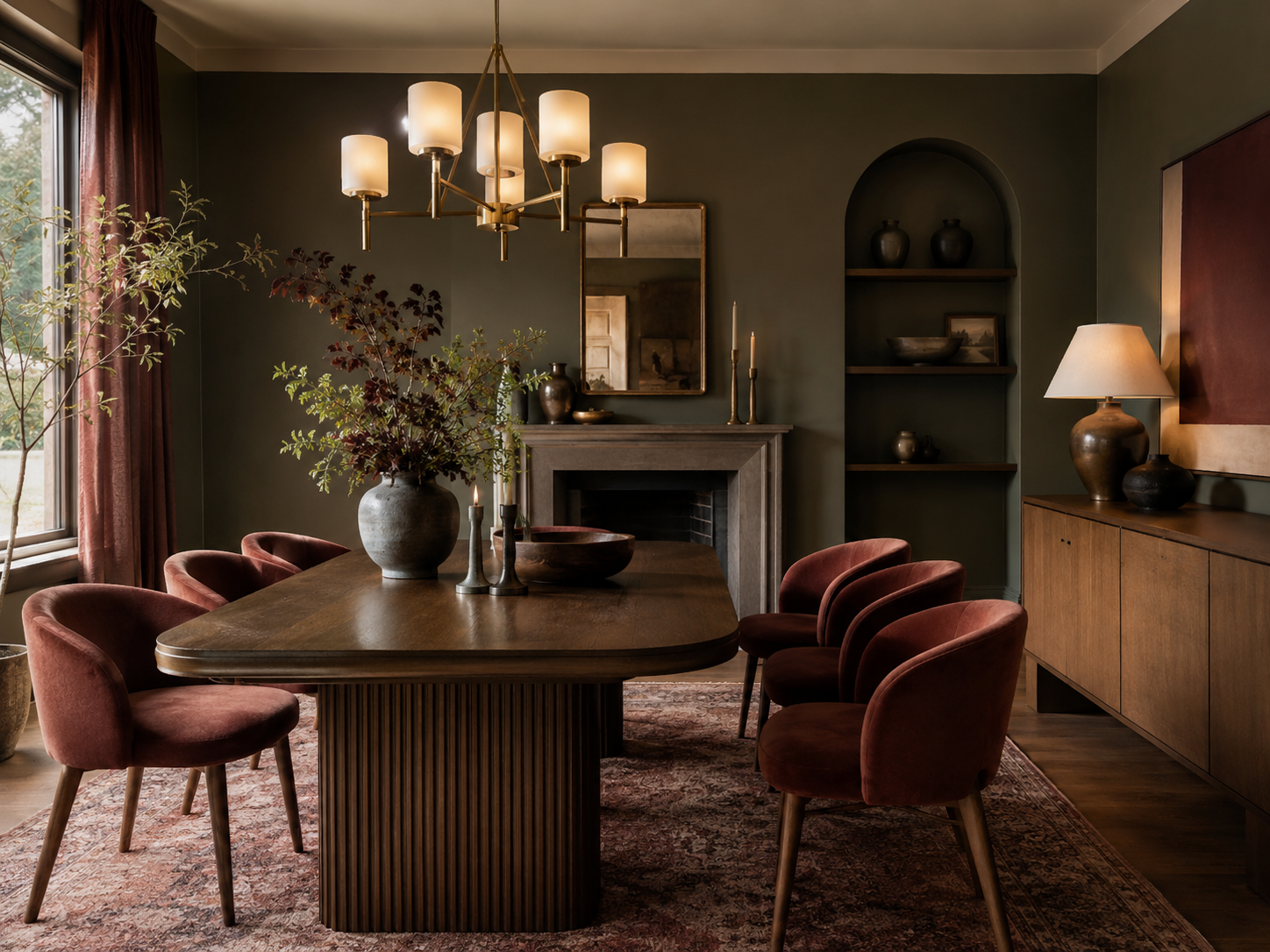
Dining rooms are moving beyond plain white and cool gray walls. In 2026, warmer and more atmospheric colors are helping these spaces feel intimate and sophisticated.
Chocolate brown, deep olive, burgundy, smoky blue, clay, mushroom, and muted terracotta can all create a beautiful background for dining furniture. These colors feel especially elegant when paired with warm wood, aged brass, linen curtains, and soft lighting.
You do not have to paint every wall a dark color. A rich shade can be used below a chair rail, on one feature wall, or even on the ceiling. In a smaller dining room, balance deeper colors with cream upholstery, light artwork, and a neutral rug.
The most polished rooms layer several related shades instead of relying on one flat wall color. This creates depth while keeping the design cohesive.
2. Darker Wood Furniture
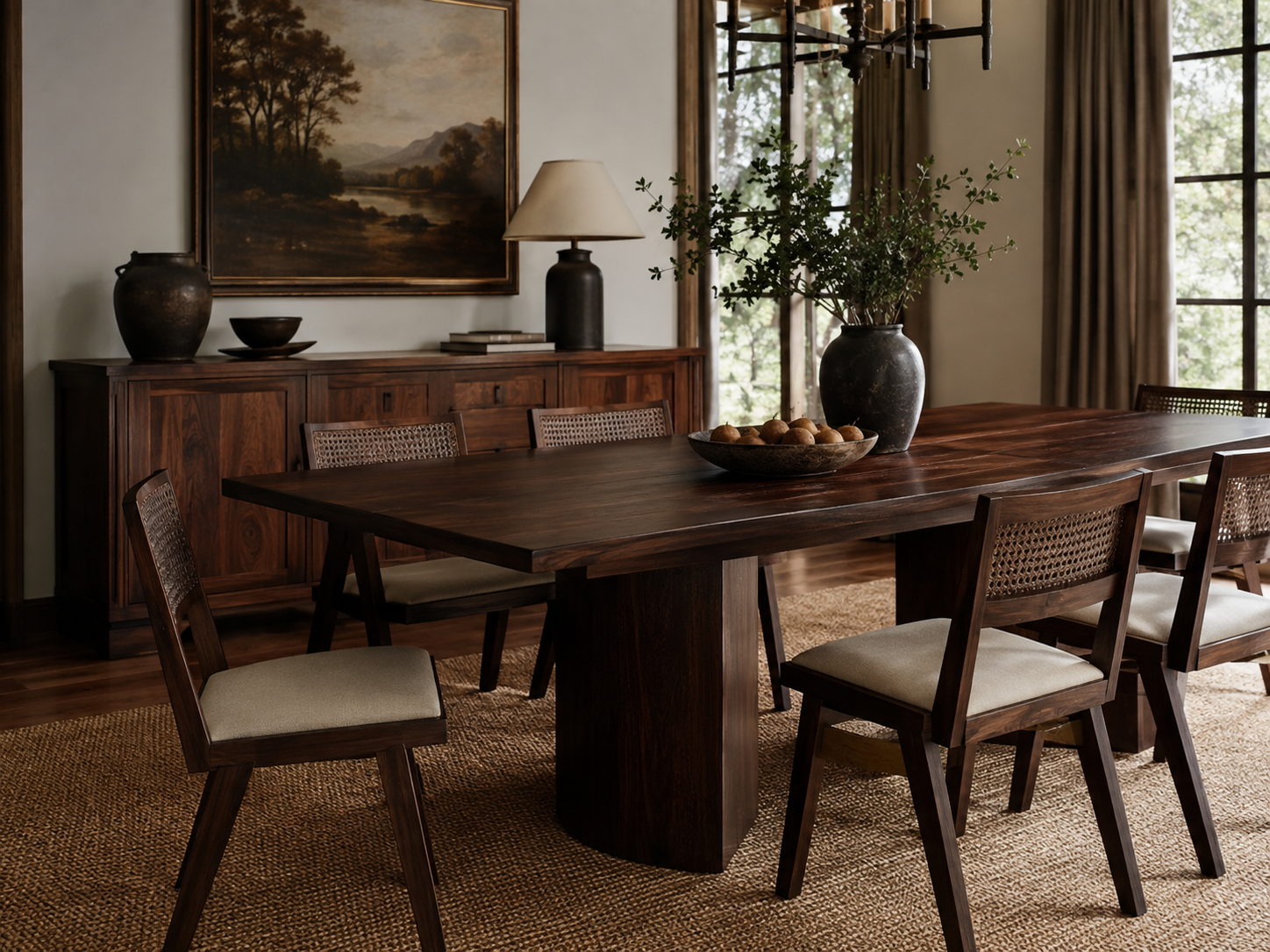
Light wood will remain popular, but deeper and more characterful finishes are becoming a major part of dining room design.
Walnut, smoked oak, mahogany, and medium-to-dark stained wood bring warmth and visual weight into the room. A dark wood dining table can become a strong focal point, while a vintage sideboard or set of wood-framed chairs can add history and personality.
Avoid buying an entire matching furniture collection. Instead, combine wood tones that complement one another. For example, pair a walnut table with upholstered chairs, a slightly lighter sideboard, and black or bronze lighting.
Mixing materials and finishes helps the dining room feel collected rather than copied from a showroom.
3. Sculptural Dining Tables
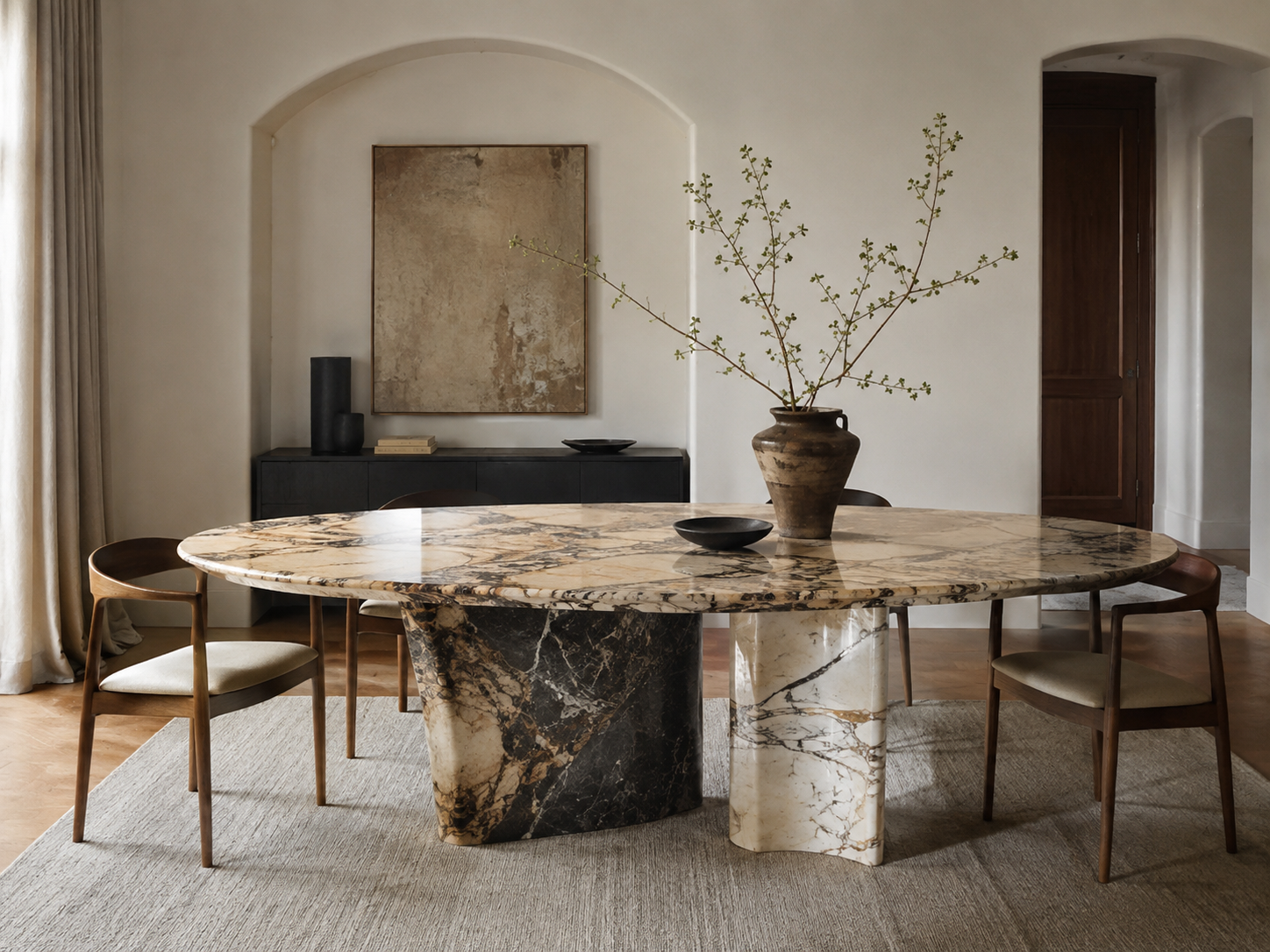
The dining table is becoming more than a functional surface. In 2026, it is also serving as a decorative statement.
Oval tops, rounded corners, irregular shapes, thick stone surfaces, and sculptural pedestal bases are replacing some of the basic rectangular tables seen in previous years. Travertine, marble, limestone, and solid wood are especially effective for creating a luxurious look.
A sculptural table can give a simple dining room instant personality. Because the table already has a strong presence, pair it with streamlined chairs and restrained accessories.
In a smaller space, a round pedestal table can improve movement and reduce the number of sharp corners. It also creates a more intimate arrangement where everyone can see one another easily.
4. Vintage-Inspired Statement Lighting
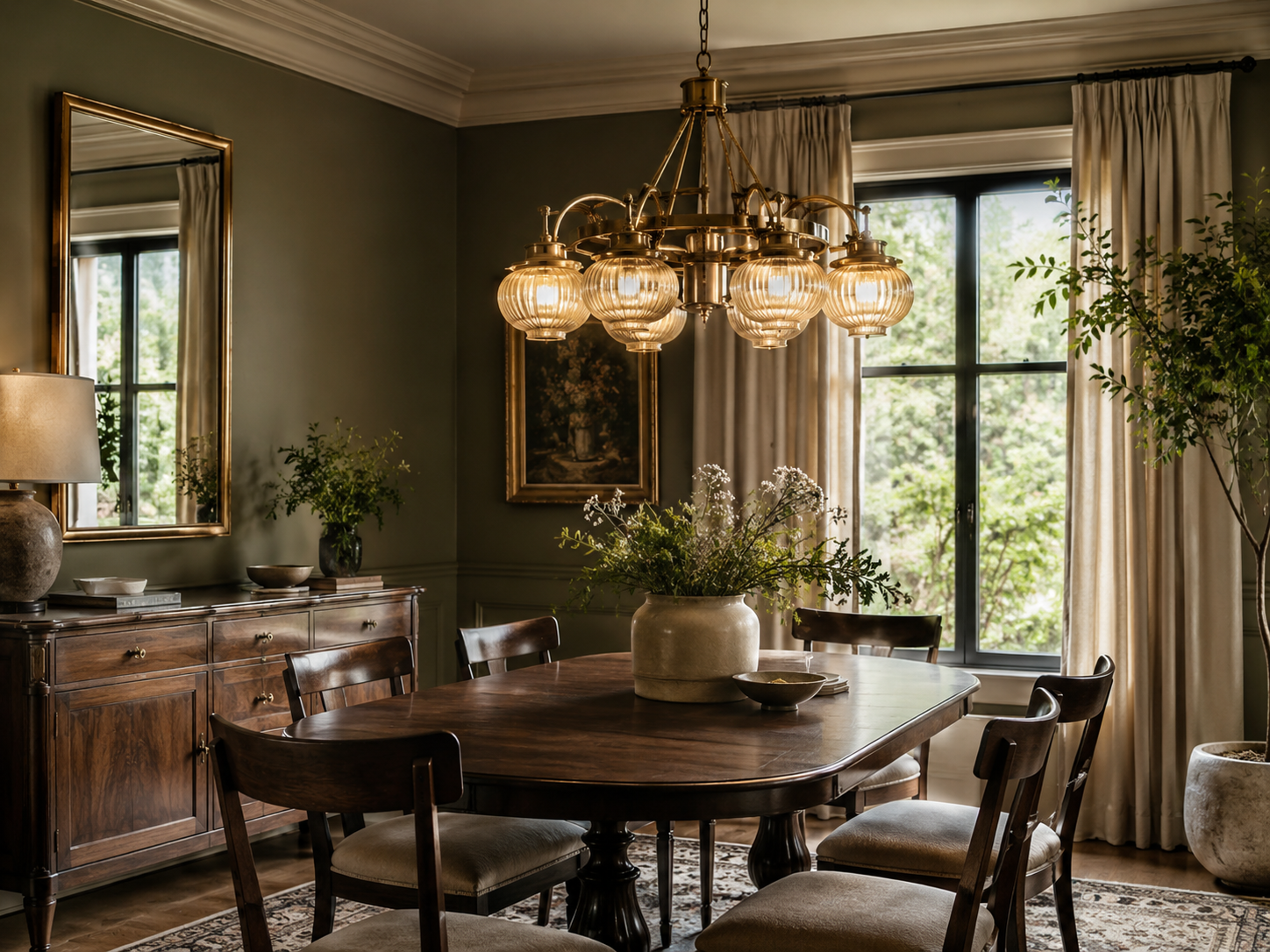
Lighting is becoming one of the most important design features in the dining room.
Rather than installing a small generic fixture, homeowners are choosing chandeliers and pendants with distinctive shapes, aged finishes, textured glass, pleated shades, or sculptural metal details.
Vintage-inspired brass, bronze, milky glass, and darkened metal can add warmth and character without making the space feel outdated. A statement fixture also helps define the dining area in an open layout.
The light should relate to the size and shape of the table. A long rectangular table may look best beneath a linear fixture or a pair of pendants, while a round table works beautifully with a centered chandelier.
Install a dimmer whenever possible. Softer evening light creates a more comfortable atmosphere for meals and entertaining.
5. Mixed and Comfortable Dining Chairs
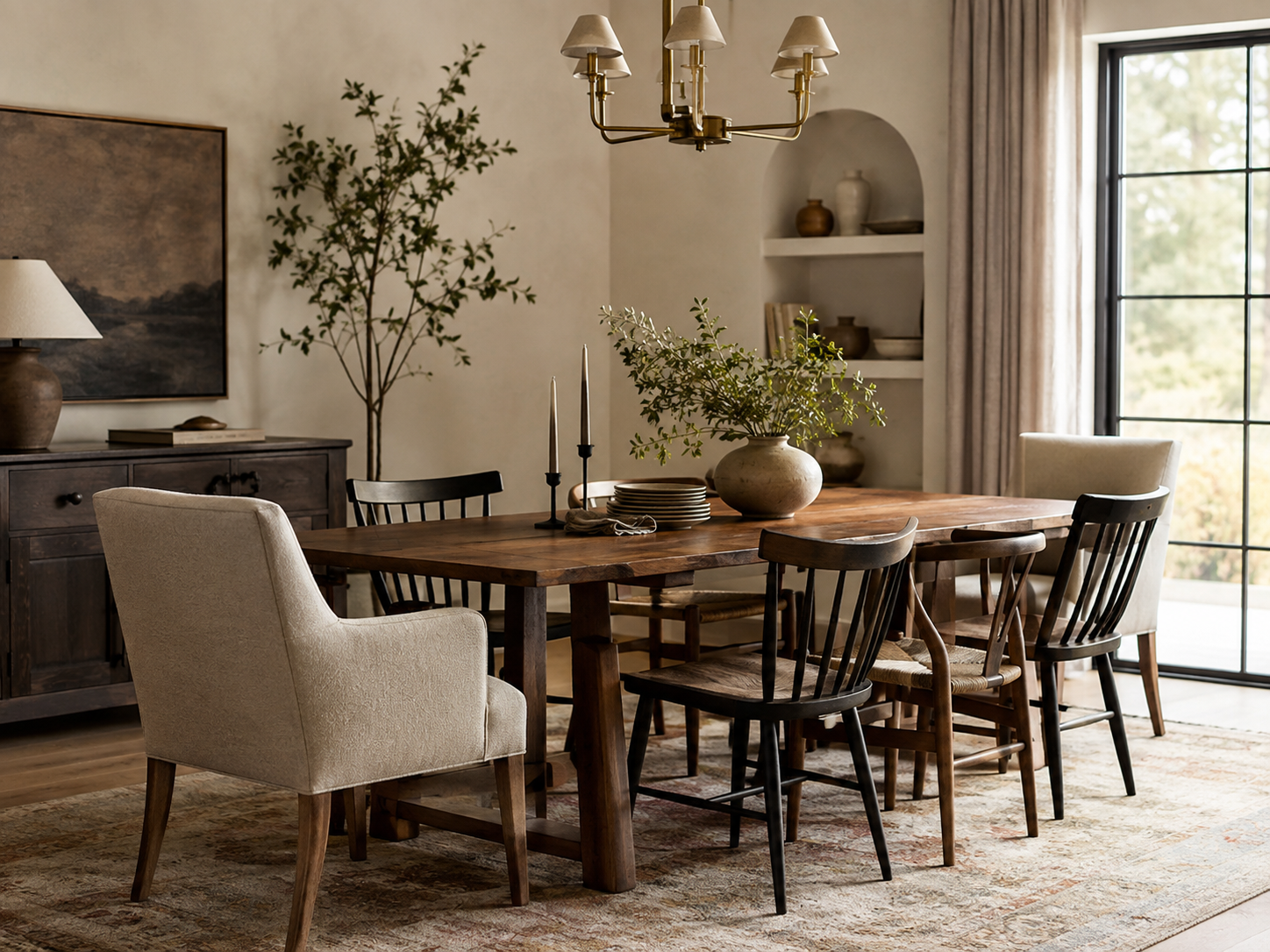
Perfectly matched chair sets are giving way to more flexible and personal arrangements.
One popular approach is placing upholstered chairs at the ends of a rectangular table and simpler wood chairs along the sides. Another option is using chairs with the same general shape but slightly different fabrics, finishes, or colors.
Comfort is also becoming more important. Dining rooms are increasingly used for long meals, conversation, homework, and working from home, so stiff seating is less practical.
Curved backs, padded seats, textured upholstery, slipcovers, and traditional wood silhouettes can make the room feel more relaxed. The chairs do not have to be identical, but they should share at least one connecting element, such as color, material, or shape.
6. Large-Scale Artwork and Murals
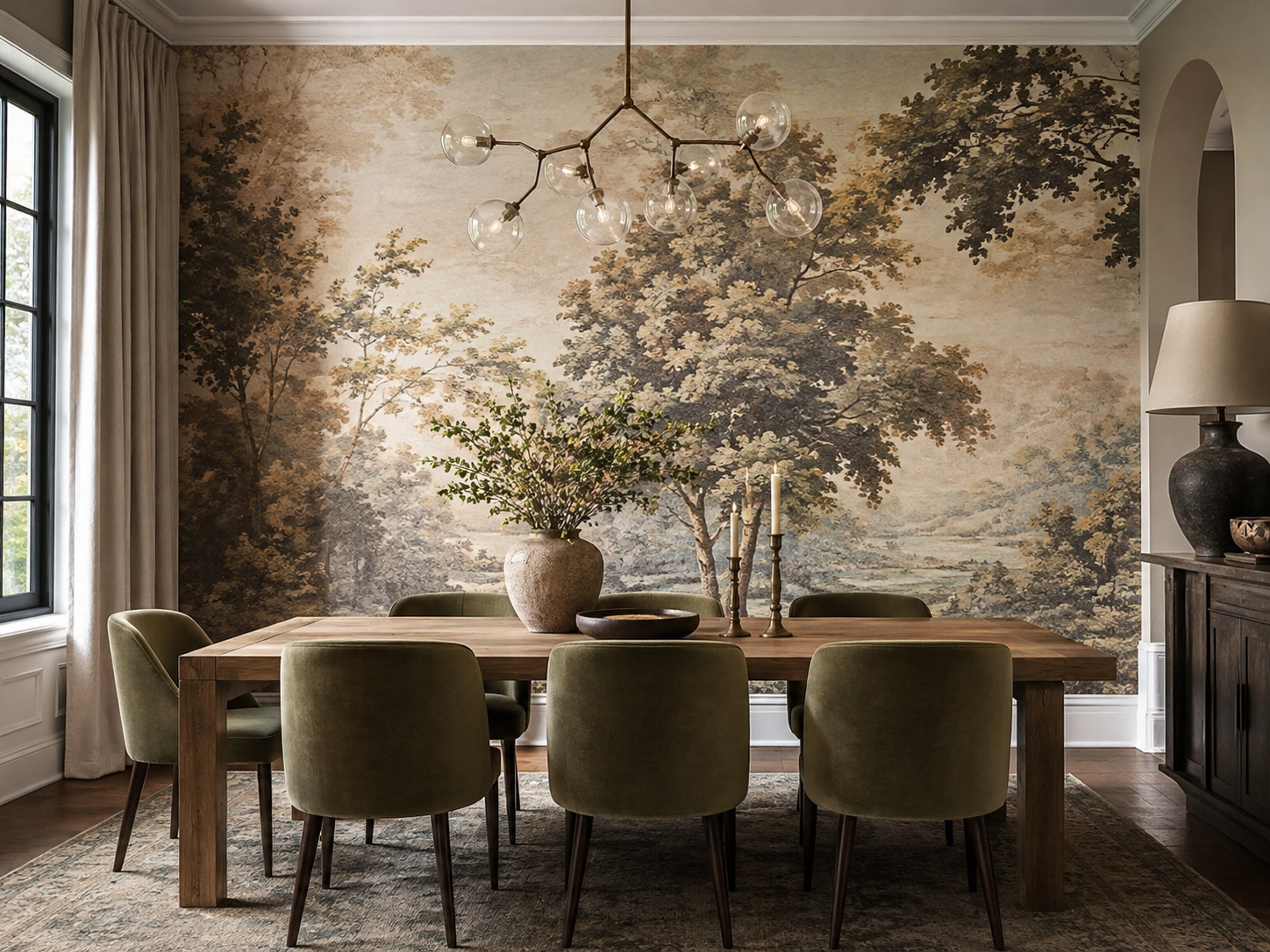
Dining room walls are becoming bolder and more expressive.
Instead of filling a wall with many small frames, designers are using one oversized painting, scenic mural, large photograph, or dramatic wallpaper pattern. A strong wall feature creates a focal point and makes the dining area feel more complete.
Murals and scenic wallpaper can give a traditional dining room a sense of history, while large abstract art works beautifully in modern interiors.
When the artwork is bold, keep the table decor simple. A low bowl, a vase with branches, or a small arrangement may be enough. This allows the wall to remain the main visual feature without making the room feel crowded.
7. Decorative Wall Treatments
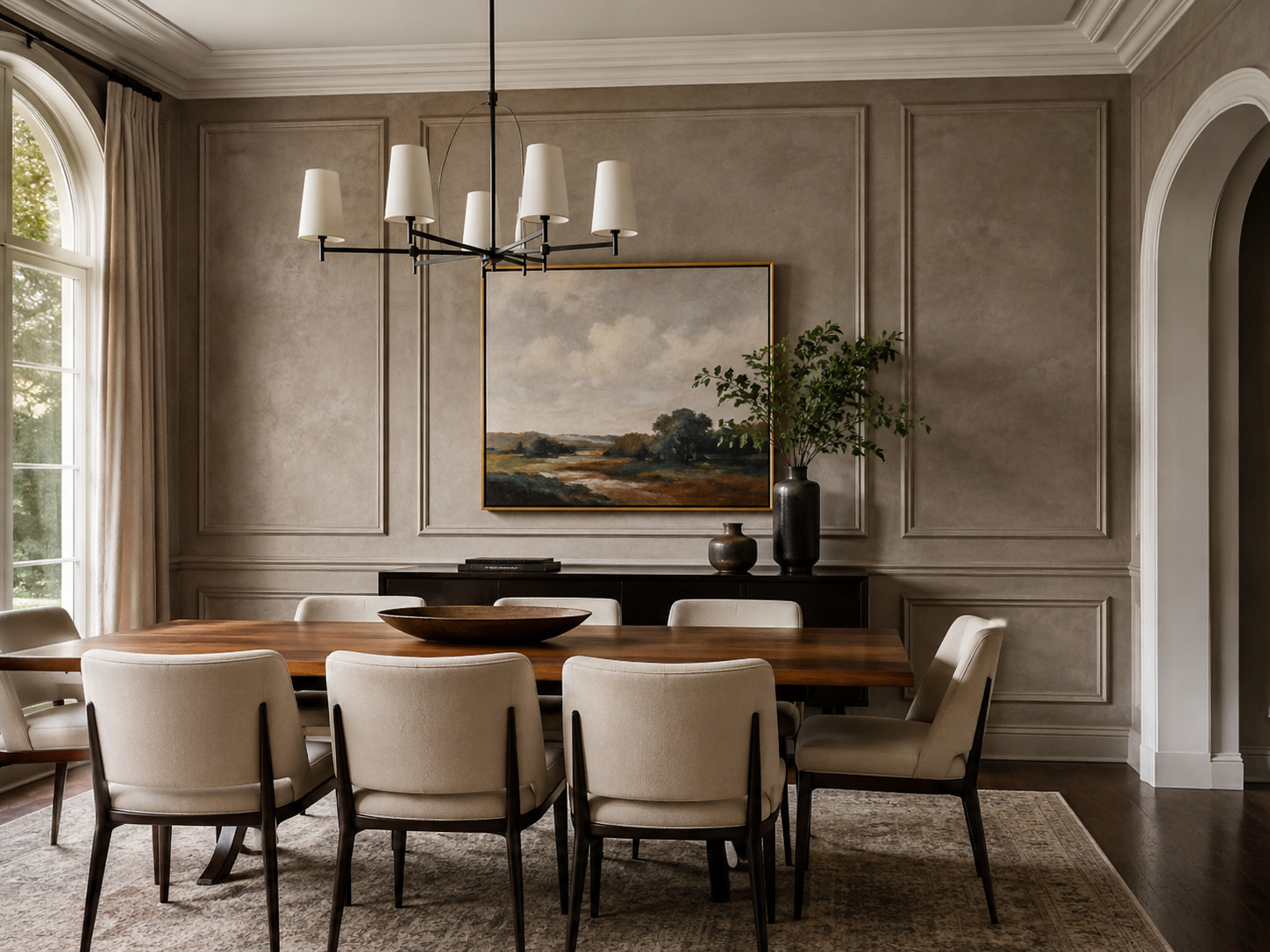
Flat, undecorated walls are being replaced with more architectural and textured finishes.
Wall paneling, picture-frame molding, limewash, plaster, wallpaper, and wood details bring depth into the dining room. These treatments can make even a simple furniture arrangement feel more custom and expensive.
Picture-frame molding painted in the same color as the wall creates a subtle, elegant effect. Dark wood paneling can make a larger room feel warmer, while soft plaster or limewash adds organic movement.
In a small dining room, use texture carefully. A feature wall or molding on the lower portion of the walls may provide enough interest without making the room feel enclosed.
8. The Ceiling as a Design Feature
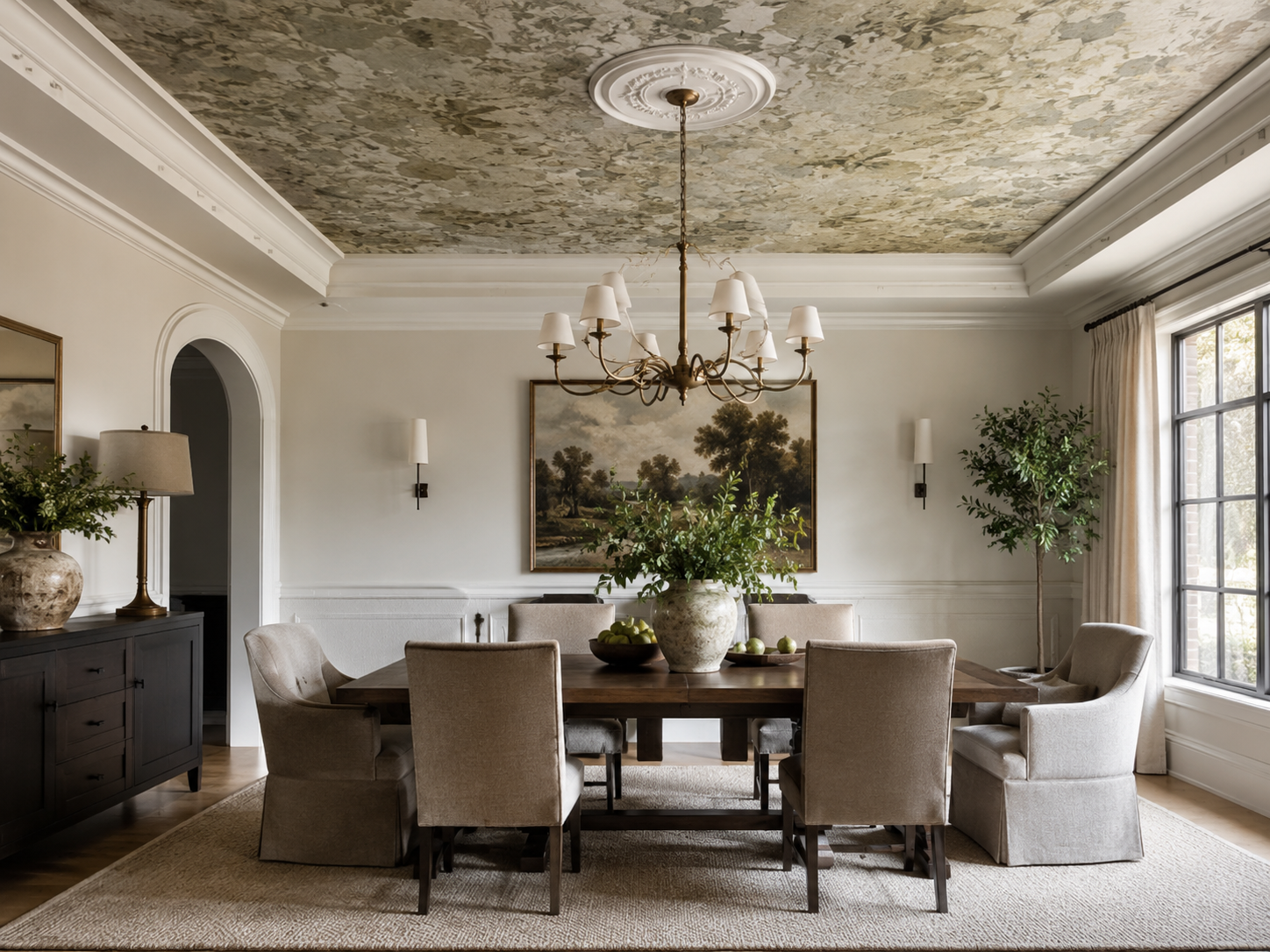
The ceiling is no longer being ignored.
Painted ceilings, wallpaper, wood beams, decorative molding, and reflective finishes are being used to add another layer of style above the dining table. This approach can make the room feel more intentional and help distinguish it from nearby spaces.
A soft contrasting color is one of the easiest ways to use this trend. Warm taupe, muted blue, pale olive, or creamy beige can provide subtle depth without becoming overwhelming.
For a more dramatic result, use wallpaper or a glossy finish that reflects the chandelier’s light. Keep the balance of the room in mind: when the ceiling is highly decorative, simpler walls and furniture will prevent the space from feeling too busy.
9. Collected and Personal Decor
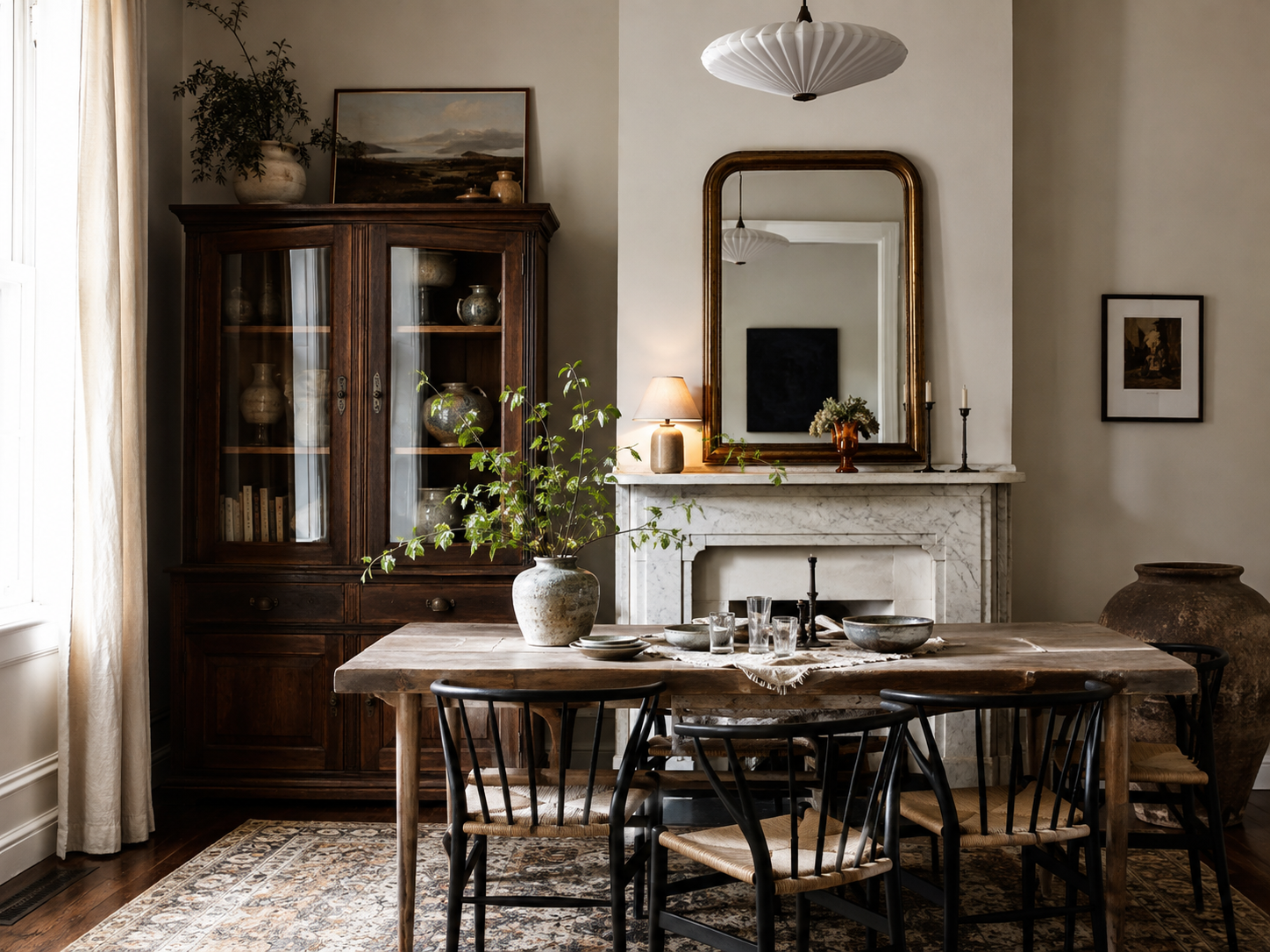
The most stylish dining rooms in 2026 do not look perfectly staged. They feel personal, layered, and lived in.
Vintage furniture, handmade ceramics, family pieces, books, artwork, woven textiles, and decorative objects can all add character. The goal is to create a room that appears to have developed naturally over time.
Try pairing a contemporary table with an antique cabinet, or combine modern chairs with a vintage chandelier. Display attractive serving pieces in a glass cabinet or style the sideboard with a lamp, artwork, and one meaningful object.
Avoid covering every surface. Personal decor looks more elegant when each item has enough space to be appreciated.
How to Use Dining Room Trends Without Dating Your Home
You do not need to apply all nine trends in one room.
Begin with timeless pieces that support daily life, such as a well-proportioned dining table, comfortable chairs, and effective lighting. These larger investments should fit the size of the room and the way your household uses the space.
Introduce more noticeable trends through paint, wallpaper, artwork, curtains, table decor, and accessories. These elements are easier to change in the future.
Natural materials such as solid wood, stone, linen, wool, and ceramic tend to age more gracefully than highly artificial finishes. Vintage and handcrafted items can also make the room feel individual rather than overly trend-driven.
Before decorating, consider how often the dining room is used and how many people it needs to accommodate. A beautiful room should still be comfortable, practical, and easy to maintain.
Final Thoughts
The dining room trends taking over in 2026 focus on warmth, comfort, character, and meaningful connection.
Moody colors, darker wood, sculptural tables, vintage-inspired lighting, mixed chairs, expressive artwork, decorative walls, statement ceilings, and collected accessories are helping dining rooms feel more memorable and personal.
You do not need a large formal room to use these ideas. Even a small dining area can feel elegant with a strong light fixture, comfortable seating, a cohesive color palette, and a few carefully selected details.
Choose the trends that complement your home and lifestyle. With thoughtful styling, your dining room can feel current for 2026 while remaining beautiful and welcoming for years to come.


